







2001: A Space Odyssey (1968)
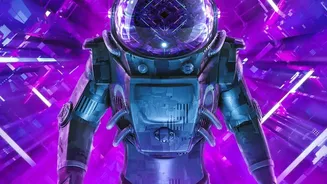
Long before digital effects became the norm, Stanley Kubrick's masterpiece created a vision of space travel so realistic it felt like a documentary. The film's legendary 'Star Gate' sequence was a psychedelic journey into the unknown, crafted with a pioneering
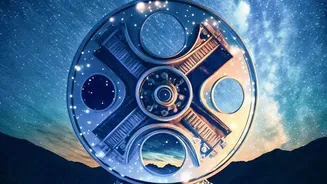
mechanical technique called slit-scan photography. Developed by visual effects supervisor Douglas Trumbull, the method involved moving artwork and patterns behind a narrow slit with the camera's shutter open, creating an astonishing corridor of light and color that represented a journey across dimensions. This analog approach, which also involved swirling chemicals in a tank to create cosmic nebulas, produced visuals so abstract and powerful that they have never been replicated, influencing generations of filmmakers to think of visual effects as a form of art, not just technology.
Blade Runner (1982)
Ridley Scott’s Blade Runner didn't just predict a future; it built one we could almost smell and touch. The film’s iconic 'future noir' aesthetic created a dystopian Los Angeles drowning in acid rain, neon advertisements, and towering, pyramid-like structures. This tangible world was largely achieved through the masterful use of miniatures, matte paintings, and atmospheric effects like smoke and backlighting. Its vision of a grimy, multicultural, and perpetually dark metropolis became the definitive visual language for cyberpunk. Decades later, Denis Villeneuve's sequel, Blade Runner 2049, expanded on this foundation, using a mix of vast, brutalist digital environments and eerie, atmospheric lighting to create hauntingly beautiful landscapes, from a radioactive Las Vegas to a snow-covered Los Angeles.
Inception (2010)
Christopher Nolan is celebrated for his commitment to practical effects, and Inception is his mind-bending magnum opus. The film visualizes the architecture of dreams not just with computers, but with incredible feats of engineering. The iconic scene of a Parisian street folding in on itself was a complex blend of practical sets and digital extensions. Even more impressive was the zero-gravity hallway fight, which was filmed in a massive, full-sized rotating corridor, with actor Joseph Gordon-Levitt performing stunts inside the spinning set for weeks. By grounding its most surreal ideas in physical reality, Inception created visuals that felt both impossible and incredibly visceral, challenging the audience to question the very nature of what they were seeing.
Interstellar (2014)
No film has taken the 'science' part of science fiction more seriously than Christopher Nolan’s Interstellar. To visualize the black hole Gargantua, Nolan collaborated with Nobel Prize-winning theoretical physicist Kip Thorne. Thorne provided the visual effects team with the real-world equations of general relativity, which they used to write new CGI rendering software. The result was the most scientifically accurate depiction of a black hole in cinema history, which remarkably predicted what a real black hole would look like years before the first actual image was captured. This collaboration didn't just create stunning visuals; the rendering process led to new scientific insights and papers on gravitational lensing, proving that a blockbuster film could genuinely contribute to our understanding of the universe.
Arrival (2016)
In Arrival, the mind-bending concept wasn't a spaceship or a dystopian city, but language itself. Director Denis Villeneuve needed to create a visual language for the film's heptapod aliens that was truly otherworldly. The result was a series of inky, circular logograms that convey entire sentences and complex ideas without linear sequence. The design team, including artist Martine Bertrand, developed a 'bible' with around 100 symbols to ensure consistency. The language was designed to feel organic and profound, as if painted with ink squirted from the aliens themselves. This focus on a purely visual, non-linear form of communication was central to the film's theme, proving that a concept, when visualized with creativity and intelligence, can be more awe-inspiring than any special effect.
Dune (2021)
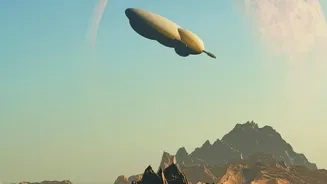
Denis Villeneuve’s adaptation of Frank Herbert’s novel succeeded where others had struggled by grounding its fantastical elements in a sense of brutal realism. A key example is the Ornithopter, the flapping-wing aircraft used on the desert planet Arrakis. Villeneuve envisioned a design inspired by dragonflies that felt both muscular and realistic, closer to a helicopter than a bird. The production built full-size, 11-tonne Ornithopters for location shoots, giving the actors a physical vehicle to interact with. This commitment to tangible design, combined with the film's vast and desolate landscapes, created a world that felt ancient and futuristic at the same time. The world of Dune feels less like a fantasy and more like a lost chapter of human history, all thanks to its believable, lived-in technology.