








The New Space Race Is Private
For decades, space exploration in India was the domain of the Indian Space Research Organisation (ISRO). While ISRO continues to achieve incredible feats, a major policy shift has opened the doors for private companies. The establishment of IN-SPACe (Indian
National Space Promotion and Authorisation Center) acts as a single-window agency to facilitate and guide private players. Companies like Skyroot Aerospace, which launched India's first private rocket, and Agnikul Cosmos, known for its 3D-printed rocket engines, are just the beginning. This privatisation boom is the primary engine driving a massive demand for new talent across a wide spectrum of specialisations.
1. Rocket and Satellite Engineers
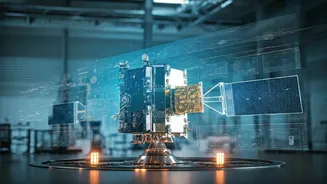
This is the most traditional role, but it's evolving rapidly. Beyond ISRO, private startups are desperate for aerospace, mechanical, and avionics engineers to design, build, and test launch vehicles and satellites. These roles involve everything from propulsion systems and structural integrity to flight control software. Unlike in a large government agency, working for a startup like Pixxel (which is building a constellation of hyperspectral imaging satellites) or Dhruva Space offers engineers a chance to work on a product from end-to-end, providing immense learning and a faster-paced environment.
2. Space Data Scientists and Analysts
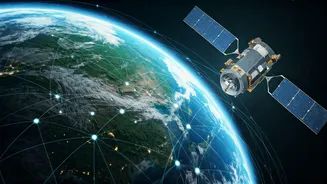
This is perhaps the fastest-growing and most accessible field. Satellites are essentially data-gathering machines in the sky, collecting vast amounts of information about agriculture, climate change, urban planning, and resource management. The real value is unlocked by people who can interpret this data. Data scientists, GIS specialists, and AI/ML experts are needed to analyse satellite imagery and telemetry data to provide actionable insights for businesses and governments. If you have a background in data science, you don't need to be a rocket scientist to find a high-paying job in the space industry.
3. Software and Automation Engineers
Modern spacecraft and ground systems are heavily reliant on sophisticated software. There is a huge demand for software engineers to develop flight software, ground control systems, mission simulation tools, and autonomous navigation algorithms. Expertise in embedded systems, cybersecurity, artificial intelligence, and cloud computing is particularly valuable. As constellations grow and missions become more complex, the need for robust, secure, and intelligent software will only increase, making this a critical role for any space company.
4. Space Lawyers and Policy Experts
As the space sector gets crowded with private players, a new set of rules is needed. Who is liable if a private satellite collides with another? Who owns the data collected from space? How are launch licenses and spectrum allocated? This has created a niche but crucial demand for lawyers and policy advisors who understand international space treaties and domestic regulations. These professionals help companies navigate the complex legal landscape, secure licenses, and manage intellectual property. It’s a frontier field for legal minds interested in technology and international relations.
5. Technicians and Manufacturing Specialists
Not every job in the space industry requires a PhD. Building rockets and satellites is a complex manufacturing process that needs skilled technicians. There's a growing need for specialists in advanced manufacturing techniques like 3D printing (additive manufacturing), composites, precision machining, and electronics assembly. These are the hands-on experts who turn designs into reality, ensuring that every component is built to withstand the extreme conditions of a launch and the vacuum of space. As companies scale up production, the demand for this skilled workforce will be immense.