







Foundations of a Modern Alliance
The groundwork for this intensified collaboration is built upon key strategic agreements. India’s decision to join the Artemis Accords in June 2023 was a landmark moment. The Accords, led by the United States, establish a set of principles for safe, transparent,
and sustainable civil space exploration. By signing, India aligned itself with a growing global coalition, moving from a traditionally independent space policy to one of collaborative engagement. This was further solidified by the Initiative on Critical and Emerging Technology (iCET), launched in 2022, which frames the partnership in the context of shared democratic values and aims to bolster cooperation in areas like space technologies, artificial intelligence, and quantum computing. More recently, in early August 2026, the 9th India-U.S. Civil Space Joint Working Group (CSJWG) met in Bengaluru to advance these goals, underscoring the sustained momentum.
A Joint Eye on Planet Earth
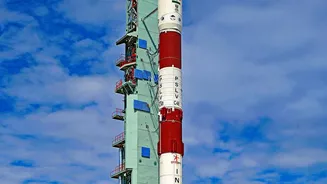
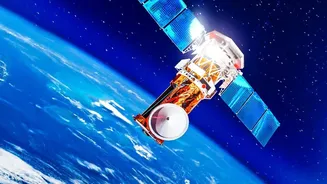
Perhaps the most tangible symbol of this partnership is the NASA-ISRO Synthetic Aperture Radar (NISAR) mission. Launched in July 2025, NISAR is the first satellite to use two different radar frequencies (L-band from NASA and S-band from ISRO) to monitor changes in the Earth's surface with unprecedented detail. The satellite orbits the Earth every 12 days, gathering data on everything from glacial melt and shifting coastlines to agricultural biomass and the effects of natural disasters. This data, which is openly available to the public, is crucial for managing resources, predicting hazards, and understanding the real-world impacts of climate change. The successful operation of NISAR represents a significant achievement in joint technological development, combining the expertise of both space agencies into a single, powerful tool for Earth observation.
The Human Element: Astronauts and the ISS
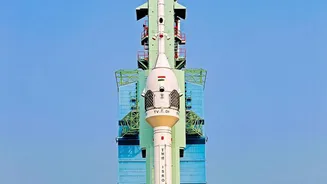
The collaboration is not limited to machines and satellites. A significant step forward involves human spaceflight. Under a framework agreed upon by both nations, NASA will provide advanced training to Indian astronauts, often called 'Gaganauts', at its Johnson Space Center in Houston. This initiative is set to culminate in a joint mission to the International Space Station (ISS). While initial timelines pointed to a 2024 mission, the commitment remains a cornerstone of the partnership, aiming to give an Indian astronaut valuable experience in long-duration spaceflight and conducting scientific research in microgravity. This not only prepares ISRO for its own ambitious Gaganyaan human spaceflight program but also deepens interoperability between the two agencies.
Looking to the Moon and Beyond
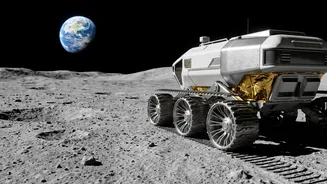
With the Artemis Accords as a guide, the partnership's gaze is firmly fixed on the Moon. Building on India's successful lunar missions, NASA has formally invited ISRO to participate in its Moon Base program, which aims to establish a permanent, sustainable human presence on the lunar surface. This invitation, extended during the August 2026 joint working group meeting, opens the door for India to play a role in constructing humanity's first off-world outpost. Prime Minister Narendra Modi has set ambitious goals for India's space program, including establishing an Indian space station by 2035 and sending an Indian to the Moon by 2040. Collaboration with NASA, particularly on projects like the Artemis moon base and the Lunar Gateway space station, provides a clear pathway to achieving these long-term aspirations while contributing to a shared global vision for deep space exploration.