



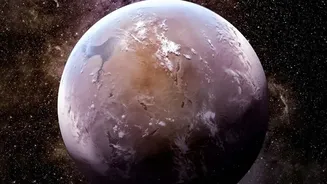

What Makes a Planet 'Superhabitable'?
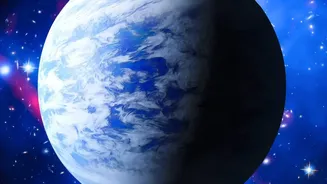
The idea of a superhabitable planet, first detailed by scientists René Heller and John Armstrong in 2014, challenges our geocentric bias. It posits that while Earth is clearly habitable, it may not represent the optimal conditions for life to arise and flourish.
These 'better than Earth' worlds aren't just science fiction; they are based on a specific set of criteria that could make them more stable and biologically productive over cosmic timescales. Researchers like Dirk Schulze-Makuch have argued that focusing our search on these prime candidates, rather than just Earth twins, could be a more effective strategy in the hunt for extraterrestrial life. The core idea is simple: Earth is good, but it might not be perfect.
The Recipe for a Better World
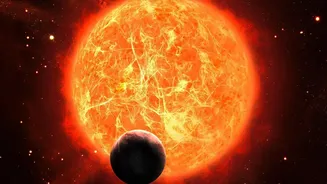
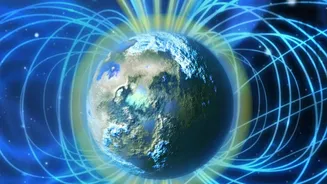
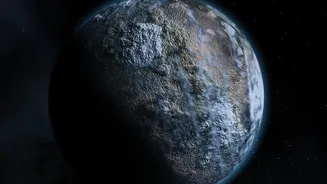
So, what does the ideal planetary recipe look like? Scientists have proposed several key ingredients. First, a superhabitable planet would likely orbit a K-dwarf star. These 'orange dwarfs' are cooler and less massive than our Sun, but crucially, they are more stable and have much longer lifespans—anywhere from 15 to 45 billion years, compared to our Sun's 10 billion. This extended timeline offers life a much longer, more stable window to emerge and evolve into complex forms. The ideal planet itself would be slightly larger (up to 1.5 times Earth's size) and more massive (up to 10 times). This extra mass helps it retain a thicker atmosphere for better heat distribution and a stronger magnetic field to shield against cosmic radiation. A world that is also slightly warmer and wetter than Earth, with more shallow seas and archipelagos rather than vast, deep oceans, could foster greater biodiversity.
New Telescopes, New Possibilities
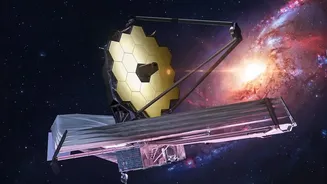
Theorising about these worlds is one thing; finding them is another. This is where the next generation of space telescopes comes in, representing a massive technological investment in answering one of humanity's biggest questions. The James Webb Space Telescope (JWST) is a game-changer. Using a technique called transit spectroscopy, JWST can analyse the starlight that passes through an exoplanet's atmosphere. As the light filters through, different gases absorb specific wavelengths, leaving a chemical fingerprint that the telescope can read from light-years away. Scientists are looking for biosignatures—gases like oxygen, methane, and carbon dioxide—that could indicate biological processes. While JWST is powerful, detecting these signatures is incredibly difficult and requires hundreds of hours of observation time for a single target.
Identifying the First Candidates
Though they are all over 100 light-years away, scientists have already identified a few dozen potential superhabitable candidates from the more than 4,500 known exoplanets. A 2020 study led by Schulze-Makuch highlighted 24 top contenders that fit many of the key criteria. One of the most promising is KOI 5715.01, a planet estimated to be about 5.5 billion years old, orbiting a stable K-dwarf star. It's important to remember that these are just candidates based on limited data. Current telescopes are best at studying planets around smaller, more volatile M-dwarf stars, which can strip their planets of atmospheres. Future observatories, like the planned LUVOIR and PLATO telescopes, will be even better equipped to find and analyse the atmospheres of these potentially life-filled worlds orbiting calmer K-type stars.