



More Than Just a Scratch
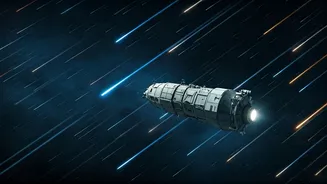
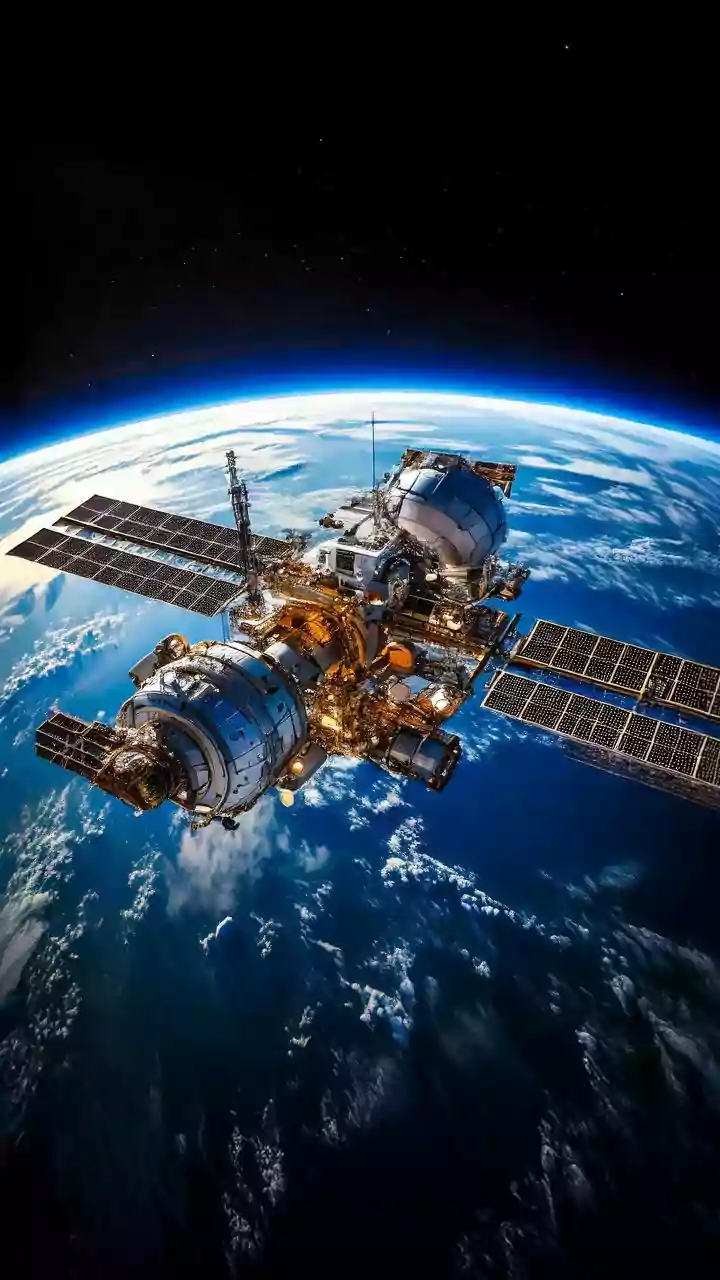
The most obvious danger to any spacecraft is a direct hit from a piece of space rock. Even a tiny particle, the size of a grain of sand, can cause significant damage when traveling at hypervelocity—speeds of 10 kilometers per second or more. [10] At such
extreme speeds, a micrometeoroid carries immense kinetic energy, capable of puncturing a satellite's hull, damaging sensitive instruments, or cracking a solar panel. [11] Every day, an estimated 48.5 tons of natural space material enters Earth's atmosphere, and during a meteor shower, the density of these particles increases as Earth passes through the debris stream left by a comet or asteroid. [17] While large impacts that could destroy a spacecraft are rare, the constant sandblasting effect from smaller particles degrades surfaces over time, threatening the long-term functionality of these critical and expensive assets. [10]
The Invisible Electrical Threat
One of the most significant “hidden” risks is not mechanical, but electrical. When a micrometeoroid strikes a spacecraft at extreme velocity, the impact doesn't just create a crater; it vaporizes the particle and a small amount of the spacecraft’s surface, creating an expanding cloud of plasma. [19] This superheated, ionized gas can be a silent killer for satellite electronics. The plasma cloud can create a powerful electromagnetic pulse (EMP) or create a conductive path that allows electrical currents to arc across circuits, causing short circuits and system failures far from the actual point of impact. [20, 22] Researchers have suggested that such electrical events may be responsible for unexplained spacecraft anomalies and failures, like the potential loss of the Olympus experimental communications satellite in 1993. [24] Simulations show that impacts above a certain velocity can produce electromagnetic fields far exceeding the specifications to which satellites are currently built. [20]
A Risk to Delicate Operations
For some of the most advanced spacecraft, even a non-damaging impact can have serious consequences. Missions that rely on precise pointing and stability, like the James Webb and Hubble Space Telescopes or future gravitational wave observatories, can be knocked off-kilter by a micrometeoroid strike. [4, 25] The force of the impact itself, along with the momentum of the ejected material, can cause a disturbance in the satellite's orientation. [4] This can interrupt sensitive measurements, requiring time for the spacecraft to reorient itself and stabilize. During major meteor showers, mission operators for flagship telescopes often take preventative measures, physically pointing them away from the direction of the incoming meteor stream to protect their delicate optics and instruments. [25]
Defending Our Assets in Orbit
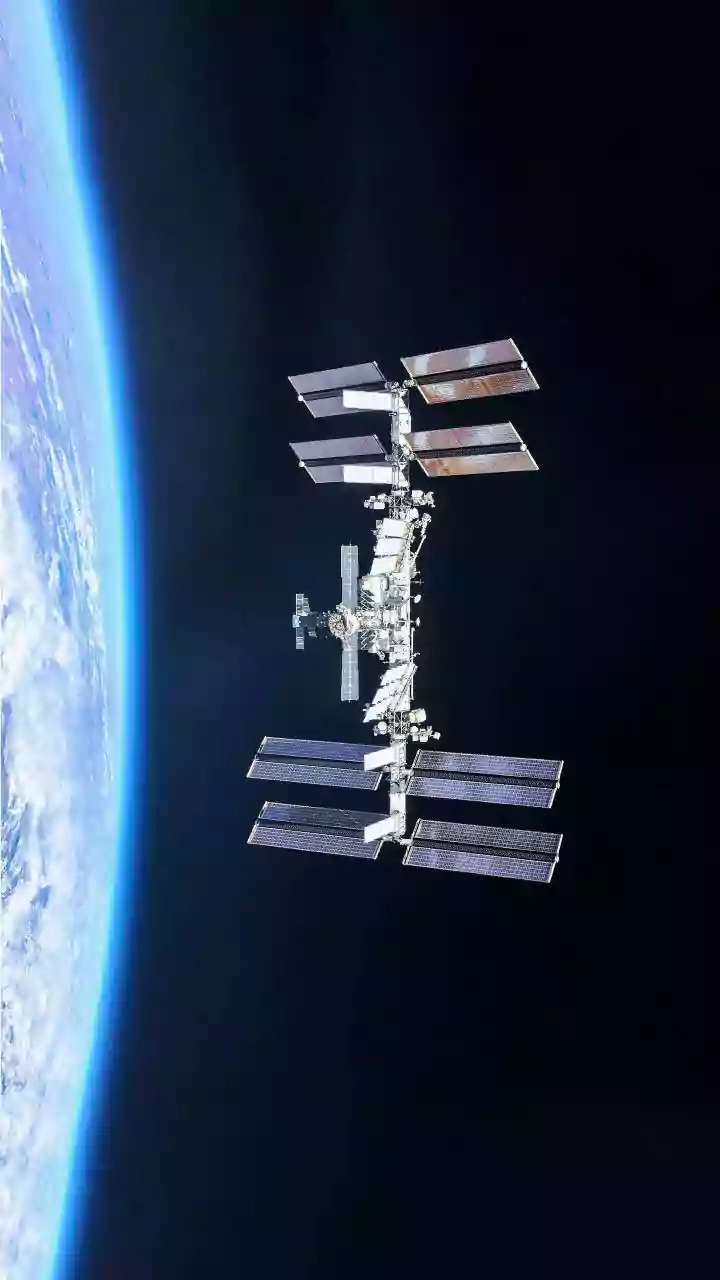
Engineers have developed sophisticated methods to protect against these threats. The primary defense is the Whipple shield, invented in the 1940s. [1, 5] This isn't a single, thick piece of armor, but a multi-layer system. A thin outer bumper is placed some distance from the spacecraft's main wall. [1] When a particle hits this sacrificial layer, it shatters into a cloud of smaller, less energetic fragments that spread out over a wider area, which the inner wall is more likely to withstand. [5, 8] Many modern shields are “stuffed” with high-strength materials like Kevlar or Nextel ceramic fabric between the layers to further dissipate the impact energy. [2, 5] The International Space Station, for example, uses over 100 different Whipple shield configurations to protect its modules and the crew inside. [2]
Planning for the Unpredictable
Beyond physical shielding, mission planning is a key line of defense. Space agencies like NASA constantly monitor the space environment and can predict meteor storm outbursts years in advance. [21] While most of the 1,000 known annual meteor showers don't significantly increase the risk, a handful of intense ones like the Geminids, or predicted outbursts from the Perseids and Leonids, are a major concern. [16] For critical missions, especially crewed ones like the upcoming Artemis flights to the Moon, launch windows may be adjusted to avoid the peak of a major shower. [14, 25] In 1993, a Space Shuttle mission was delayed to avoid the Perseids. [25] For spacecraft already in orbit, their flight attitude can sometimes be adjusted to present a smaller or better-protected profile to the incoming stream of particles. [3]