

A New Eye on Planet Earth
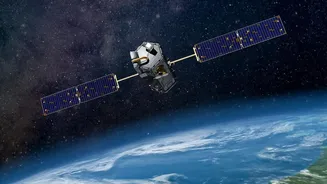
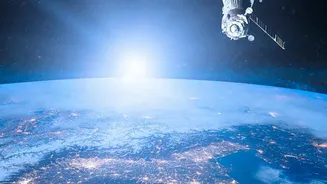
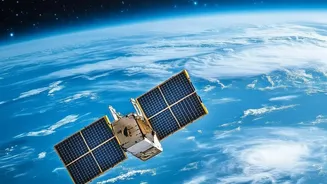
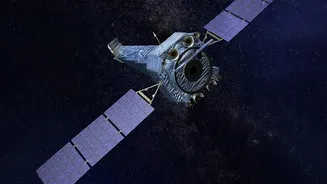
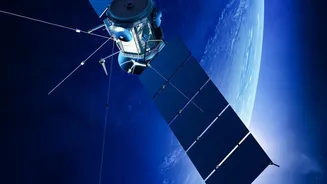
The NASA-ISRO Synthetic Aperture Radar, or NISAR, is not just another satellite. It is one of the most advanced Earth-observing systems ever deployed, born from a powerful partnership between the Indian Space Research Organisation (ISRO) and the U.S.
National Aeronautics and Space Administration (NASA). Launched from the Satish Dhawan Space Centre, this sophisticated observatory is designed to monitor our planet in incredible detail. Its mission is to track subtle changes on the Earth's surface, from the slow creep of a glacier to the sudden shift of an earthquake, providing data that is crucial for science and disaster management. What makes NISAR truly unique is its use of two different radar frequencies, L-band and S-band, allowing it to see our world in a way no single satellite has before.
Seeing the Unseen with Radar
Imagine having a superpower that lets you see through clouds, darkness, and even dense forests. That's the power of Synthetic Aperture Radar (SAR). Unlike regular cameras that need light, SAR sends out its own radar signals and reads the echoes that bounce back. This allows NISAR to map the Earth's surface day or night, in any weather. The L-band radar can penetrate forest canopies to measure biomass, while the S-band is ideal for monitoring crops and other surface features. Together, they can detect changes as small as a centimeter, providing an unprecedented view of processes like land subsidence, volcanic activity, and the melting of ice sheets. Every 12 days, the satellite will complete a full scan of the planet's land and ice masses, building a rich, dynamic picture of our changing world.
Democratizing Space Data for All
Perhaps the most groundbreaking aspect of the NISAR mission is not its technology, but its philosophy. In a landmark decision, all science data from the mission is being made freely and openly available to the public. This includes both the L-band data managed by NASA and the S-band data managed by ISRO. This open-data policy is a game-changer, especially for students, researchers, and smaller institutions that previously could not afford expensive satellite imagery. By removing the cost barrier, NASA and ISRO are democratizing access to cutting-edge Earth observation data. Indian students and researchers can access S-band data through ISRO's Bhoonidhi portal, while global L-band data is available via NASA's platforms, requiring only a free Earthdata Login.
From Classrooms to Climate Action
The release of NISAR data is set to ignite a new wave of innovation in Indian universities and schools. For students, this is an opportunity to move beyond textbooks and work with real-world data on projects that matter. They can monitor deforestation in the Western Ghats, track soil moisture levels in agricultural regions to improve crop yields, study the health of Himalayan glaciers, or map urban expansion. ISRO has actively encouraged this through initiatives like the NISAR Utilization Programme (NISAR UP), which invites proposals from Indian researchers and students for projects using the data in fields like disaster management, agriculture, and hydrology. This hands-on experience is invaluable, preparing a new generation of scientists and data analysts to tackle some of India's most pressing environmental challenges.
How to Get Started with NISAR
Getting started with NISAR data is more accessible than one might think. For Indian researchers focused on regional applications, ISRO's Bhoonidhi data hub is the primary gateway for S-band products. For global L-band data, NASA's Earthdata Search and the Alaska Satellite Facility's Vertex portal are the main access points. While the raw data can be complex, a growing ecosystem of tools and tutorials is emerging to help new users. For example, tutorials demonstrate how to use free software like QGIS to download and visualize NISAR imagery. As the mission progresses, the volume and variety of user-friendly tools and educational resources are expected to expand, further lowering the barrier for students to turn their curiosity into discovery.