








Woven Air That Tells a Story
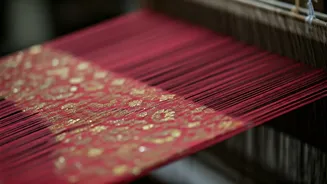
At first glance, Jamdani captivates with its ethereal beauty. It’s a fine, sheer cotton muslin, so light it was once poetically called 'woven air'. But what makes it truly remarkable are the intricate motifs that appear to float on its surface. These
are not printed or embroidered on, but woven directly into the fabric by hand using a discontinuous weft technique. This incredibly labour-intensive process means that a weaver manually introduces each supplementary thread to build the design, line by line. The name itself, from the Persian words 'jam' (flower) and 'dani' (vase), hints at its legacy of delicate, nature-inspired patterns. Each design—be it a floral vine, a geometric pattern, or a traditional paisley—is a testament to the weaver's skill and patience, making every Jamdani piece unique.
A Rich History and Royal Patronage
The roots of Jamdani run deep in the fertile soil of Bengal, with a history stretching back over two millennia, though it reached its zenith under the patronage of the Mughal emperors. This was the fabric of royalty, treasured in courts for its unparalleled artistry. Mughal empress Nur Jahan was a known patron, helping to establish Jamdani as a symbol of luxury and refined taste. However, the arrival of British colonial rule and the influx of cheaper, machine-made textiles led to a sharp decline in this heritage craft, pushing it to the brink of extinction. The handloom industry suffered, and the generational knowledge of Jamdani weaving became endangered. It took a concerted effort during India's independence movement and a renewed, modern appreciation for indigenous crafts to begin its revival.
The Soul of the Artisan
To understand the meaning in a Jamdani textile is to understand the life of its weaver. This is not a mechanical process; it is a human one. The creation of a single sari can take weeks, even months, depending on the complexity of the design. The patterns are often held in the master weaver's memory, passed down through generations within a family or from a guru to a disciple. This transmission of knowledge is so vital that in 2013, UNESCO recognised the traditional art of Jamdani weaving as an Intangible Cultural Heritage of Humanity, highlighting its cultural significance and the need for its preservation. Choosing to wear Jamdani is a direct acknowledgment of this human element—the skill, dedication, and artistic soul embedded in every thread. It supports a community of artisans and helps keep an ancient art form alive.
From Heirlooms to High Fashion
Today, Jamdani is experiencing a powerful renaissance. It's no longer just the treasured heirloom tucked away for special occasions but a versatile fabric finding its place in the modern Indian wardrobe. Designers are reinterpreting this classic weave into contemporary silhouettes like dresses, jackets, and scarves, blending its traditional charm with modern aesthetics. This revival is also being championed by some of India’s most influential figures, who have worn Jamdani on national and international stages, bringing it back into the language of modern luxury. As consumers become more conscious of the stories behind their clothes, Jamdani offers a meaningful alternative to mass-produced fashion. It represents a connection to heritage, a commitment to sustainability, and an appreciation for true craftsmanship.