






What Exactly is a Carat?
Before you can choose the right gold, it's essential to understand what 'carat' (often abbreviated as 'K' or 'Kt') means. It's not the same as the 'carat' used to weigh diamonds. For gold, carat is a measure of purity. The system works on a scale of 24
parts. So, if a piece of jewellery is 24 carat, it means all 24 parts are pure gold. Because pure gold is naturally very soft and malleable, it's often mixed with other metals, called alloys, like copper, silver, zinc, or nickel. These alloys increase the metal's strength and durability, making it suitable for crafting into jewellery that can withstand daily wear. The carat number tells you the ratio of pure gold to these other alloys in your piece.
The Gold Standard: 24 Carat (24K)
24K gold is the purest form you can get, boasting 99.9% gold content. It has a distinct, bright yellow hue and holds the highest value due to its purity. However, this purity comes with a significant drawback: softness. 24K gold is so malleable that it can easily bend, scratch, and deform, making it unsuitable for most forms of jewellery, especially intricate designs or pieces intended for regular wear. In India, you'll typically find 24K gold in the form of investment-grade coins and bars rather than wearable ornaments.
The Popular Choice: 22 Carat (22K)
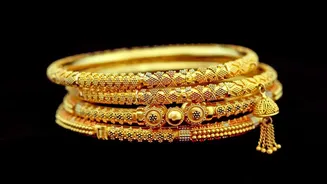
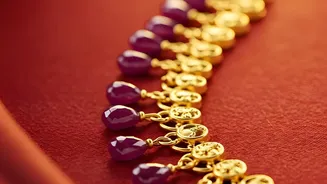
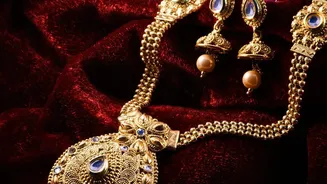
Containing 91.6% pure gold (marked with a '916' stamp), 22K gold is the traditional favourite for plain gold jewellery in India, especially for weddings and festivals. The remaining 8.4% consists of alloys that give it more strength than 24K gold. This makes it durable enough for creating detailed and ornate designs that are central to Indian craftsmanship. While it offers a rich, beautiful yellow colour close to pure gold, it is still relatively soft compared to lower carats and may not be the ideal choice for pieces that are worn every single day or for setting delicate gemstones.
The Durable All-Rounder: 18 Carat (18K)
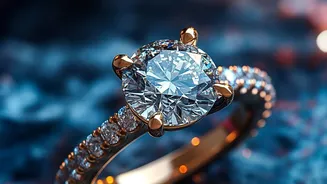
Composed of 75% pure gold and 25% alloys (marked with a '750' stamp), 18K gold strikes an excellent balance between purity, durability, and affordability. This increased alloy content makes it significantly more durable and scratch-resistant than 22K gold. Its strength makes it the preferred choice for diamond and gemstone-studded jewellery, as it can hold stones more securely. While its colour is a slightly lighter yellow than 22K, it is considered the global standard for fine, everyday luxury jewellery. For engagement rings, daily-wear earrings, and bracelets, 18K is often the most practical and popular option.
Practical & Affordable: 14K and Lower
For those who prioritize durability and budget, 14K gold (58.3% pure gold) and even 10K gold (41.7% pure gold) are excellent options. The higher percentage of alloys makes these metals very strong and resistant to the wear and tear of an active lifestyle. This makes them perfect for trendy, lightweight pieces, daily-wear rings, and for individuals who work with their hands. The trade-off is a lower gold content, which means a paler yellow colour and lower intrinsic value, but for many, the enhanced durability and accessible price point are worth it. People with sensitive skin should note that the higher alloy content can sometimes cause irritation, making 18K or higher a better choice for them.
A Guarantee of Purity: The BIS Hallmark
No matter which carat you choose, the most important thing to look for is the BIS Hallmark. This is a certification from the Bureau of Indian Standards, the national standards body of India, which guarantees the purity of the gold you are buying. Since June 2021, hallmarking has been made mandatory for gold jewellery sold in India. A hallmarked piece will have a laser-engraved stamp that typically includes the BIS logo (a triangle), the carat and fineness (e.g., '22K916' for 22K gold), and a unique identification number of the hallmarking centre. This mark is your assurance against being sold lower-purity gold and ensures you get exactly what you paid for.