





An Ambitious Conservation Plan
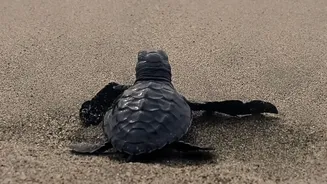
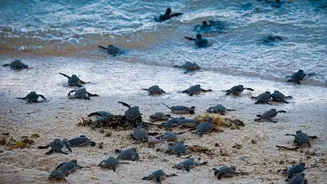
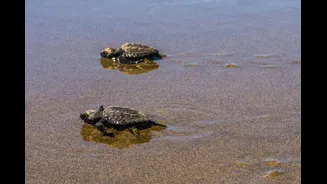
Goa's Forest Department has sent a significant proposal to the state's Environment Department, recommending that 24 beaches be officially declared as olive ridley turtle nesting sites. This list includes 10 beaches in North Goa and 14 in South Goa. The
move aims to provide stronger legal protection for these coastal stretches under the Coastal Regulation Zone (CRZ) Notification, 2019. If approved, this designation would classify the beaches as CRZ-I, the most ecologically sensitive category, recognising their importance in maintaining the coastal ecosystem. This proposal comes amid concerns over a recent decline in nesting numbers compared to previous years, prompting a push for more robust conservation measures.
Why Tourist Hotspots Baga and Calangute?
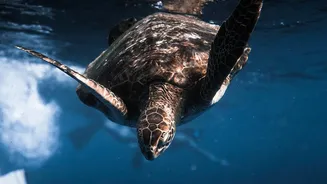
The inclusion of hyper-commercialised beaches like Baga, Calangute, and Candolim has raised eyebrows and initiated a debate. Traditionally, Goa’s recognised turtle nesting habitats are the quieter beaches of Morjim and Mandrem in the north, and Agonda and Galgibaga in the south. While these sites see regular nesting, the Forest Department's new list includes beaches where nesting is sporadic or based on historical data. The rationale appears to be pre-emptive and comprehensive. By including a wider range of beaches where turtles have been known to lay eggs, even if infrequently, the department aims to create a wider safety net for the endangered species. The olive ridley turtle is a Schedule I species, afforded the highest level of protection under Indian law.
What 'Protection' Could Mean for Beaches
Declaring a beach a turtle nesting site triggers a specific set of regulations designed to protect the habitat, especially during the nesting season from October to May. This could lead to much stricter controls on beach activities. Potential restrictions include tighter regulations on the operation of beach shacks, a ban on bright, artificial lighting that disorients turtles, and curbs on loud music, events, and vehicle movement on the sand, particularly at night. For beaches like Baga and Calangute, which are the epicentre of Goa's nightlife and tourism economy, such regulations would represent a fundamental shift in how they are managed and operated.
A Brewing Conflict: Tourism vs. Turtles
The proposal has already sparked concern among those whose livelihoods depend on beach tourism. The Shack Owners Welfare Society has expressed worries that the move could devastate the entire tourism industry, not just shack operators. Stakeholders argue that they were previously assured that protections would be limited to specific, well-known nesting stretches. There is a growing call for clarity from the government on the exact nature of the proposed restrictions. Fishermen, particularly those using traditional 'rampon' nets, fear their livelihood could be declared illegal. Tourism bodies in Canacona, where eight beaches are on the list, have warned of a 'financial catastrophe' and are preparing to oppose the plan, advocating for a balance between environmental protection and the local economy.
The Path Forward
The Forest Department’s letter is currently a proposal, and the decision rests with the Department of Environment and Climate Change. The process from here involves a detailed environment management plan for the ecologically sensitive areas. This plan will be based on maps and data to outline specific measures. The proposal sets the stage for a crucial discussion about Goa's future: can it expand its conservation footprint to protect its vulnerable wildlife while sustaining the tourism engine that powers its economy? The coming months will likely see intense negotiations between government departments, environmentalists, and tourism stakeholders to find a workable solution.