





A Home in the Heavens by 2035
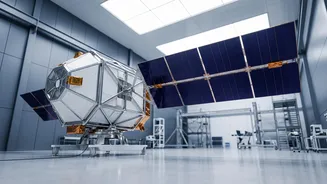
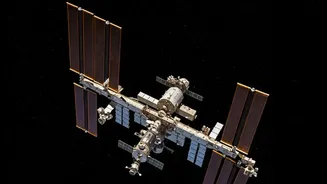
The Bharatiya Antariksha Station is India's ambitious plan to build and operate its own modular space station in Low Earth Orbit, approximately 400-450 kilometres above our planet. The project envisions a 52-tonne, five-module orbital outpost assembled
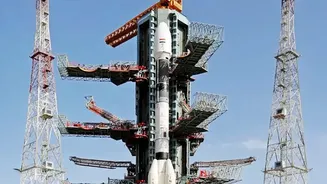
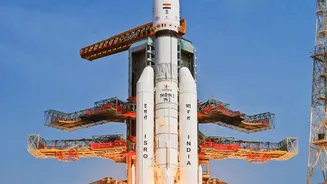
in space. The timeline is phased, with the first module, BAS-01, slated for launch by 2028 using an LVM3 rocket. The complete station, featuring a base module, core-docking module, science lab, and other components, is targeted for completion by 2035. Once operational, it will be able to host crews of three to four astronauts for missions lasting several months, making it only the fourth such government-operated facility after those of the US, Russia, and China.
A New Frontier for Science
So, what changes once India has its own orbiting lab? The primary shift will be the ability to conduct long-term, complex scientific experiments in a microgravity environment. This is a game-changer for Indian science. Researchers will gain a dedicated platform for disciplines like materials science, pharmaceuticals, and biology. Studying how crystals grow, alloys form, and cells behave without the interference of gravity can lead to breakthroughs in manufacturing and medicine on Earth. The station will also be crucial for human-centric research, allowing ISRO to study the long-term effects of space travel on the human body. This knowledge is not just academically interesting; it is essential for ensuring the health and safety of astronauts on future long-duration missions, including a planned crewed lunar landing by 2040.
The Strategic and Economic Ripple Effect
Beyond pure science, the BAS holds immense strategic value. Having an independent space station grants India autonomy in its space activities. It will no longer need to rely on international partners for access to a microgravity lab, giving it full control over research priorities and mission schedules. This elevates India's stature as a major space power, positioning it to play a key role in shaping the future rules of space exploration. Economically, the project is expected to be a massive catalyst. It will drive demand for private sector participation in building everything from launch services and robotics to life-support systems and cargo vehicles. This will help transition Indian industry from being mere component suppliers to partners in a complex, high-tech national programme, boosting the entire space ecosystem.
Paving the Way to the Station and Beyond
The space station isn't being built in a vacuum. It is the logical successor to the Gaganyaan programme, which is developing the core technologies for human spaceflight. The experience gained from Gaganyaan—from life support systems to crewed capsules—is foundational for the station. Furthermore, ISRO has already successfully demonstrated critical docking technology with its SpaDeX mission, proving it can join two spacecraft in orbit, a prerequisite for modular station assembly. To lift the heavier modules of the station into orbit, ISRO is also developing a powerful Next Generation Launch Vehicle (NGLV). This reusable rocket will be essential for servicing the station and for achieving India’s even more ambitious goals, like sending astronauts to the Moon.