




An Invisible Threat from Space
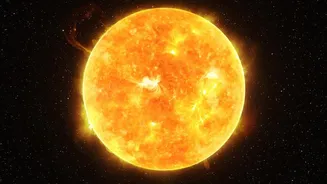
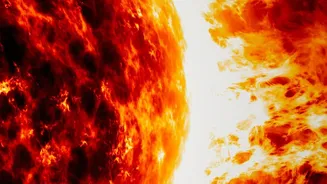
A solar storm is a powerful eruption on the Sun's surface, which can include solar flares or coronal mass ejections (CMEs). These events launch vast clouds of charged particles and magnetic fields into space. While Earth’s magnetic field and atmosphere
protect humans from direct harm, our technology is far more vulnerable. If a strong storm is aimed at our planet, it can trigger a geomagnetic storm — a major disturbance of Earth's magnetosphere that can have serious consequences on the ground and in orbit. These aren't a new phenomenon; the most famous historical event was the 1859 Carrington Event, which set telegraph offices on fire. In today’s hyper-connected world, a similar storm could be far more disruptive.
How Space Weather Hits Home
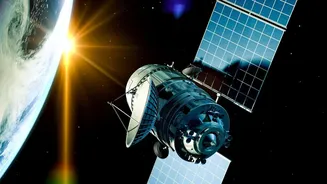
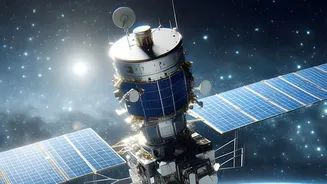
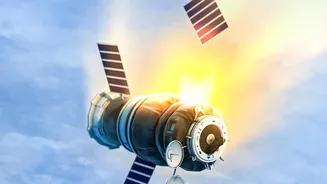
The danger of a geomagnetic storm lies in its ability to induce powerful electrical currents. When these currents surge through power grids, they can overwhelm systems, damage critical transformers, and potentially cause widespread, long-lasting blackouts. In space, the threat is just as severe. The flood of energetic particles can damage the sensitive electronics of satellites, disrupting everything from GPS navigation and telecommunications to credit card transactions and weather forecasting. For the thousands of active satellites orbiting Earth, including India's extensive network, severe space weather can also increase atmospheric drag, causing them to lose altitude and requiring operators to perform corrective manoeuvres to avoid damage or re-entry.
The Global Watchtowers
Fortunately, we aren't flying blind. A sophisticated global network of observatories constantly monitors the Sun. A key player is the U.S. National Oceanic and Atmospheric Administration's (NOAA) Space Weather Prediction Center (SWPC). Using data from ground-based telescopes and satellites like the Deep Space Climate Observatory (DSCOVR), which sits 1.5 million kilometres from Earth, forecasters can spot a CME shortly after it leaves the Sun. This can provide anywhere from minutes to days of warning before the storm reaches our planet. The SWPC issues watches, warnings, and alerts using a simple 1-to-5 scaling system for different types of events — geomagnetic storms (G-scale), solar radiation storms (S-scale), and radio blackouts (R-scale) — to clearly communicate the potential impact.
India's Eye on the Sun
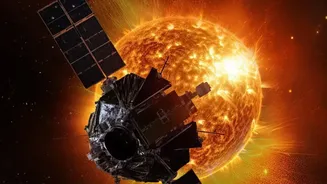
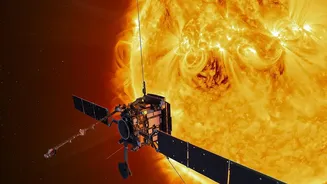
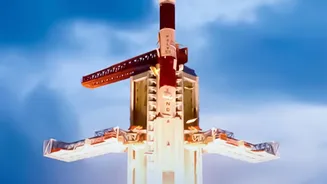
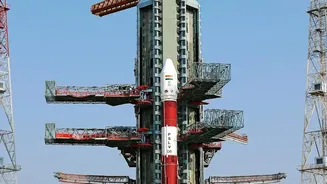
India has become a vital contributor to this global effort with its Aditya-L1 mission. Launched by the Indian Space Research Organisation (ISRO), this state-of-the-art solar observatory is also positioned at the L1 Lagrange point, giving it an uninterrupted 24/7 view of the Sun. Aditya-L1's instruments provide crucial data on solar flares and CMEs, significantly boosting India's ability to forecast space weather and protect its own critical infrastructure. This includes a fleet of more than 50 operational satellites that are essential for communications, defence, and national development. Recent research using Aditya-L1 data has already provided new insights into the early warning signs of solar flares, solidifying India's position as a leader in space science and preparedness.
From Alert to Action
An early warning is only useful if it leads to action. When a significant solar storm alert is issued, infrastructure operators spring into motion. Power grid managers can take preventative measures to protect their networks from electrical surges, potentially preventing billions of dollars in damage. Satellite operators can power down sensitive components, reorient their spacecraft to offer more protection, or make small orbital adjustments to minimise atmospheric drag. Airlines may even reroute flights away from polar regions to protect passengers and crew from increased radiation exposure and to avoid communication blackouts. These proactive steps are the final, critical link in a chain that begins with an eruption on the Sun and ends with keeping our lights on and our digital world running smoothly.