
Why Venus? Earth’s Fiery Twin
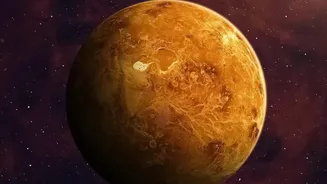
Venus is often called Earth's sister planet due to its similar size, mass, and density. Yet, it is the most hostile planet in our solar system. Its surface is a scorching 460°C, hot enough to melt lead, under a crushing atmospheric pressure 90 times that
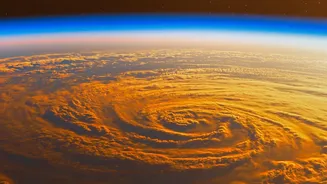
of Earth's. The planet is perpetually shrouded in thick clouds of sulfuric acid, making direct observation of its surface impossible with conventional telescopes. Scientists are fascinated by Venus because it represents a cautionary tale of a runaway greenhouse effect, a process that transformed a once-potentially-habitable world into a planetary furnace. By studying why Venus evolved so differently from Earth, scientists hope to gain critical insights into planetary evolution, climate change dynamics, and the conditions that make a planet habitable.
Shukrayaan-1: India's Ambitious Next Step
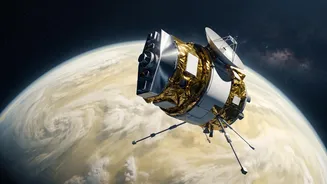
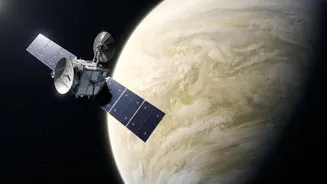
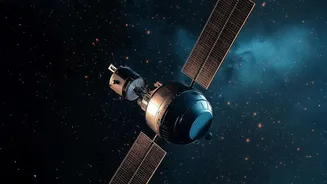
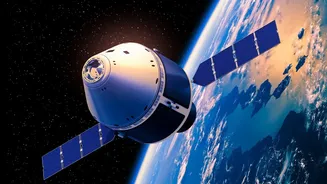
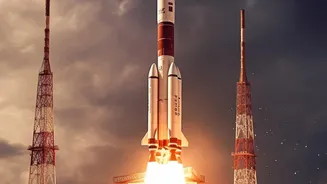
Following the monumental successes of the Chandrayaan (Moon) and Mangalyaan (Mars) missions, Shukrayaan-1 is ISRO's first dedicated mission to Venus. Formally approved by the Indian Cabinet in September 2024, the Venus Orbiter Mission is slated for a March 2028 launch aboard the heavy-lift LVM-3 rocket. The spacecraft will embark on a 112-day journey to reach its destination. Once there, it will enter a large elliptical orbit, allowing its instruments to gather data from varying altitudes, from as close as 200 km to as far as 60,000 km. The mission's primary goals are to map the planet's surface and subsurface, analyze its complex atmospheric chemistry, and study the interaction between the Venusian atmosphere and the solar wind.
Peering Beneath the Veil
A key challenge in studying Venus is its impenetrable cloud cover. Shukrayaan-1 is equipped with advanced payloads specifically designed to overcome this obstacle. The centerpiece of this effort is a high-resolution Synthetic Aperture Radar (SAR). Unlike optical cameras, radar can penetrate clouds, darkness, and bad weather to create detailed maps of the surface below. This will allow ISRO to investigate geological features like volcanoes, lava flows, and large impact craters with unprecedented clarity. Even more groundbreaking is the inclusion of a ground-penetrating radar, an instrument that will conduct the first-ever subsurface study of Venus by any spacecraft. This technology aims to probe several metres below the surface to understand its geological layers and history.
A Toolkit for an Alien World
Shukrayaan-1 will carry a payload of approximately 100 kg, comprising around 19 scientific instruments from Indian institutions and international partners, including Russia, Sweden, and Germany. These sensors will perform a wide range of investigations. One instrument, VIRAL, developed in collaboration with Russia, will analyze the Venusian atmosphere for trace gases, including phosphine, a potential, though not definitive, indicator of biological processes. Another key instrument, the Venusian Neutrals Analyser (VNA) from Sweden, will study how charged particles from the sun interact with the planet's atmosphere. Other tools will monitor for lightning, study cloud structure, map volcanic hotspots, and analyze the composition of the upper atmosphere, providing a comprehensive picture of this dynamic world.
India's Growing Role in Space
The Shukrayaan-1 mission is more than just a scientific endeavor; it's a statement of India's expanding capabilities and ambitions in planetary exploration. By tackling the immense challenges of a Venus mission, ISRO joins a select group of space agencies that have successfully explored the inner solar system. The mission builds upon decades of expertise and showcases India's ability to design, manage, and execute highly complex interplanetary projects. The international collaborations on payloads, such as with Sweden and Germany, also highlight India's growing importance as a partner in global space science. The discoveries from Shukrayaan will not only contribute to the global understanding of Venus but will also inspire a new generation of scientists and engineers across India.