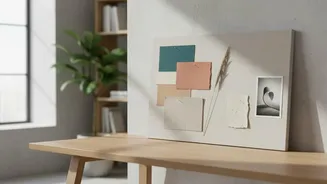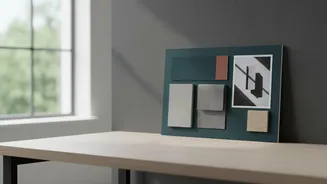


The Old Way vs. The New Workflow
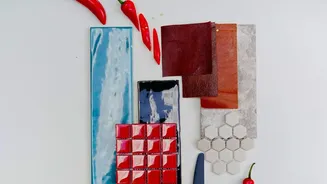
Traditionally, creating a mood board meant hours spent scouring Pinterest, design blogs, and stock photo sites, followed by painstakingly arranging those assets into a cohesive collage. The process, while creative, is laborious. Generative AI flips this
model. Instead of hunting for images, designers now write descriptive text prompts. For example, typing “a mood board for a fintech app targeting Gen Z, with a neon-on-dark-mode aesthetic, inspired by cyberpunk visuals” can yield a complete, curated set of visuals in seconds. This transforms the designer's role from a manual collector to a creative director, guiding the AI to a desired outcome.
How AI-Assisted Mood Boarding Works
The new workflow begins not with a blank canvas, but with a conversation with an AI model. Designers use natural language to describe the project's purpose, target audience, desired style, and color palette. Tools like Adobe Firefly, Midjourney, or specialized platforms like MoodyBoards then generate a collection of original or curated images, textures, and even typographic styles that fit the brief. The artist can then refine the output, swapping individual images, tweaking color schemes, or iterating on the prompt to explore different creative directions. This rapid experimentation allows for a much wider range of concepts to be explored in the initial phase of a project.
The Benefits for Indian Freelancers
In a competitive market like India, speed and efficiency are critical for freelancers. Automating mood board creation allows designers to accelerate project kick-offs significantly, reducing turnaround times and enabling them to handle more clients. It’s a powerful tool for overcoming creative blocks, offering unexpected visual combinations that can spark fresh ideas. This speed also translates into better client service. A freelance designer can now present multiple, fully-realised visual directions in an initial client meeting, making a stronger impression and facilitating clearer communication about the project's aesthetic from day one.
Leading Tools in the AI Arsenal
A variety of tools are enabling this shift. General-purpose image generators like Midjourney are known for creating atmospheric and artistic visuals perfect for conceptual mood boards. Adobe Firefly is deeply integrated into the Creative Cloud ecosystem, allowing for a seamless flow from mood board to production in apps like Photoshop and Illustrator. Platforms such as Canva have also integrated AI features, allowing users to generate design concepts and mood boards from simple text prompts. For freelancers, the choice of tool often depends on their existing workflow, budget, and whether they need to generate wholly original images or simply assemble concepts quickly.
Human Curation Remains Irreplaceable
While AI provides a powerful starting point, it doesn't eliminate the need for a professional designer's eye. The technology is a co-pilot, not the pilot. AI can generate visually coherent images, but it lacks the deep contextual understanding of a specific brand's history, cultural nuances, or the strategic goals of a campaign. The designer's crucial role shifts to curation, selection, and refinement. They must still use their expertise to filter the AI's output, ensuring the final mood board is not just aesthetically pleasing but also strategically sound and unique. The value is in the designer's taste and ability to tell a compelling story, using AI as a super-fast assistant.