







The Current Confusion in the Aisles
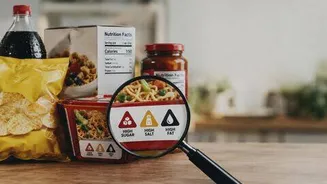
For years, Indian consumers have had to be detectives to understand what’s in their packaged food. Nutritional information is typically found in a dense table on the back of the pack, using terms and measurements that are hard to quickly compare. When
you're trying to decide between two brands of instant noodles or breakfast cereals, flipping them over to compare grams of saturated fat or sodium per 100g serving is impractical for most shoppers. This complexity makes it difficult to make a quick, informed decision about which product is the healthier option for your family.
Enter the Front-of-Pack Warning Label
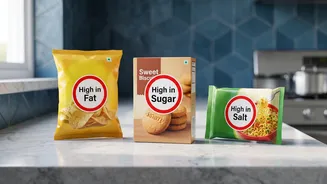
To solve this problem, the Food Safety and Standards Authority of India (FSSAI) is moving towards a new system called Front-of-Pack Labelling (FoPL). Instead of complex charts, this system uses a simple, highly visible warning label. The latest proposal involves a red hexagon on the front of a product that is high in nutrients of concern like sugar, salt, or saturated fat. The idea is straightforward: if a food or drink exceeds a certain limit for these unhealthy ingredients, it gets a clear warning, such as "HIGH SUGAR." This move follows a directive from the Supreme Court, which has been pushing for a clearer system to help citizens make healthier choices.
From Stars to Stop Signs
Previously, the FSSAI had considered a 'Health Star Rating' system, similar to what's used in Australia. This model would have rated foods from half a star (least healthy) to five stars (healthiest). However, recent discussions have shifted decisively towards warning labels. Many health experts argue that warning labels are more effective. While a star rating tells you how 'good' a product is, a warning label acts like a stop sign, immediately flagging it as an unhealthy choice. Studies have shown that simple, bold warnings are quicker for consumers to spot and understand compared to other labelling systems like traffic lights or star ratings.
What Global Evidence Shows
India isn't inventing the wheel here. Several countries, particularly in Latin America, have already implemented mandatory warning labels with impressive results. In Chile, the introduction of black octagonal warning signs led to significant drops in household purchases of products high in sugar, sodium, and saturated fat. One study found that purchases of sugary drinks with warning labels fell by nearly 24%. These laws not only changed consumer behaviour but also prompted food companies to reformulate their products to avoid the negative label, resulting in healthier options on the shelves. The mandatory nature of these labels has been identified as a critical factor in their success.
How This Will Change Your Shopping
Once implemented, these labels will make comparisons effortless. Imagine picking up two different packets of 'namkeen'. A quick glance at the front will tell you if one is high in salt while the other is not. The choice becomes immediate and intuitive. You won't need to be a nutritionist to understand that a product with a "HIGH FAT" warning is something to be consumed in moderation. The goal is to empower you to make a better choice at a glance, taking the guesswork out of your grocery run. It simplifies the decision-making process, allowing you to easily compare similar products and opt for the one without a warning, promoting a healthier lifestyle without needing to decipher complex data.