






Meet the Astronaut
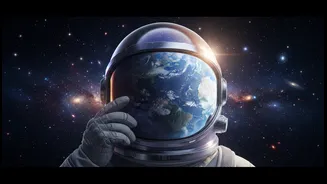
Dr. Anil Menon, 49, is a US Space Force colonel, an emergency physician, and now, a NASA astronaut about to make his first journey into orbit. Born in Minneapolis, Minnesota, to immigrant parents from India and Ukraine, his journey to the stars has been
remarkable. His career is a unique blend of medicine, military service, and space exploration. He served as a first responder in disasters like the 2010 Haiti earthquake and the 2015 Nepal earthquake. He also has a direct connection to India, having spent a year there as a Rotary Ambassadorial Scholar to support polio vaccination efforts. Before being selected as an astronaut in 2021, Menon was NASA’s crew flight surgeon for several ISS missions and later became SpaceX's first-ever flight surgeon, where he helped launch the company's first human spaceflights.
The Mission Ahead
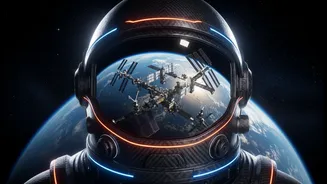
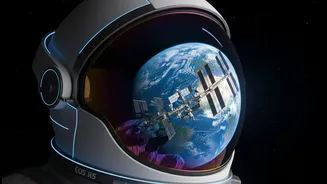
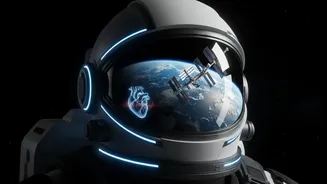
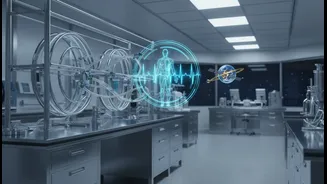
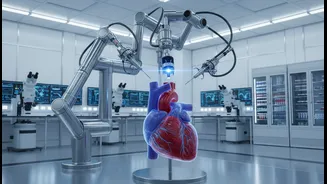
Menon is scheduled to launch aboard a Roscosmos Soyuz MS-29 spacecraft from the Baikonur Cosmodrome in Kazakhstan, alongside cosmonauts Pyotr Dubrov and Anna Kikina. Their destination is the International Space Station (ISS), where they will join the Expedition 74 and 75 crews for an eight-month stay. His mission is packed with scientific objectives. As a physician, Menon will be central to experiments studying the physiological effects of long-duration spaceflight on the human body. He will research how microgravity impacts blood flow and vein structure, which is crucial for planning future deep-space missions to the Moon and Mars. He will also work on developing key technologies, such as producing IV fluids from the station’s drinking water and refining the manufacturing of semiconductor crystals in space.
A Beacon of Inspiration
For many in India, Menon’s flight carries immense symbolic value. He follows in the footsteps of pioneers like Rakesh Sharma, the first Indian citizen in space, and Indian-origin astronauts like Kalpana Chawla and Sunita Williams, who have inspired generations. The sight of an astronaut with Indian heritage working aboard the world’s leading orbital laboratory can ignite the imagination of millions of students, encouraging greater interest in science, technology, engineering, and mathematics (STEM). This “hero effect” is a powerful catalyst for a nation with ambitious goals in science and technology. It reinforces the idea that with dedication, even the most challenging frontiers are within reach.
Connecting to India's Space Ambitions
While Menon's mission is for NASA, it aligns perfectly with India's own growing space aspirations. The Indian Space Research Organisation (ISRO) is deep in preparation for its Gaganyaan programme, which aims to send Indian astronauts into space on an Indian spacecraft. The experience and data from missions like Menon's provide invaluable insights into human spaceflight, from safety protocols to managing the effects of zero gravity on the body. His research on medical technologies for deep-space travel could indirectly inform the systems that will keep Indian astronauts safe on future missions. Furthermore, his mission strengthens the collaborative spirit of space exploration, highlighting the crucial partnership between the US and India in this high-tech domain.
More Than Just Science
Menon’s journey represents the modern, globalised nature of scientific endeavour. The son of immigrants, trained at top American universities like Harvard and Stanford, with experience serving in the US military and working at the cutting edge of private spaceflight with SpaceX, his story is one of multicultural achievement. His wife, Anna Menon, is also a key figure in the space industry, having flown on the private Polaris Dawn mission. His flight is a testament to the contributions of the Indian diaspora and serves as a powerful diplomatic bridge. It’s a reminder that space exploration, at its best, is a collaborative effort that brings nations and people together in the pursuit of knowledge.