







The Rocket: GSLV-F17
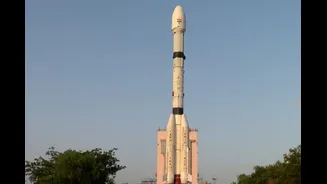
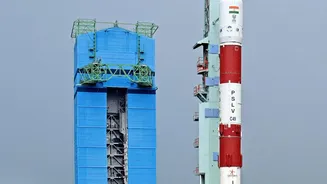
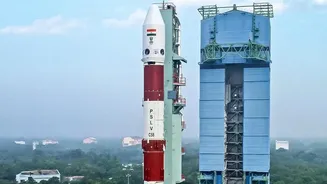
The Geosynchronous Satellite Launch Vehicle (GSLV) is one of ISRO's most powerful rockets, designed to place heavy satellites into high orbits. The GSLV-F17 is a 51.7-metre-tall, three-stage vehicle. Its most critical component is the indigenously developed
cryogenic upper stage, which uses super-cooled liquid hydrogen and liquid oxygen as propellants. This technology provides the immense thrust needed to push satellites into geosynchronous orbits, some 36,000 km above Earth. This mission, the 19th flight for the GSLV, was particularly significant as it followed a previous failure in 2021 when the GSLV-F10 could not complete its mission due to a cryogenic stage anomaly. The success of GSLV-F17 reaffirms ISRO's mastery over this complex and vital technology.
The Satellite: EOS-05, The 'Eye in the Sky'
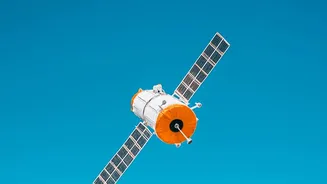
The passenger aboard the rocket was the EOS-05, an advanced Earth observation satellite weighing approximately 2,367 kg. Nicknamed the 'Eye in the Sky,' EOS-05 is India's first geo-imaging satellite designed to operate from a geosynchronous orbit. Unlike satellites in low-Earth orbit that pass over locations intermittently, a satellite in geosynchronous orbit moves at the same speed as the Earth's rotation. This allows it to constantly monitor a large geographical area, providing near real-time imagery of the Indian subcontinent and surrounding regions. Equipped with powerful multispectral imagers, EOS-05 can capture high-resolution pictures day and night, making it a crucial asset for both civilian and strategic purposes.
The Launch: A Fiery Ascent
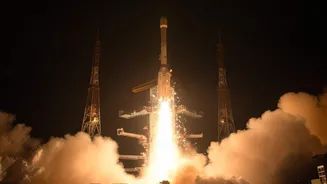
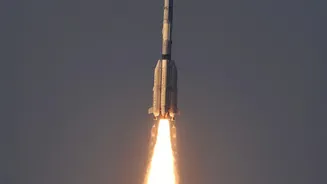
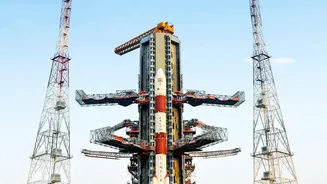
Following a 27.5-hour countdown, the GSLV-F17 lifted off from the Second Launch Pad at the Satish Dhawan Space Centre in Sriharikota at 2:55 AM. The rocket's four liquid-fueled strap-on boosters and solid-propellant first stage ignited, pushing the massive vehicle through the atmosphere. Each stage performed its function perfectly before separating, passing the baton to the next. The most crucial phase was the ignition and performance of the cryogenic upper stage. After a flawless burn, the rocket successfully injected the EOS-05 satellite into its intended Sub-Geosynchronous Transfer Orbit about 18 minutes after liftoff.
What Happens Next in Orbit?
Once separated from the launch vehicle, the EOS-05 began its own journey. ISRO's mission control confirmed that the satellite's health was normal and its solar panels had successfully deployed to start generating power. Over the next few days, scientists at ISRO's Master Control Facility will perform a series of complex orbit-raising manoeuvres. These involve firing the satellite's own onboard liquid apogee motor at strategic points to gradually raise its orbit from the initial elliptical transfer orbit to its final circular perch 36,000 km above the Earth. Once it reaches its designated spot, the satellite will undergo final tests before it is declared operational.
Why This Mission Is a Game-Changer
The EOS-05 mission is a significant enhancement of India's national capabilities. The ability to continuously monitor a specific region provides invaluable data for a wide range of applications. For disaster management, it means being able to track the development of cyclones, floods, and forest fires in near real-time, enabling quicker and more effective response. For agriculture, it can monitor crop health and soil moisture over large areas. The satellite will also play a key role in urban planning, monitoring environmental changes, and providing crucial data for weather forecasting. Furthermore, having a persistent 'eye in the sky' significantly boosts the nation's strategic surveillance capabilities, a critical aspect of national security.