






Step 1: Finding the Unseen
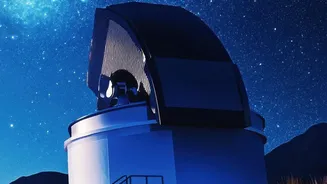
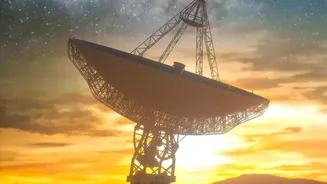
It all starts with discovery. All over the world, powerful telescopes are constantly scanning the night sky, taking pictures of the same patch of space minutes or hours apart. Computers then analyse these images, looking for any 'star' that has moved.
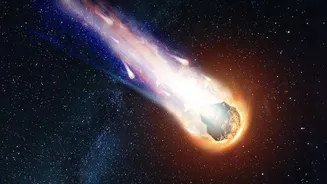
This moving dot could be a previously unknown Near-Earth Object (NEO), the term for an asteroid or comet whose orbit brings it into our planetary neighbourhood. Most of these automated discoveries are made by large, NASA-funded observatories. This initial detection is just the beginning. The information is sent to the Minor Planet Center, the global clearinghouse for all small body observations.
Step 2: Charting a Course Through Space
A single observation isn't enough to determine an asteroid's path. To plot its orbit, astronomers need multiple sightings over days, weeks, and even months. This is where a global network of professional and amateur astronomers jumps into action, performing follow-up observations. This data is fed into powerful computer systems like Scout and Sentry, run by NASA's Center for Near-Earth Object Studies (CNEOS). Scout provides a quick, preliminary risk assessment for newly found objects, while Sentry performs continuous long-term analysis for confirmed asteroids over the next 100 years. Initially, with only a few data points, the potential path of the asteroid is very uncertain, creating a wide 'error ellipse' of possible locations. This is why initial reports can sometimes sound alarming; the asteroid could be anywhere within that large area, which might include Earth.
Step 3: From Probability to a Clearer Picture
As more observations come in, the uncertainty shrinks. With each new data point, astronomers can refine the asteroid's trajectory, making the calculated orbit more precise. In the vast majority of cases, this added precision allows scientists to rule out an impact completely. An asteroid that initially seemed to have a chance of hitting Earth is often found to be passing by at a very safe distance. This is what happened with the asteroid Apophis. In 2004, it briefly held a rating of 4 on the risk scale, the highest ever recorded, but further observations eventually ruled out any impact risk for the foreseeable future. This process is a crucial part of planetary defense, managed by bodies like NASA's Planetary Defense Coordination Office (PDCO), which was established in 2016.
Step 4: Communicating the Risk: The Torino Scale
If an object can't be immediately ruled out, how do scientists communicate the level of concern without causing unnecessary panic? They use the Torino Scale. Adopted in 1999, this 0-to-10 scale is a color-coded system designed to communicate impact hazards to the public and policymakers. A rating of 0 (White) means there is virtually no chance of collision. A 1 (Green) is for a routine discovery that needs more observation but is no cause for public concern. The scale moves up through Yellow and Orange for more threatening situations that require careful monitoring and potential contingency planning. A rating of 10 (Red) signifies that a collision is certain and large enough to cause a global catastrophe. Thankfully, no object has ever remained above a 1 on the scale for long after initial discovery and follow-up.