



A Library Scandal Unfolds
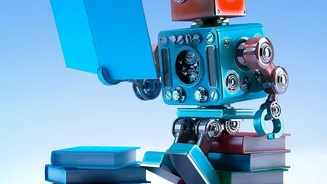
A significant controversy has emerged in Tamil Nadu, centred on the procurement of books for public libraries. Recent developments have brought to light allegations of a large-scale scam involving books that are allegedly generated by artificial intelligence,
plagiarised, or falsely attributed to phantom authors. The issue gained widespread attention following a social media post by a writer that pointed to a 'colossal fraud' in book procurement for a library in Coimbatore. This triggered a public outcry and led to swift judicial action. The case has put publishers like Agal Vilakku Pathippagam under scrutiny, with the court taking a stern view of the matter. The core of the issue revolves around public funds being used to purchase books of questionable origin and quality, undermining the very purpose of a public library as a source of authentic information.
The High Court Steps In
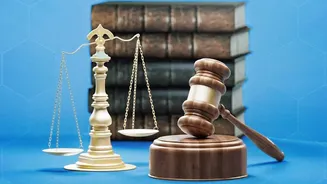
The Madras High Court, taking serious note of the allegations, has stepped in decisively. A bench comprising Justice G.R. Swaminathan and Justice M.D. Sumathi took up the matter while hearing a contempt petition related to the non-implementation of its own 2024 directions for transparent book procurement. The court observed that had its previous orders been followed, the procurement from 'dubious entities' might have been prevented. Expressing concern that a crime of this 'humongous proportion' could not have occurred without the complicity of government officials, the court directed the Directorate of Vigilance and Anti-Corruption (DVAC) to register a First Information Report (FIR) into the scam. It also ordered the freezing of bank accounts of the implicated publisher and directed that officials involved be suspended.
AI and Books of 'Doubtful Taste'
A key aspect of the court's observations was the classification of AI-generated and plagiarised works. The bench referred to the Tamil Nadu Public Libraries Rules, 1950, which prohibit the acquisition of books of 'doubtful taste'. The court expansively interpreted this term to include not just fiction but also non-fiction works with dubious content, false narratives, and those generated by AI or plagiarised. The judges noted that public libraries serve people from ordinary backgrounds who are entitled to presume the authenticity of the books they access. The court pointed out instances where a book falsely attributed to the renowned economist Jean Drèze was found in a library, and works were wrongly credited to the celebrated poet Subramania Bharathi. The court held that stocking libraries with such material infringes upon the citizens' right to receive accurate information under Article 19(1)(a) of the Constitution.
The Broader Implications for AI and Ethics
This case extends far beyond a regional procurement scam; it touches upon the critical and evolving intersection of artificial intelligence, ethics, and law. While Indian courts, including the Madras High Court itself, have begun cautiously exploring AI for tasks like document retrieval, this scandal highlights the technology's potential for misuse. The absence of a specific, comprehensive law governing AI in India means that regulatory frameworks are still catching up. Existing rules under the IT Act primarily deal with intermediaries and 'synthetically generated information' like deepfakes, but do not fully address the nuances of AI-created content in publishing and academia. This incident serves as a stark warning about the need for robust verification mechanisms and clear ethical guidelines for the use of AI. It underscores the challenge institutions face in distinguishing legitimate AI-assisted work from outright fabrication, a problem that demands both technological solutions and stringent human oversight.