






The Mission to the Asteroid Belt
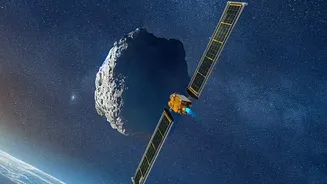
The project is the Emirates Mission to the Asteroid Belt (EMA), an ambitious deep-space probe led by the United Arab Emirates (UAE) Space Agency. Scheduled for launch in March 2028, the mission involves an eight-year, five-billion-kilometre journey to the main
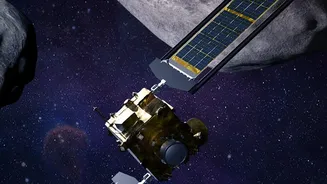
asteroid belt located between Mars and Jupiter. The probe, named the MBR Explorer, will perform fly-bys of six different asteroids before its ultimate destination: a rendezvous with the asteroid 269 Justitia. Once it enters orbit, a separate lander will detach and attempt an autonomous descent to the asteroid's surface, providing invaluable data on the origins of our Solar System.
India's Crucial Contribution
Thiruvananthapuram-based startup HEX20 has been selected by the UAE Space Agency and the Technology Innovation Institute (TII) to develop the spacecraft's core systems. This is the first time an Indian private company has been chosen for a deep-space mission by the Gulf nation. HEX20's role is not minor; the firm is responsible for developing the probe's 'bus'—the main body and primary structure of the spacecraft—as well as its complex software, onboard computer, and power systems. This contribution is fundamental to the entire mission's operation, from navigation to data processing millions of kilometres from Earth.
A 'Made in India' Moment
This collaboration is a powerful endorsement of India's burgeoning private space sector, which has been rapidly gaining momentum since the government opened the industry to non-governmental entities in 2020. For years, India's space story was dominated by the incredible achievements of the Indian Space Research Organisation (ISRO). While ISRO laid the foundation with historic missions like Chandrayaan and Mangalyaan, the selection of HEX20 signals a new chapter. It demonstrates that Indian companies can now compete and win contracts for highly complex, deep-space technologies on the global stage, moving beyond just building components to engineering the very heart of a spacecraft.
The Rise of Private Spacetech
The success of HEX20 is part of a larger trend. Indian space startups are increasingly attracting global attention, capital, and contracts. Companies like Skyroot Aerospace, which is developing its own line of Vikram launch vehicles, have fielded significant international interest and secured launch deals with US and Brazilian firms. Bengaluru-based Pixxel has raised over $100 million from global investors, including Google, for its work on earth-imaging satellites. Meanwhile, Digantara, a space surveillance company, has set up operations in the US and Singapore to service international defence contracts. This ecosystem is being actively fostered by government agencies like IN-SPACe, which was created to promote and authorise private participation in the space sector.
Why This Matters for India
Securing a role in a mission like the MBR Explorer is about more than just national pride; it's about economic opportunity and strategic positioning. The global space economy is transforming, with private players driving innovation. By proving their capabilities in high-stakes interplanetary projects, Indian firms are positioning themselves to capture a larger share of this lucrative market. Pawan Goenka, chairman of IN-SPACe, has noted that Indian startups are 'quite aggressive' in winning orders from abroad and will be highly competitive within years. This milestone proves that India's engineering talent and cost-effective innovation are a potent combination, capable of delivering not just for domestic needs but for the world's most ambitious scientific goals.