






What is a Coffee-to-Water Ratio?
A coffee-to-water ratio is simply a way to describe how much coffee and how much water you are using to brew. It is expressed by weight, for example, 1:16. This means for every 1 gram of coffee grounds, you will use 16 grams of water. This might sound
overly technical, but it’s the single most important variable for achieving a good, repeatable cup of coffee. Without a consistent ratio, you’re just guessing every time you brew, which is why your coffee can taste dramatically different from one day to the next. Adopting this one principle is the fastest way to upgrade your home coffee game.
Why Scoops Are So Inconsistent
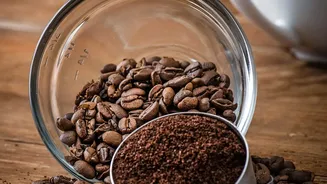
Many people use scoops to measure their coffee, but this method is notoriously unreliable. A scoop of coarsely ground coffee has more air between the particles and weighs less than a scoop of finely ground coffee. Similarly, dense, light-roasted beans will weigh more than the same volume of porous, dark-roasted beans. This means your 'two scoops' could be 12 grams one day and 15 grams the next, a significant difference that will absolutely change the taste of your final cup. Weight, on the other hand, is absolute. A gram is always a gram, which is why a simple kitchen scale is the most essential tool for consistent brewing.
Finding the 'Golden Ratio'
While there is no single ratio that is perfect for everyone, the coffee world has a widely accepted starting point known as the 'golden ratio'. For most pour-over and automatic drip coffee makers, this ratio falls between 1:15 and 1:18. A ratio of 1:16 is often cited as a great, balanced place to begin. So, if you want to make a single large mug of coffee (about 320ml of water), you would use 20 grams of coffee (20 x 16 = 320). The Specialty Coffee Association (SCA) often references a standard of 55 grams of coffee per liter of water, which is roughly a 1:18 ratio, confirming this range as a professional benchmark.
Adjusting the Ratio for Your Brew Method
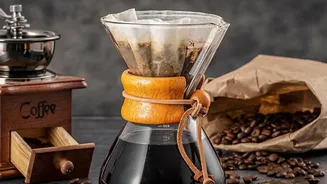
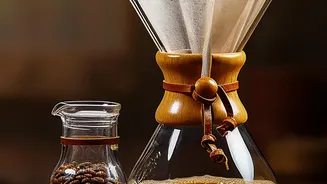
Different brewing methods require slightly different ratios because of how they extract flavour. Immersion methods like a French press, where the grounds steep directly in the water, benefit from a slightly stronger ratio, often around 1:12 to 1:15. This is because the extended contact time requires more coffee to achieve a full-bodied brew without becoming bitter. Pour-over methods like a V60 or Chemex shine in the 1:16 to 1:17 range, which allows their clean, nuanced flavours to come through. Cold brew, which uses no heat, requires a very concentrated ratio like 1:4 or 1:5 to create a concentrate that is later diluted.
How to Experiment and Find Your Perfect Cup
The golden ratio is a starting point, not a strict rule. The best ratio is the one that tastes best to you. Once you start with a 1:16 ratio, you can begin to make adjustments based on your preference. If your coffee tastes too strong or intense, try a 'looser' ratio like 1:17 or 1:18 (using more water for the same amount of coffee). This will result in a lighter, more diluted cup. If your coffee tastes weak, try a 'tighter' ratio like 1:15 (using less water). This will produce a more concentrated, stronger brew. The key is to only change one variable at a time. By keeping your ratio consistent, you can then experiment with other factors like grind size to fine-tune the flavour even further.