



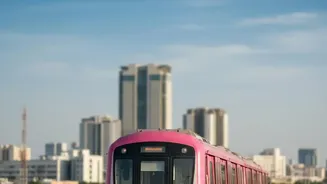
A New Benchmark for Delhi's Metro
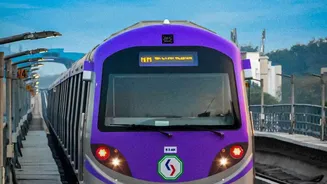
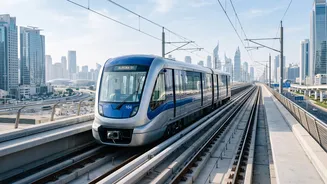
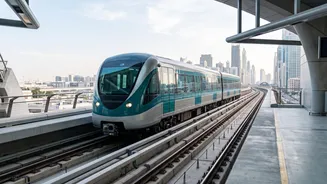
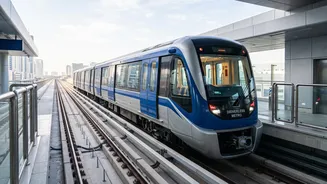
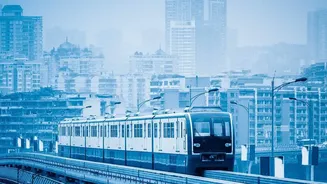
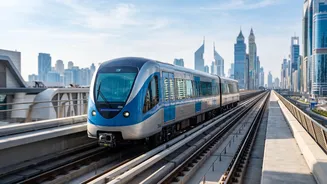
During the pre-Diwali rush on November 2, the driverless trains on Delhi Metro’s Magenta and Pink lines carried a staggering 1.6 million passengers in a single day. This figure is not just a number; it represents a significant operational achievement.
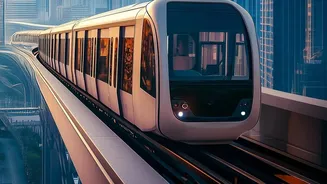
It meant that approximately one in every five passengers across the entire Delhi Metro network on that day travelled on a train with no human operator in the cabin. The milestone underscores the growing public trust and reliance on the Unattended Train Operation (UTO) system, which was first introduced in India in 2020. This surge in ridership, happening just before the peak festival travel period, serves as a powerful real-world stress test for the automated system's capacity and efficiency.
The Driverless Corridors of Power
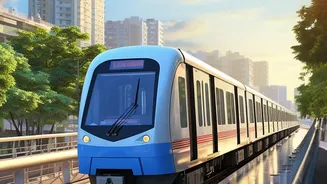
The record-setting performance was confined to two of the network's most modern corridors: the Magenta Line and the Pink Line. Together, these lines cover nearly 120 kilometres of the metro's vast network, accounting for about 29% of its total length. The Delhi Metro Rail Corporation (DMRC) currently operates 100 driverless trains across these two lines, making it one of the largest driverless metro networks globally. Driverless operations on the Magenta Line began in December 2020, followed by the Pink Line in November 2021. The technology behind these trains relies on advanced automated systems for control and signalling, which helps reduce human error and allows for greater flexibility in service scheduling. With ongoing expansion projects, the driverless network is set to expand to nearly 198 kilometres, further cementing its role in the capital's transport infrastructure.
Why This Record Matters
Achieving such high ridership on the automated lines is significant for several reasons. According to DMRC's Managing Director, Vikas Kumar, the UTO system brings more flexibility to train operations, improves the availability of coaches, and enhances reliability through exhaustive self-tests before each service run. This operational efficiency is crucial as the overall metro network continues to grow. The DMRC has maintained a punctuality rate of 99.95% in 2026, a world-class standard. This reliability, now proven on its automated lines at scale, is vital for a city where millions depend on the metro daily. The success has also sparked a nationwide debate on whether other metro projects across India's 26 cities with operational networks should adopt the driverless model. While critics raise concerns about high upfront costs and potential job displacement, the DMRC has stated that no train operators have been laid off, but have been redeployed to other essential roles like station management and crowd control.
Gearing Up for the Festival Crush
The timing of this ridership milestone is crucial, coming just before the annual Diwali travel rush. For the festival, the DMRC has already announced revised timings to manage the expected surge in commuters. On Diwali day, November 8, 2026, train services on the Pink and Magenta lines (along with the Grey Line) began an hour earlier, at 6 AM instead of the usual 7 AM on Sundays. However, to allow staff and commuters to participate in evening festivities, the last train services from all terminal stations departed an hour earlier, at 10 PM instead of 11 PM. These adjustments are designed to smooth out travel patterns during one of the busiest times of the year. The demonstrated capacity of the driverless lines to handle over 1.6 million passengers provides a degree of confidence that the system can withstand the immense pressure of holiday travel, ensuring a safer and more predictable journey for lakhs of people.