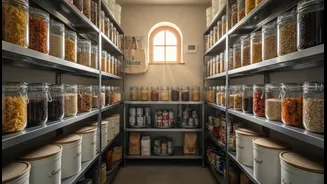









Assess Your Home's Unique Environment
Before buying a single extra bag of rice, take a critical look at your storage space. India's diverse climate means a pantry in a humid coastal city faces different challenges than one in a dry northern region. During the monsoon season, soaring humidity
can make dry goods like biscuits soggy, cause spices to clump, and encourage mould growth. In the peak of summer, high ambient heat can turn the natural oils in whole-grain flours and nuts rancid. Consider your home's specific conditions. Is your kitchen prone to dampness? Do you live in a compact apartment where space is at a premium, or a larger house with a cooler, dedicated storeroom? Identifying your primary challenges—be it heat, humidity, pests, or limited space—is the first step to building a pantry that lasts.
The Battle Against Heat and Humidity
Moisture and warmth are the biggest enemies of long-term food storage. To combat them, airtight containers are non-negotiable. Transfer items like flour, lentils (dals), sugar, and spices from their original paper or plastic bags into glass or high-quality, food-grade plastic containers with silicone seals. This creates a barrier against both moisture and common pantry pests like weevils and beetles. For an extra layer of protection in very humid areas, consider placing food-safe silica gel packets inside containers with dry goods. Store your pantry items in a cool, dark cupboard away from the stove and direct sunlight. Heat accelerates spoilage, and light can degrade the quality of oils and spices. Creating air circulation by not overcrowding shelves and ensuring a small gap between containers and walls can also prevent pockets of stagnant, humid air from forming.
Choosing Climate-Resilient Foods
The foundation of a robust backup pantry lies in choosing items with a naturally long shelf life that can withstand temperature fluctuations. White rice is a better long-term choice than brown rice, as its lower oil content prevents it from going rancid. Similarly, whole spices last significantly longer than their ground counterparts. Stock up on staples of the Indian kitchen like dried legumes—chickpeas, kidney beans, and various dals—which can last for years if kept dry. Low-acid canned goods like corn and carrots are also excellent, with a shelf life of two to five years. Ghee, with its low moisture content, is a more shelf-stable fat than many cooking oils. For sweeteners, honey and sugar can last virtually forever if sealed properly. Consider bouillon cubes or powder for a long-lasting flavour base for soups and curries.
Smart Storage for Small Spaces
In many urban Indian homes, space is the biggest constraint. However, a small footprint doesn't rule out a functional backup pantry. The key is to think vertically. Use tall, narrow cabinets that maximise vertical space without cluttering the floor. Stackable shelves can double the storage capacity within an existing cupboard. Look for under-utilised spaces, like under the bed or on top of wardrobes, for storing less frequently used bulk items. When space is tight, focus on multi-purpose ingredients. For example, a versatile lentil like toor dal can be used in more dishes than a speciality grain. Prioritise clear, stackable containers so you can see what you have at a glance, preventing duplicate purchases and making items easier to find.
The Golden Rule: Rotate Your Stock
A backup pantry is not a time capsule. To prevent food from expiring and going to waste, practice the "First-In, First-Out" (FIFO) method. When you buy a new package of an item, move the older one to the front of the shelf to ensure it gets used first. Regularly check expiration dates on all your items, especially canned goods and packaged mixes. It’s helpful to get into the habit of incorporating items from your backup pantry into your regular weekly meals. This ensures that your stock is constantly being refreshed and nothing sits on the shelf for years past its prime. A well-maintained and rotated pantry is a living resource, not a forgotten relic.