



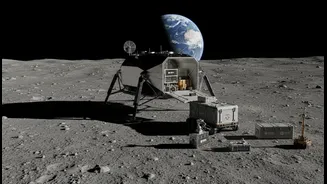


Science as the Driving Force
Before building a base, you need a reason for it to exist. For NASA's Artemis program, that reason is science. The agency has a list of compelling questions it wants to answer, many of which require a long-term presence on the lunar surface. Scientists
are eager to investigate the permanently shadowed craters of the Moon's South Pole, which may hold vast reserves of water ice that have been untouched for billions of years. This ice could be a game-changer, providing drinking water, breathable air, and rocket propellant for future missions. Other key scientific objectives include studying the Moon's geology to understand the formation of our solar system and setting up telescopes on the lunar farside, free from Earth's radio interference. These aren't simple, one-off experiments; they are complex investigations that demand a sustained presence, continuous power, and robust equipment operating for months or even years.
The Commercial 'Uber' to the Moon
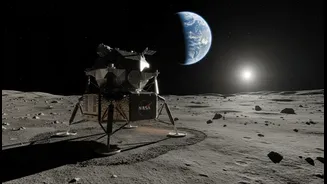
Instead of building its own fleet of delivery vehicles, NASA has essentially created a lunar shipping market. Through the Commercial Lunar Payload Services (CLPS) initiative, NASA acts as a customer, purchasing payload delivery services from a pool of American companies. Companies like Intuitive Machines, Astrobotic, and Firefly Aerospace compete for fixed-price contracts to transport NASA's scientific instruments and technology demonstrations to the Moon. This model is designed to be faster and more cost-effective, fostering innovation and competition within the private sector. The program has already seen success, with the first-ever commercial landing on the Moon achieved in 2024. NASA plans a steady cadence of these missions, with at least two per year, creating a reliable pipeline of opportunity for these commercial partners.
From Science Payloads to Surface Infrastructure
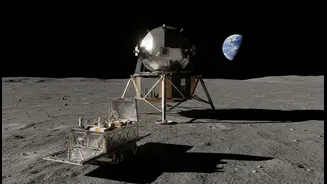
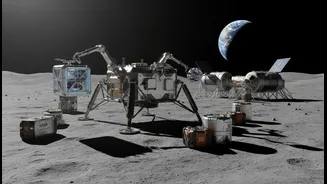
Here is where the connection becomes critical: the initial CLPS missions are the reconnaissance force for building a future base. Early landers are delivering small-scale science experiments, rovers, and technology demonstrations. These missions gather crucial data on the lunar environment, test landing systems, and scout potential locations for a permanent outpost. For example, missions like the VIPER rover are specifically designed to prospect for water ice, effectively mapping out valuable resources before humans arrive to build larger facilities. The experience and data from these robotic missions directly inform how and where to build the necessary infrastructure. Each successful landing and experiment proves the viability of the commercial model and reduces the risk for more complex human-led construction missions to follow.
The Makings of a Moon Base
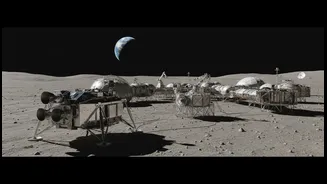
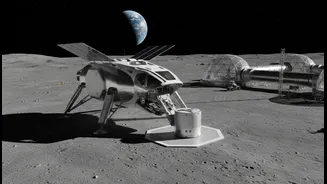
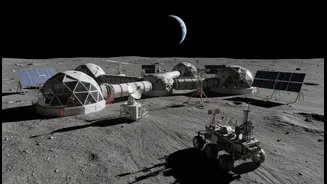
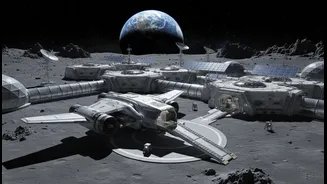
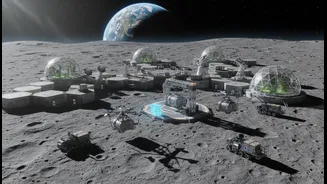
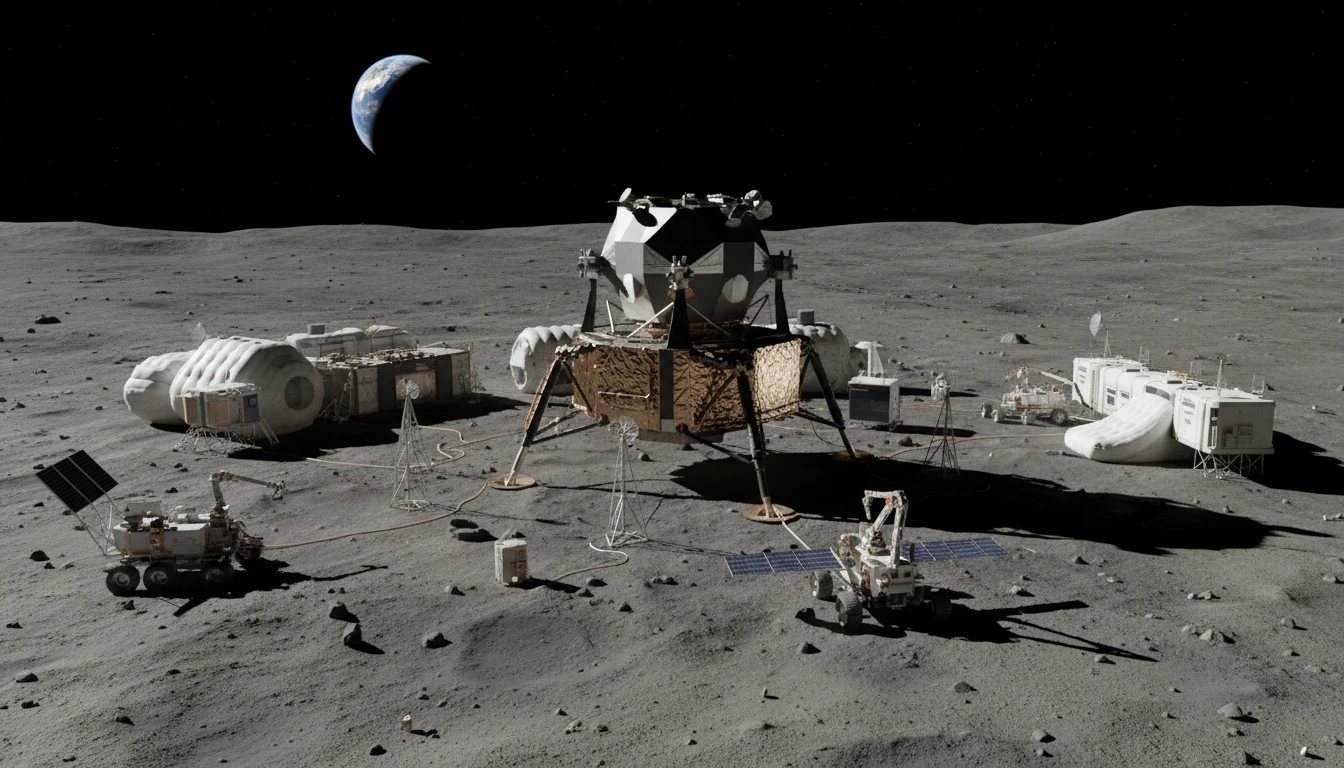
A sustainable human presence requires infrastructure far beyond what a single lander can provide. To survive the two-week-long, incredibly cold lunar night and conduct meaningful long-term work, astronauts will need a reliable power grid, potentially using a combination of vertical solar arrays and fission power systems. They will need landing pads to manage dust kicked up by arriving and departing spacecraft, roads for rovers to traverse the terrain, and communication relays to stay connected with Earth. NASA is already partnering with companies on these next-generation systems, including technologies to 3D-print structures using the local lunar soil, or regolith. The scientific payloads delivered by early CLPS missions are the direct justification for this infrastructure; a long-term geology lab needs constant power, and a water-ice processing plant needs a prepared site and robust transportation links.
A New Lunar Economy Takes Shape
This strategy creates a self-sustaining cycle. Ambitious scientific goals justify the need for permanent infrastructure. The demand for that infrastructure creates a reliable market for commercial delivery services, encouraging companies to build larger and more capable landers. As these commercial capabilities grow and costs decrease, it becomes feasible to undertake even more complex scientific and exploration missions. This isn't just about supporting NASA's goals; it's about catalysing the first off-world economy. By acting as an anchor customer, NASA is giving private industry the foundation it needs to eventually serve other customers, whether they be other nations, private research firms, or even space tourists. The science push is the spark that ignites the entire economic engine.