

Catching a Star's Wobble
One of the first successful ways to find a planet doesn't involve seeing the planet at all, but rather its star. This is the radial velocity method, sometimes called the "wobble method". As a planet orbits its star, its gravity gives the star a tiny pull,
making it wobble back and forth. From Earth, astronomers can't see this wobble directly, but they can detect it in the star's light. As the star moves slightly towards us, its light shifts to the blue end of the spectrum; as it moves away, the light shifts to the red end. This is known as the Doppler effect. By measuring these periodic shifts, scientists can deduce the presence of an orbiting planet, its orbital period, and its minimum mass. This method has unveiled hundreds of worlds, often massive planets in tight orbits that cause a more noticeable wobble.
Shadows in the Starlight
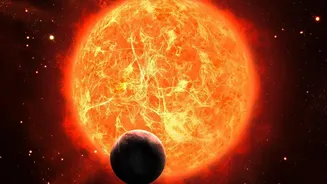
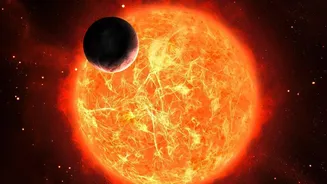
Another powerful technique is the transit method, which looks for tiny, regular dips in a star's brightness. If a planet's orbit is aligned just right from our point of view, it will pass in front of its star, blocking a small fraction of its light, much like a moth flying in front of a distant searchlight. Space telescopes like NASA's Kepler and TESS have used this method to discover thousands of exoplanets by monitoring the brightness of huge numbers of stars. This technique not only confirms a planet's existence but also reveals its size. For an extra layer of detective work, astronomers analyze variations in the timing of these transits. Known as Transit Timing Variations (TTVs), these subtle changes can signal the gravitational pull of other, unseen planets in the same system, allowing scientists to infer their presence and even their mass.
Snapping a Direct Picture
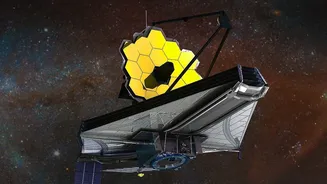
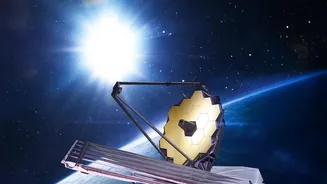
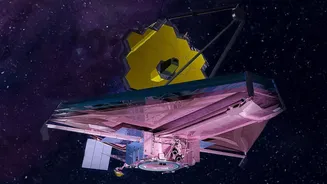
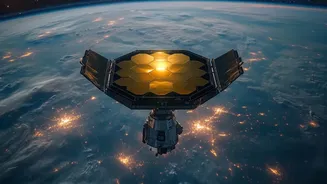
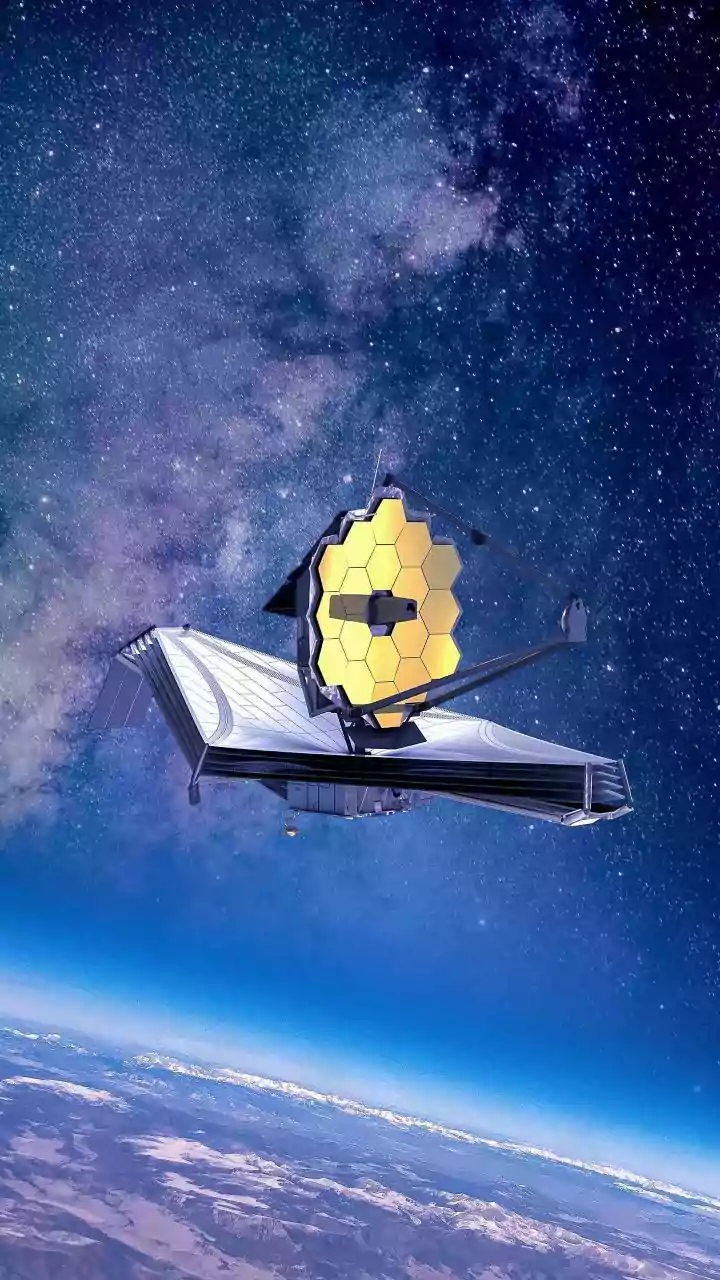
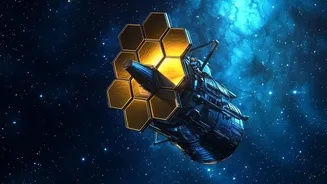
Directly imaging an exoplanet is incredibly difficult because the glare from its host star is usually overwhelming—like trying to spot a firefly next to a spotlight. However, for planets that are very large and orbit very far from their star, it is possible. Astronomers use advanced instruments called coronagraphs, which are essentially sophisticated masks that block out the direct light from the star, revealing the faint glow of the planets orbiting it. This method is most effective at infrared wavelengths, where a young, hot planet glows brightly from the heat of its formation, making it stand out more against its star. Telescopes like the Hubble and the James Webb Space Telescope (JWST) have successfully captured direct images of planetary systems, providing a stunning, family-portrait-style view of these distant worlds.
What 'Strange' Orbits Reveal
Our solar system's planets follow relatively tame, near-circular paths. But many exoplanets have highly 'eccentric', or oval-shaped, orbits. A planet on such a path experiences wild temperature swings, moving from a frigid winter far from its star to a scorching summer as it swings in close. Some planets even orbit backwards relative to their star's spin or have orbits tilted at bizarre angles. These strange orbits are fossils of a chaotic past. They suggest a history of dramatic events, like gravitational kicks from other planets in the system, close encounters with other stars, or the migration of giant planets from where they originally formed. Studying these oddities helps astronomers piece together the violent and diverse processes that shape how planetary systems form and evolve across the galaxy.