






The Great Monsoon Delay of 2026
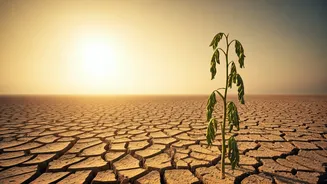
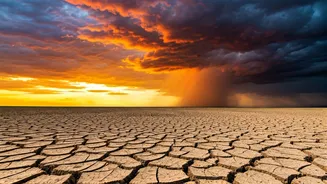
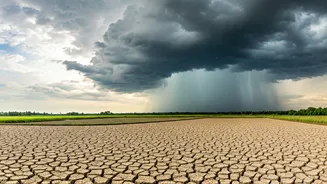
Let’s start with what’s happening. The southwest monsoon, which typically arrives in Delhi around the end of June, is running late. [7, 8] The India Meteorological Department (IMD) and other forecasters now expect the first proper monsoon showers around July
4th. [8, 13] In the meantime, the city is caught in a meteorological tug-of-war. Dry, hot westerly winds from Pakistan are keeping temperatures high, while moist southwesterly winds from the Arabian Sea are pumping humidity into the air. [7, 8] This combination has led to some of the most uncomfortable conditions in recent memory, with Delhi recording its warmest morning in two years on June 28. [7, 8] This unusual weather pattern is creating clouds but without enough moisture for the widespread, relief-bringing rain the city desperately needs. [8]
Decoding the Discomfort
The core of the problem isn't just the heat; it's the humidity. Your body’s primary air conditioning system is sweat. When you get hot, you perspire, and as that sweat evaporates from your skin, it cools you down. [9, 10] However, when the air is already saturated with moisture—as it is during periods of high humidity—your sweat has nowhere to go. [6] Evaporation slows down dramatically or stops altogether. The result is that you feel sticky, damp, and overheated because your body can't regulate its temperature effectively. A day with a temperature of 35°C can feel pleasant in a dry climate but utterly oppressive in a humid one, and that’s exactly what Delhi is experiencing.
It's Not Just a Feeling
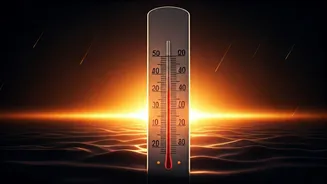
If you think it feels much hotter than the thermometer suggests, you're correct. This phenomenon is measured by the Heat Index, often called the 'feels-like' temperature. [3, 9] The Heat Index is a scientific calculation that combines air temperature with relative humidity to quantify how hot it actually feels to the human body. [6] For instance, a temperature of 32°C with 70% humidity can have a heat index of 41°C, which is a significant jump. [3] Recently, while the actual temperature in Delhi climbed to around 41.8°C, the IMD calculated the 'feels-like' temperature at a staggering 50.7°C. [7, 8] This isn't just a subjective complaint; it's a measurable indicator of extreme environmental stress on the body.
The Science of the Pre-Rain Tease
So, why does the humidity get so much worse right before it rains? It’s because the atmosphere is essentially loading up with ammunition for the downpour. [4] A rainstorm is the culmination of a process where warm, moist air rises, cools, and condenses into clouds. [21] But before this process reaches its climax and releases the rain, all that moisture has to accumulate in the air. This pre-storm phase involves a massive increase in atmospheric water vapour, pushing the relative humidity near the ground to its peak. [4, 16] Furthermore, the cloud cover that forms ahead of the rain acts like a blanket, trapping heat that would otherwise escape, adding to the sensation of warmth and stuffiness. [4]