



A Sweet Discovery Near the Galactic Center
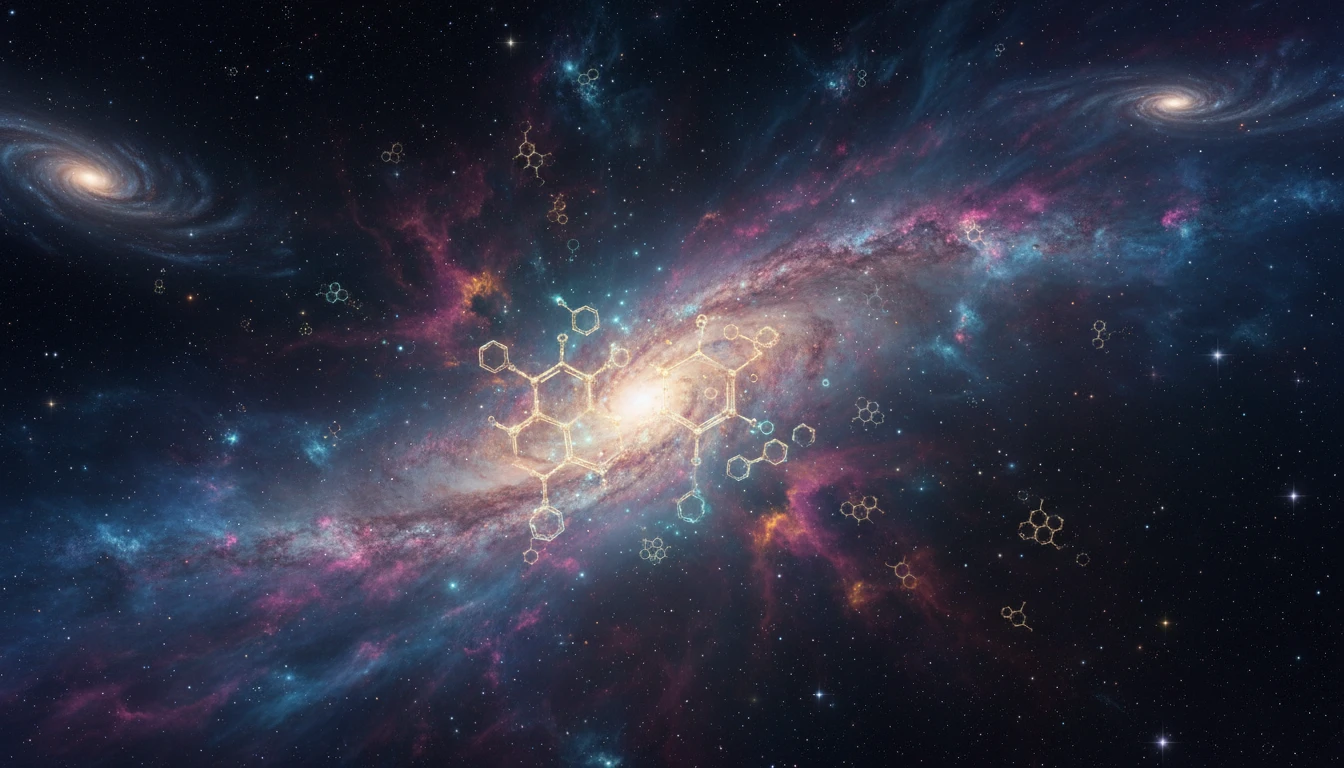
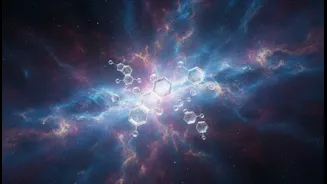
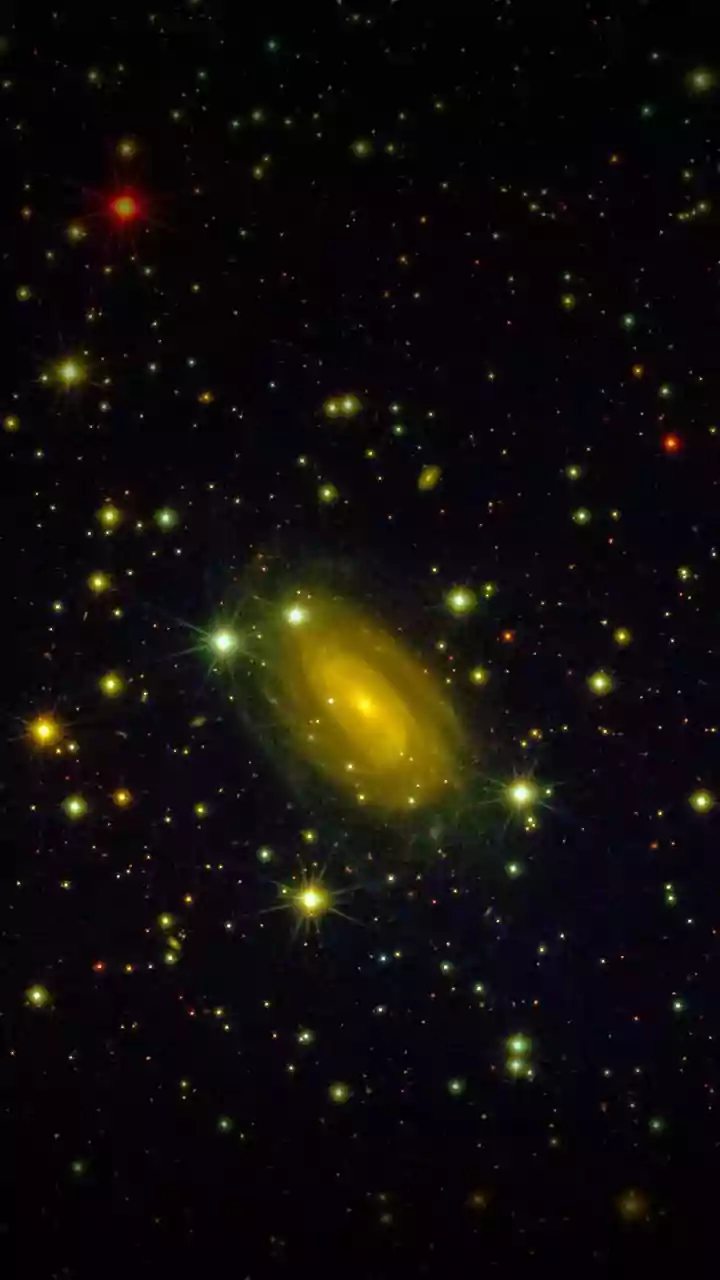
In a landmark finding, astronomers have identified a sugar molecule called erythrulose floating in a massive gas and dust cloud roughly 27,000 light-years from Earth. The discovery was made by a team in Spain using the Yebes 40-meter and IRAM 30-meter
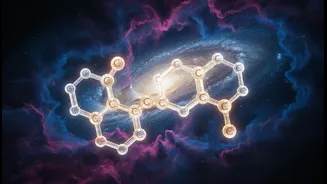
radio telescopes. They scanned a chemically rich region known as G+0.693-0.027, a molecular cloud near the galaxy's core, and detected the distinct radio frequency 'fingerprint' of erythrulose. This molecule, a four-carbon sugar, is also found in small quantities in raspberries on Earth and is used in some cosmetics. While other molecules related to life's precursors have been found in space before, this marks the first time a true sugar has been directly detected in the interstellar medium.
Why Sugar in Space Matters
Sugars, or carbohydrates, are fundamental to life as we know it. They are not just a source of energy for living cells; they also form the structural backbone of DNA and RNA, the molecules that carry our genetic code. For decades, scientists have debated how the first of these vital molecules formed on a young, sterile Earth, as lab experiments simulating early conditions often fail to produce them in significant amounts. The discovery of sugars in meteorites and samples from asteroids like Bennu and Ryugu has long suggested that these ingredients might have been delivered to Earth from space. Finding erythrulose in a star-forming cloud confirms that the chemical factories of space are capable of producing these complex molecules long before planets even exist.
The Cosmic Recipe for Life's Ingredients
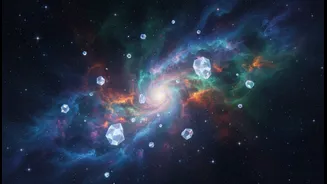
So how does sugar form in the freezing, near-vacuum of a molecular cloud? The current theory is that these complex molecules are built on the icy surfaces of tiny dust grains. Over millions of years, simpler molecules like alcohols and aldehydes stick to these frozen grains. Bombarded by cosmic radiation, these simple components react and combine to form larger, more complex structures like erythrulose. What surprised the researchers was the relative abundance of this four-carbon sugar compared to its simpler three-carbon cousins, which were not detected. This challenges the long-held view that molecules in space grow sequentially one carbon atom at a time and suggests more complex formation pathways may be at play.
From Interstellar Cloud to New Worlds
Molecular clouds like G+0.693-0.027 are stellar nurseries; they are the very places where new stars and planetary systems are born. As these clouds collapse under gravity to form stars, the dust and ice, now enriched with prebiotic molecules like sugars, flatten into a protoplanetary disk. From this disk, planets, comets, and asteroids coalesce. This discovery provides a direct link, showing how the building blocks of life can be created in the interstellar medium and then incorporated into the raw materials of new solar systems. Scientists estimate that millions of tons of erythrulose could have been delivered to a young Earth during the 'Late Heavy Bombardment' period billions of years ago, potentially kick-starting the chemistry that led to life.