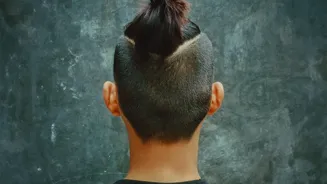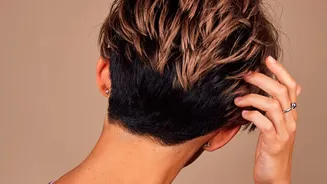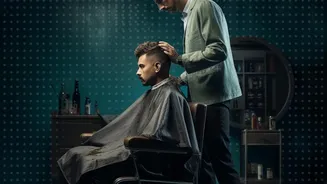







Looking for a hairstyle that makes a statement? The disconnected undercut is a bold, modern cut defined by its dramatic contrast. Instead of a gradual fade, it features a sharp, clean line between the short sides and the much longer top.
What Exactly Is a Disconnected Undercut?
The defining feature
of a disconnected undercut is the abrupt transition between the hair on the sides and back of the head and the hair on top. Unlike a fade, where lengths are carefully blended, this style intentionally leaves a hard line, creating a 'disconnected' effect. The sides are typically buzzed very short—often with a number 1 or 2 guard, or even down to the skin—while the top is left significantly longer, usually at least 3 to 4 inches. This severe difference in length is what gives the haircut its signature, high-contrast and graphic look.
Popular Ways to Style the Top
The versatility of the disconnected undercut comes from the many ways you can style the longer hair on top. For a classic, sharp look reminiscent of historical dramas, a slicked-back style using a gloss pomade is a popular choice. For something more modern and voluminous, you can create a pompadour or quiff by blow-drying the hair upwards and back with a round brush and finishing with a matte clay for texture and hold. Other options include a more casual, textured fringe styled forward, a classic side part, or even tying longer hair into a top knot. This adaptability allows the cut to be tailored to both formal and relaxed settings.
The Conversation with Your Barber
To ensure you get the cut you want, clear communication with your barber is key. Simply asking for an 'undercut' can be misinterpreted, so it's best to be specific. Use the term 'disconnected' and specify that you don’t want the sides blended or faded into the top. Bringing a reference photo is highly recommended. Be prepared to discuss how short you want the sides (mentioning a clipper guard number like '1' or '2' is helpful) and where you want the disconnection line to sit. A classic placement is at the parietal ridge, which is the widest part of your head where the side begins to curve toward the top.
Maintenance and Upkeep
A disconnected undercut is a high-contrast style, which means it requires regular maintenance to keep it looking sharp. The short sides will show growth quickly, so you'll likely need a trim every two to four weeks to maintain that clean, dramatic line. The top section can be left to grow longer between cuts if you desire more length for styling. Daily styling is also a commitment; the longer top section usually needs product like pomade, wax, or clay to give it shape and hold, whether you're slicking it back or texturizing it. Without styling, the contrast can look less intentional.
Is This Hairstyle Right for You?
This bold haircut works well for men who want a fashion-forward style and are comfortable with its high-contrast appearance. It can be adapted for most hair types, including straight, wavy, and curly hair, though the final look will vary. Straight hair will create the sharpest, most defined 'shelf' effect, while wavy or curly hair will result in a softer, more textured contrast. Consider your face shape as well; styles with a lot of volume on top, like a pompadour, can help add length to rounder faces, while those with longer faces might prefer a style that lies flatter. It's also a style that requires commitment to regular barber visits and daily styling, so it's best suited for someone willing to put in the effort.