






The Myth of a 'Standard' Room
The first mistake many group organisers make is trusting hotel room names. A 'Junior Suite' in one hotel might be a sprawling space with a separate living area, while in another, it could simply be a slightly larger standard room. This inconsistency stems
from a lack of industry-wide standards; hotels use these names for their own marketing and internal categorisation, not for guest clarity. Terms like 'Deluxe' or 'Superior' often signal a better view, a higher floor, or slightly upgraded furnishings, but they rarely provide concrete information about size or capacity, which are the most critical factors for a group.
Start With Maximum Occupancy
The single most important number to look for is the maximum occupancy allowed in a room. This determines how many people can legally and safely stay there. Booking a room for four people when its maximum occupancy is three can lead to unexpected nightly fees for an extra person or, in the worst-case scenario, the need to book an additional room at the last minute at a much higher price. Always filter your search by the number of guests in your party first. This ensures every option you see is a viable one, saving you from the disappointment of finding a perfect-looking suite that can't actually accommodate your group.
Examine the Bed Configuration
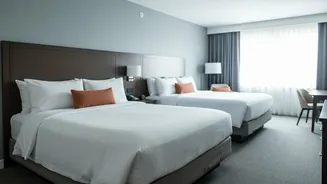
Once you've confirmed a room can hold your group, the next step is to scrutinise the bed setup. A 'quad room' designed to sleep four people can have vastly different arrangements. Some might have two queen beds, which is ideal for two couples. Others might have one king bed and a pull-out sofa, a combination that works better for a family but might be awkward for friends or colleagues. Don't just trust the phrase 'sleeps four'. Look for explicit descriptions like 'two twin beds' or 'one king and one sofa bed' to ensure the sleeping arrangements match your group's needs and comfort levels. This detail is often found in the finer print of the room description.
Check the Actual Room Size
Photos can be deceiving, but numbers don't lie. Whenever possible, look for the room's size in square metres or square feet. This figure gives you a true sense of the space you'll be sharing. A room might technically sleep four people, but if it's too small, it will feel cramped once everyone's luggage is inside. For group travel, more space is always better, providing room to move around without constantly bumping into each other. A spacious common area, even within a single room or suite, can make a huge difference in the group's overall experience, offering a place to socialise without feeling crowded.
Smart Booking and Direct Enquiries
While online travel sites are great for initial research, booking directly with the hotel is often the best strategy for groups. A quick phone call or email to the hotel's sales or reservations team allows you to ask specific questions and clarify details that websites might leave out. You can confirm bed configurations, inquire about connecting rooms, and negotiate group rates or perks. Many hotels are willing to offer discounts or extras for group bookings, as it guarantees them a certain number of filled rooms. This direct communication builds a relationship and ensures the hotel understands your group's specific needs before you arrive.