

A Water World Hiding in Plain Sight
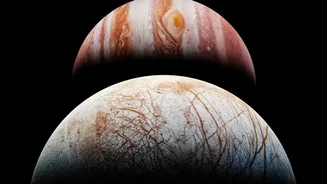
For decades, Europa has fascinated scientists. It’s slightly smaller than Earth’s moon, but it isn’t a dead, dry rock. Data from past missions like Galileo strongly suggested the presence of a global ocean buried beneath a thick ice shell, which could
contain more than twice the water of all of Earth's oceans combined. The evidence comes from a magnetic field signature detected around the moon, which is best explained by a deep layer of conductive, salty water. The surface is covered in reddish-brown cracks and ridges, hinting at a dynamic world where the ocean below interacts with the ice above. This tantalizing evidence makes Europa one of the most promising places in our solar system to search for habitable environments beyond Earth.
The Three Essential Ingredients for Life
To be clear, Europa Clipper is not designed to find life itself. Instead, its primary goal is to determine if Europa has the right conditions to support it. Astrobiologists focus on three key requirements for life as we know it: liquid water, essential chemical elements, and a source of energy. The Clipper mission is designed to investigate each of these three pillars. Strong evidence already points to water. The next steps are to confirm the ocean's properties and search for the necessary chemistry and energy that could fuel a potential ecosystem in the dark, cold depths far from the sun.
Hunting for Chemical Building Blocks
Life requires a specific chemical toolkit, including carbon, hydrogen, nitrogen, oxygen, phosphorus, and sulfur. Recent observations have already detected carbon dioxide on Europa's surface that appears to originate from the ocean below. The Europa Clipper is equipped with a suite of powerful instruments to expand this search. Spectrometers will analyze the composition of the icy surface, mapping the distribution of salts, organic compounds, and other materials. Two key instruments, MASPEX and SUDA, will directly sample particles in Europa's extremely thin atmosphere and any water vapor plumes that might be venting from the ocean into space. These instruments can detect a wide range of molecules, from simple volatile gases to more complex organic compounds like amino acids or lipids, which could serve as potential biosignatures.
Is There Enough Energy?
Without sunlight, any life in Europa's ocean would need a different energy source. Scientists believe this energy could come from a combination of factors. The immense gravitational pull of Jupiter causes Europa's interior to flex and stretch, a process called tidal heating. This could generate enough warmth to keep the ocean liquid and may even drive chemical reactions on the seafloor, similar to the hydrothermal vents found in Earth's deep oceans. These vents on our own planet support thriving ecosystems independent of the sun. Additionally, the intense radiation from Jupiter bombarding Europa's surface could create oxidants and other chemicals that, if cycled into the ocean, could provide another potential source of chemical energy for life.
A Mission of Flybys, Not Landing
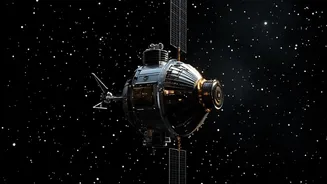
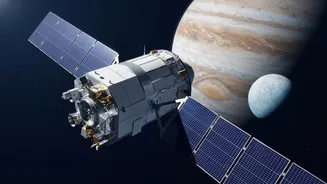
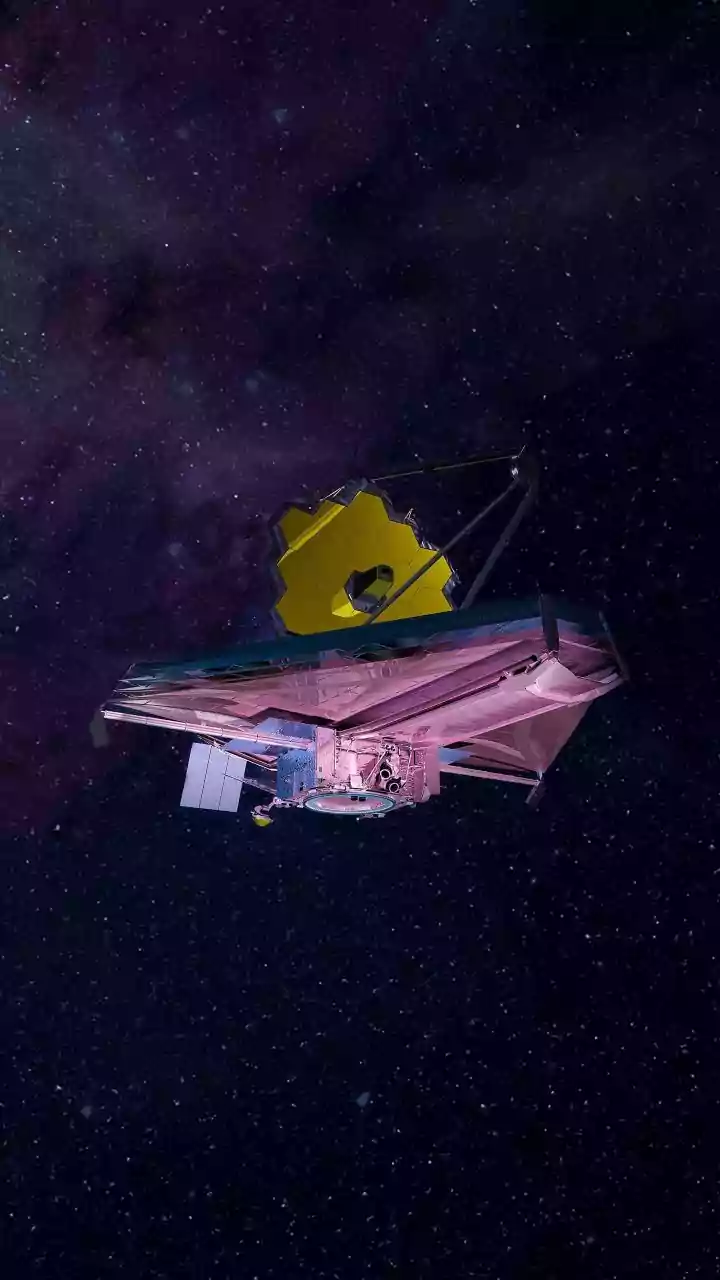
Launched in October 2024, the Europa Clipper is embarking on a long voyage, scheduled to arrive in the Jupiter system in April 2030. To protect the spacecraft from Jupiter's harsh radiation, it will not orbit Europa directly. Instead, it will enter a long, looping orbit around Jupiter and perform dozens of close, rapid flybys of Europa—some as low as 25 kilometers above the surface. During each pass, its nine science instruments will work together to gather data on the ice shell's thickness, the ocean's depth and salinity, and the surface geology. This reconnaissance strategy will allow for a detailed global survey, paving the way for understanding Europa as a complex, potentially habitable system and helping to select sites for a potential future lander.