




A Safe Ride Home
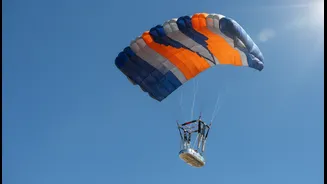
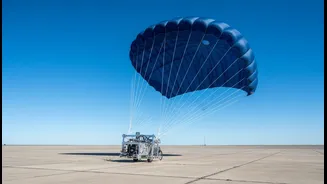
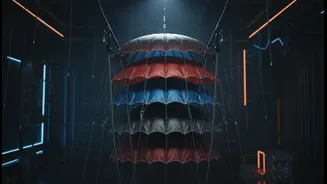
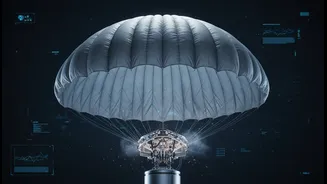
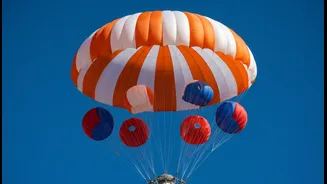
One of the most critical parts of any human spaceflight mission isn't the launch, but the return. To ensure the Gaganyaan crew module lands safely, ISRO is perfecting a complex parachute system designed to slow the capsule from hypersonic re-entry speeds
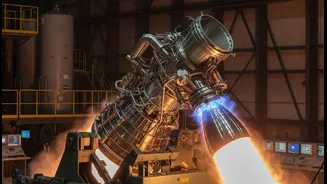
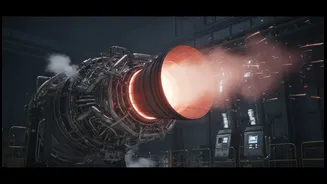
to a gentle splashdown. This isn't just one big parachute; it's a precisely timed sequence of ten. It starts with two apex cover separation parachutes, followed by two drogue parachutes to stabilize the capsule, and finally, three pilot chutes that pull out the three massive main parachutes. To validate this system, ISRO has been conducting a series of rigorous trials, including Integrated Air Drop Tests (IADT), where a dummy crew module is dropped from a helicopter. More recently, ISRO successfully tested a new Sub-Orbital Launch Vehicle for Experiments (SOLVE) motor. This rocket will carry a test module to an altitude of 10-17 km before dropping it, simulating re-entry conditions more accurately than ever before and allowing for repeated validation of the parachute sequence.
The Ultimate Safety Net
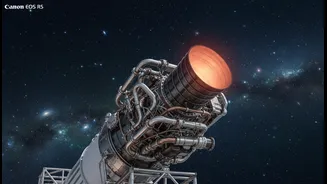
Human safety is the absolute priority for the Gaganyaan mission. To that end, ISRO is refining the Crew Escape System (CES), a crucial safety feature designed to protect astronauts in case of an emergency during launch. The CES is a set of quick-acting solid motors located at the top of the rocket. If a catastrophic failure is detected on the launchpad or during ascent, these motors can fire in an instant, pulling the entire crew module away from the malfunctioning rocket to a safe distance. The successful TV-D1 test mission was a major milestone, demonstrating the performance of this escape system in a real-world flight scenario. This system represents a critical layer of redundancy, ensuring that the Vyomanauts have a reliable exit strategy even in the most unlikely of events.
An Earth-Like Bubble in Space
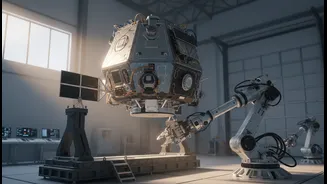
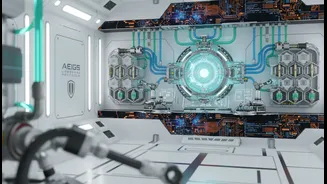
The Crew Module is the astronauts' home for three days, a pressurized habitat where they will live and work in a 400 km high orbit. Making this module habitable requires a sophisticated Environmental Control and Life Support System (ECLSS). This system is responsible for maintaining an Earth-like environment in the vacuum of space. It must constantly provide oxygen, remove carbon dioxide, manage temperature and humidity, and supply water. Developing a reliable, self-contained life support system is one of the most complex technological challenges of human spaceflight. ISRO's Human Space Flight Centre (HSFC) is leading the development and testing of these human-centric systems to ensure they are robust and fail-safe for the duration of the mission.
Preparing for Every Possibility
While engineers perfect the hardware, India's astronaut-designates are undergoing intensive training for every conceivable scenario. At the Astronaut Training Facility in Bengaluru, the Vyomanauts are immersed in a curriculum that includes academic courses, physical conditioning, and complex simulations. They use multiple simulators to prepare for the mission. Virtual Reality trainers help them get familiar with the crew module's interior and controls, while static mock-ups provide a realistic feel for the cabin's layout. The most advanced is the dynamic training simulator, which replicates the physical sensations of launch, stage separations, and landing, including the powerful vibrations and g-forces. This rigorous training ensures the crew can handle not just the planned procedures but also any unexpected challenges that may arise.