




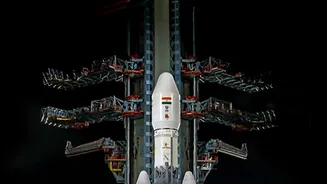
Gaganyaan: A Quick Refresher
At its core, the Gaganyaan programme is India’s ambitious endeavor to demonstrate human spaceflight capability. The mission aims to launch a crew of three astronauts into an orbit of 400 kilometres for a three-day journey. After completing their objectives
in Low Earth Orbit, the crew will return to Earth, splashing down in the Indian Ocean. The success of this mission will place India in an elite group of nations—alongside the United States, Russia, and China—that have independently sent their citizens into space. The entire nation is watching as ISRO meticulously pieces together the technology and procedures needed for this monumental undertaking.
Why Safety Is the Top Priority
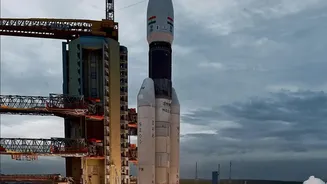
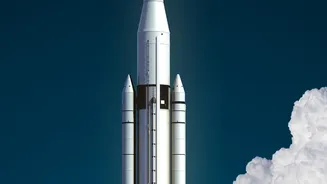
In human spaceflight, there is no room for error. The lives of the astronauts, or ‘Vyomanauts’, depend on every single component functioning flawlessly, from the powerful LVM3 rocket to the smallest valve in the crew capsule. History has shown the inherent risks of space travel, making safety the absolute highest priority. Before any astronaut boards the Gaganyaan capsule, ISRO must prove that the systems designed to protect them are virtually infallible. This means subjecting every safety mechanism to punishing tests that simulate the most extreme and dangerous scenarios imaginable. The recent progress is focused squarely on these life-saving systems.
The All-Important Crew Escape System
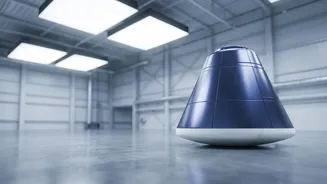
One of the most crucial safety features is the Crew Escape System (CES). Think of it as a rocket-powered ejector seat for the entire astronaut capsule. In the event of a catastrophic failure on the launchpad or during the initial ascent, the CES is designed to fire powerful motors that pull the crew module away from the malfunctioning rocket in seconds. This system must work perfectly every time, whisking the crew to a safe distance where they can then deploy parachutes for a landing. ISRO has been systematically testing the motors and abort mechanisms that make up this system, including a successful test flight in October 2023 that validated an in-flight abort scenario.
Recent Tests: Parachutes and Splashdowns
Recent validations have focused on the final, critical phases of the mission: re-entry and landing. In July 2026, ISRO successfully conducted a series of parachute tests at the Aerial Delivery Research and Development Establishment in Madhya Pradesh. These tests, part of the Integrated Main Parachute Airdrop Test (IMAT) series, involved dropping a dummy payload from an Indian Air Force aircraft to validate the strength and deployment sequence of the parachute system. The Gaganyaan module uses a complex sequence of 10 parachutes to slow its descent from hypersonic speeds to a gentle splashdown velocity. Additionally, ISRO tested the Crew Module Up-righting System (CMUS), a clever flotation system that uses gas-inflated bags to ensure the capsule remains upright after landing in the sea, which is vital for the crew's stability and recovery. Other recent tests successfully validated the mechanism for separating the crew module from its service module and the structural strength needed when the parachute cover is jettisoned.
The Road to a Crewed Launch
Every successful test is a building block for the ultimate goal. With these safety systems gaining qualification, ISRO can move forward with greater confidence towards the next major milestones: a series of uncrewed test flights. These missions, designated G1, G2, and so on, will fly the full mission profile without astronauts to validate that all systems—from launch to orbit to re-entry and recovery—work together seamlessly. ISRO has indicated that multiple uncrewed missions will be conducted to ensure the highest level of reliability. Only after a thorough review of these flights will the agency set a firm date for the first crewed Gaganyaan mission, which is tentatively anticipated for 2026 or later.