




The First Rule: Match the Hair Texture
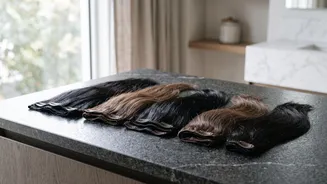
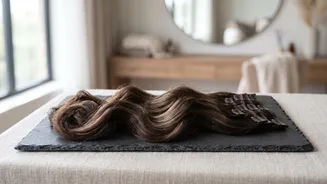
The most critical step for a seamless blend is choosing extensions that mimic your natural hair's texture. This isn't just about picking 'straight' or 'curly'; it involves a deeper look at your hair's specific pattern and density. To find your true texture,
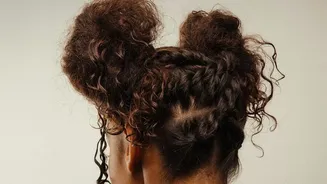
wash your hair and let it air-dry without any products. This reveals its natural state. Hair extension textures are incredibly diverse, ranging from silky straight and body wave to kinky-curly and coily Afro patterns. For example, Yaki textures are designed to imitate the look of relaxed or heat-straightened natural hair, offering a more realistic blend than bone-straight extensions for those hair types. The goal is to find extensions that move and behave like your own hair, ensuring they blend effortlessly whether styled or not.
Why Density and Finish Matter
Beyond the curl pattern, consider the hair's density and finish. If you have fine, thin hair, an overly heavy set of extensions can look bulky and artificial, even if the texture is a perfect match. Lighter-weight sets (around 100-120 grams) are often better for adding subtle volume without overwhelming your natural hair. Conversely, if you have thick hair, you'll need a heavier, denser set (180+ grams) to ensure the extensions don't look sparse against your natural volume. The finish—whether the hair has a high shine or a more matte, natural luster—also plays a role. The closer the extensions' characteristics are to your own hair, the less styling you'll have to do to force a blend.
The Unsung Hero: Matching the Clips
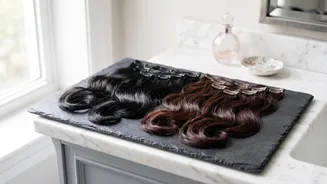
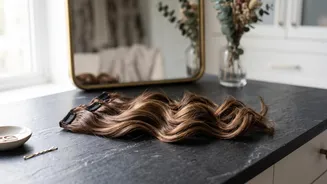
The second, often-overlooked, aspect of this approach involves the clips themselves. Not all clips are created equal, and choosing the right type for your hair is key to a secure, comfortable, and damage-free experience. For those with fine, silky hair that struggles to hold a style, look for clips with a silicone grip. This provides extra security and prevents the wefts from slipping throughout the day. If you have very thick or curly hair, you'll want larger, more robust clips that can securely hold the weight of the wefts and anchor firmly into your dense hair. The right clip ensures the weft lies flat against your scalp, preventing bumps and making the extensions virtually undetectable.
Application for a Seamless Blend
Proper application is where your careful matching pays off. Start by creating clean, horizontal sections from the bottom of your head and working your way up. For a stronger hold, especially on fine hair, gently tease the hair at the root where you plan to place the clip. A light spritz of dry shampoo or texture spray can also give the clips something extra to grip. Attach the wefts close to the scalp, ensuring they lay flat, and snap them shut. A common mistake is placing wefts too high up on the head, near your parting or hairline, which makes them visible. Always leave a generous layer of your own hair on top and around the sides to conceal the wefts.
Final Touches and Styling
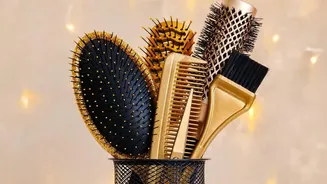
Once all your wefts are in place, the final step is to blend them. Use a wide-tooth comb or a brush designed for extensions to gently mix your natural hair with the extension hair. The best way to create a truly unified look is to style them together. Lightly curl or straighten your natural hair and the extensions at the same time, which helps merge any subtle differences in texture. For curly types, twisting sections of your own hair with the extension hair can create a cohesive curl pattern. If there's still a noticeable difference in length between your natural hair and the extensions, consider asking a stylist to trim the extensions to create subtle layers, which makes for a much more natural transition.