




What is Light Pollution?
Light pollution is the excessive or poorly directed artificial light that floods the night sky. It comes from streetlights, buildings, advertising, and homes. This light scatters in the atmosphere, creating a phenomenon called 'skyglow'—the orange or whitish
dome of light you see over urban areas. This glow drastically reduces the contrast between celestial objects and the sky itself, making it impossible to see fainter stars, distant galaxies, or the subtle structure of the Milky Way. Essentially, it drowns out the universe, preventing our eyes from fully adapting to the dark.
Know Your Darkness: The Bortle Scale
To help stargazers understand and compare the quality of the night sky, amateur astronomer John E. Bortle created a nine-level scale. The Bortle Scale ranges from Class 1, representing a pristine, perfectly dark sky found only in the most remote locations, to Class 9, the sky typical of a major city centre where only the moon, planets, and a few of the brightest stars are visible. Most suburban skies fall into Class 5 to 7, where the Milky Way is faint or completely invisible. You don't need special equipment to estimate your local Bortle class; it's based on what you can see with your own eyes, making it a practical tool for any beginner.
Finding a Dark Sky Sanctuary
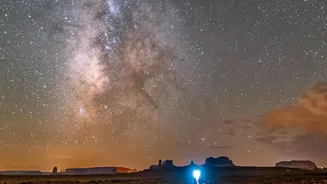
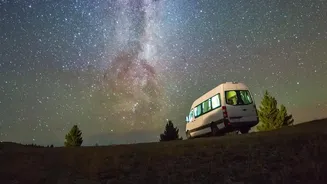
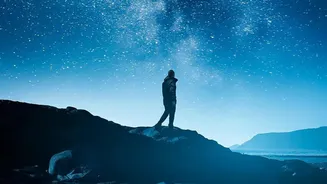
The best way to experience a truly dark sky is to travel. In India, locations like Hanle in Ladakh (home to India's first official Dark Sky Reserve), Spiti Valley, and the Rann of Kutch offer some of the darkest skies in the world, often rated as Bortle Class 1 or 2. In these places, the Milky Way can be so bright it casts a faint shadow. For those unable to travel to such remote areas, national parks and wildlife sanctuaries often provide a significant improvement over city skies. You can use online tools like LightPollutionMap.info to find darker zones (often shown in green, blue, or grey) within driving distance of your home.
Tips for Urban and Suburban Stargazing
If you're stuck in or near a city, don't despair. You can still enjoy the brighter wonders of the cosmos. The Moon and planets like Jupiter and Saturn are bright enough to punch through moderate light pollution. To maximize what you can see, find a spot that shields you from direct glare, like the shadow of a building. Turn off all nearby lights and give your eyes at least 20-30 minutes to adapt to the darkness; this will dramatically increase your ability to spot fainter objects. Also, plan your sessions for clear, haze-free nights when the Moon is in its crescent phase or not in the sky at all, as a full moon acts as a powerful source of natural light pollution.
Your First Stargazing Toolkit
You don't need an expensive telescope to start. In fact, the best tools for a beginner are your own eyes and a good pair of binoculars. Binoculars, especially a 10x50 pair, are fantastic for scanning the Milky Way, exploring large star clusters, and getting a closer look at the Moon. They offer a wide field of view that makes finding objects easy. There are also many excellent and free stargazing apps like Stellarium Mobile, SkyView Lite, and Star Walk 2 that use your phone's sensors to identify stars, constellations, and planets in real-time, acting as a digital guide to the night sky.