

What Happened on Flight AI 2030?
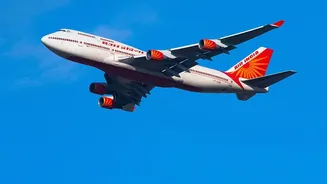
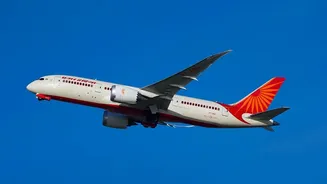
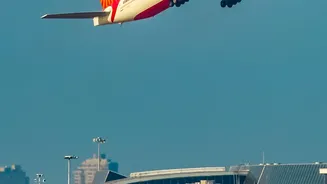
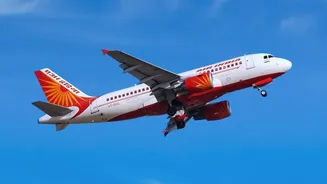
On October 14, Air India flight AI 2030 was en route from Frankfurt to Delhi when Air Traffic Control (ATC) received a 'Squawk 7500' alert—the universal code for a hijacking. Puzzlingly, the pilots of the Boeing 787-9 told controllers that all was normal
on board and they had not transmitted the code. Despite this, security protocols are absolute. Given the nature of the alert, the aircraft, carrying 293 passengers and 13 crew, was immediately diverted to Jaipur International Airport as a precaution. The plane landed safely and was moved to an isolation bay, where all passengers and baggage underwent extensive security checks before the flight was finally cleared to continue to Delhi several hours later.
The Prime Suspect: A Glitch in the System
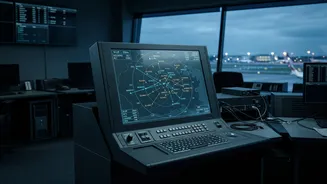
While initial speculation pointed towards pilot error, the focus of the investigation has quickly shifted to a possible technical malfunction on the ground. Specifically, a newly installed ATC radar system in Mumbai is being closely examined by India's aviation regulator, the Directorate General of Civil Aviation (DGCA). Investigators are probing whether this system erroneously generated or displayed the hijack alert, even though the pilots did not send it. Senior pilots have noted that accidentally punching in the four-digit 7500 code is a 'one in a trillion' chance, as each number must be entered manually, making a system-level error a more plausible line of inquiry.
How Air Traffic Control Keeps You Safe
Air Traffic Control is the complex network of controllers, radar, and communication systems responsible for guiding aircraft safely on the ground and in the air. Controllers use radar and transponder signals to manage flight paths, prevent collisions, and orchestrate takeoffs and landings. An aircraft's transponder is a crucial device that communicates with both ground-based radar and other aircraft. It sends back a unique four-digit 'squawk' code that identifies the plane. While most codes are for routine identification, special codes like 7500 (hijack), 7600 (lost communication), and 7700 (general emergency) trigger immediate, specific responses.
Built-in Redundancy: The Role of TCAS
Modern aviation is built on layers of safety. Even if there are issues with ground-based ATC, aircraft are equipped with their own backup: the Traffic Alert and Collision Avoidance System (TCAS). This onboard system operates independently of ATC, communicating directly with the transponders of other nearby aircraft to assess collision risks. If a threat is detected, TCAS can issue a 'Resolution Advisory' (RA), instructing the pilot to climb or descend. Crucially, pilots are trained to follow a TCAS instruction even if it contradicts an order from ATC, as the onboard system has the most immediate, real-time data. This principle was tragically underscored by the 2002 Überlingen mid-air collision, where one plane followed TCAS and the other followed a conflicting ATC order.
What Happens Next?
The DGCA's investigation into the Air India incident is ongoing. Experts will analyze data logs from the aircraft's 'black box', the Mumbai ATC system, and communications between the pilots and controllers to pinpoint the source of the false alert. The outcome is critical. If a system glitch is confirmed, it could lead to urgent software updates or changes in how alerts from new ATC systems are verified before triggering a full-scale emergency response. The incident, while disruptive and alarming for those on board, ultimately serves as a real-world stress test of aviation's complex, interconnected safety protocols.