





The Urban Charging Dilemma
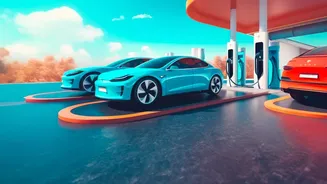
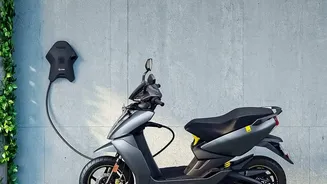
In densely packed cities, the dream of overnight charging in a private garage is a reality for very few. Most urbanites rely on public charging infrastructure, where spending hours tethered to a charger is impractical. This 'range anxiety' combined with
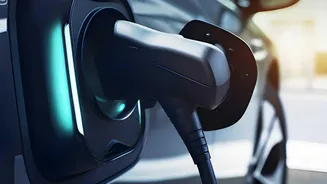
'charging anxiety' has been a significant barrier to EV adoption. A standard Level 2 charger, the kind you might find at a shopping centre, can take several hours for a full charge. While faster DC charging exists, it has historically come with its own set of trade-offs, including potential battery degradation over time.
The Science of a Speedy Charge
So, how do you cram hours of energy into a battery in just ten minutes without damaging it? The challenge lies in managing the flow of lithium ions and the immense heat generated. Traditional fast charging can cause lithium ions to build up on the anode's surface, a process called 'lithium plating', which degrades the battery's capacity and lifespan. The key to ultra-fast charging is to enable ions to move rapidly and efficiently without causing this damage. Modern EVs use sophisticated Battery Management Systems (BMS) to constantly communicate with the charger, regulating voltage and current for safety.
Innovations Breaking the Speed Barrier
Several key breakthroughs are making the ten-minute charge possible. Companies are developing new anode materials, moving beyond traditional graphite to incorporate silicon, which can store more ions and facilitate faster charging. Others, like Cambridge spin-out Nyobolt, are using patented carbon and metal oxide materials in low-impedance cells that generate less heat. Another critical innovation is thermal management. Shell recently unveiled a concept EV with a battery immersed in a special dielectric fluid. This direct immersion cooling is far more effective than traditional methods, allowing the battery to handle high power levels without overheating.
The Companies Racing to Ten Minutes
The race is on, with several companies making headlines. Chinese giants CATL and BYD are at the forefront. CATL has launched batteries for commercial vehicles that can reach 80% charge in under seven minutes. BYD's Blade Battery 2.0, paired with its Flash Charging technology, claims a 10% to 70% charge in just five minutes. These companies aren't just developing batteries; they are also building out the necessary high-powered charging infrastructure, with BYD planning 20,000 fast-charging stations in China by the end of 2026. Denza, a BYD brand, is already touting cars with the promise of sub-10-minute charging.
More Than Just a Battery
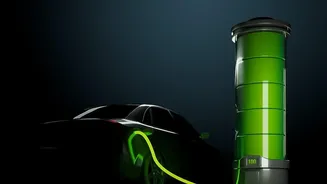
A ten-minute-charge battery is only half the equation. Delivering that much power requires an extremely robust charging station and a grid that can support it. Level 3 DC fast chargers can range up to 350 kW, with megawatt stations already in development. However, deploying these widely, especially in older city grids, presents a significant challenge. The solution may lie in energy storage systems at charging locations—large stationary batteries that can be charged slowly from the grid and then discharge their power rapidly into an EV, buffering the local power supply from extreme demand spikes.