




The Policy That Opened the Floodgates
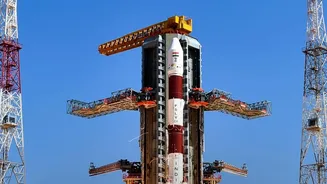
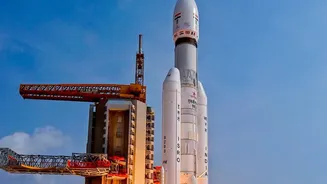
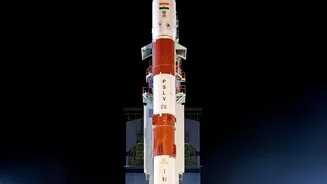
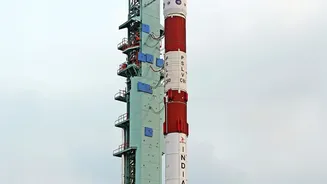
The pivotal shift began with the Indian Space Policy 2023, which fundamentally redefined the rules of the game. Previously a field dominated by the state-run Indian Space Research Organisation (ISRO), the new policy explicitly opened the entire space
value chain to private companies, or Non-Government Entities (NGEs). This reform allows private players to build and launch rockets and satellites, own and operate space assets, and commercialise data. The policy also clarified the roles of key institutions: ISRO now focuses on research and development of advanced technologies, while NewSpace India Limited (NSIL) handles commercial deployment. Crucially, the Indian National Space Promotion and Authorisation Centre (IN-SPACe) was established as a single-window agency to authorise, promote, and regulate private space activities, making it easier for startups to navigate the sector and access ISRO's facilities.
From Upstream Manufacturing to Downstream Data
The results of these reforms are already clear. The number of registered space startups has surged from just one in 2014 to over 400 by 2026. Early growth has been concentrated in the "upstream" segment—the design and manufacturing of hardware like rockets, satellites, and their components. Companies like Skyroot Aerospace, which launched India's first privately developed orbital rocket, and Agnikul Cosmos, known for its 3D-printed engines, have become poster children for this new era. However, the next phase of growth is widely expected to be dominated by the "downstream" segment. This involves leveraging satellite capabilities to provide commercial services, such as Earth observation data, satellite communication, and navigation applications. Experts project that downstream services could make up the bulk of the Indian space market by 2030, transforming sectors like agriculture, logistics, disaster management, and telecommunications.
The Next Frontier: Satellites, Data, and In-Orbit Services
Looking ahead, three key areas are poised for explosive growth. First is the small satellite revolution. Private companies like Pixxel are deploying constellations of small, high-resolution satellites for Earth observation, providing valuable data for everything from climate monitoring to financial services. Second is the burgeoning field of space data analytics. The true value lies not just in collecting data from space, but in using AI to turn that raw data into actionable intelligence for businesses and governments. The third frontier is in-orbit services. This emerging market includes everything from satellite life extension and refuelling to the management of space debris and even in-space manufacturing, where the unique microgravity environment can be used to produce advanced materials. These niches represent a move from simply accessing space to building a sustainable economy within it.
Navigating the Hurdles Ahead
Despite the optimism, the path forward is not without challenges. Funding remains a major hurdle. Space tech is capital-intensive, with long development cycles and no immediate returns, which can make it a tough sell for venture capitalists seeking quick growth. While the government has liberalised Foreign Direct Investment (FDI) rules and announced venture funds, access to early-stage capital is still a constraint. Furthermore, a shortage of specialised infrastructure like private testing facilities forces many startups to rely on already burdened ISRO resources. There are also regulatory and bureaucratic hurdles that still need streamlining to match the fast pace of the industry. Building a pipeline of skilled talent in niche areas of aerospace engineering will also be critical to sustain momentum and compete on a global scale.