









What is AI Screening?
Gone are the days when a human recruiter manually sifted through every resume. Today, a majority of large companies, especially in India, use AI-powered tools to manage the high volume of applications from campus drives. [17] These tools are not just
one thing; they are a suite of technologies. The most common is the Applicant Tracking System (ATS), which scans and ranks thousands of resumes in seconds based on keywords, skills, and relevance to the job description. [9] Beyond resumes, AI is used to conduct automated first-round interviews. [7] These can be text-based chats or, increasingly, video interviews where candidates record answers to preset questions. The software then analyses responses, speech patterns, facial expressions, and even perceived confidence levels to score and rank candidates before a human is ever involved. [9, 28] Gamified assessments that test problem-solving and behavioural traits are also becoming common. [11]
Why It Makes Hiring More Competitive
The core promise of AI for companies is efficiency and scale. [16] A recruiter who could previously screen 100 resumes a day can now process thousands. This allows companies to cast a much wider net, conducting nationwide hiring drives without visiting every single campus. [9] For students, this means you are no longer just competing with batchmates in your own college; you are competing against a national pool of talent. [9] While this can provide visibility for students from tier-2 and tier-3 colleges, it also dramatically increases the overall number of applicants for every single role. [7] Furthermore, these AI systems create what some researchers call an 'algorithmic monoculture'. [2] If multiple companies use the same AI vendor, they might end up favouring the same narrow profiles, leading to systemic rejection for candidates who don't fit that specific mould. [2] This makes the first hurdle—passing the AI screen—a make-or-break moment.
How to Beat the Resume Bots
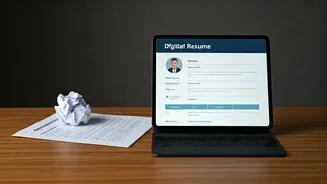
Your first task is to create a resume that is friendly to Applicant Tracking Systems (ATS). This means prioritizing clarity and keywords over fancy design. Use a clean, single-column format without tables, images, or complex graphics that can confuse the software. [19, 22] Most importantly, tailor your resume for every single application. [12] Carefully read the job description and identify the key skills, tools, and qualifications the employer is looking for. Weave these exact keywords and phrases naturally throughout your resume, especially in your skills and experience sections. [19] For example, if the job description mentions "Python" and "Data Analysis," ensure those exact terms are in your resume. Include both acronyms and their full forms (e.g., "Certified Information Systems Auditor (CISA)") to maximize your chances of being matched. [12, 22]
Acing the AI Video Interview
The AI video interview can be intimidating because there's no human to interact with. However, you can prepare. Treat it like a real interview. [26] Set up in a quiet, well-lit space with a clean, professional background. [28] The AI analyses your speech and expressions, so look directly into the camera lens, not at your own image on the screen. [30] Speak clearly and at a measured pace, avoiding filler words like "um" and "uh." [30] Many platforms give you a few seconds to think before you record your answer—use this time to structure your response. [28] It's crucial to answer the question asked, but try to sound natural and not like you're reading from a script. While the system is robotic, showing a bit of personality can still be picked up as a positive emotional tone. [28]
The Double-Edged Sword of Bias
While AI is often promoted as a tool to reduce human bias, it's not always the case. AI systems learn from historical data, and if that data reflects past biased hiring decisions (e.g., favouring candidates from certain universities or a specific gender for a role), the AI can learn and even amplify those biases. [3, 5] Studies have shown that some AI screening tools can discriminate based on race, gender, and age, systematically filtering out qualified candidates from underrepresented groups. [2, 4] This is a significant challenge that companies and developers are actively working to address. For candidates, this reinforces the importance of using clear, objective language on your resume focused on skills and measurable achievements, minimizing any information that could trigger algorithmic bias.