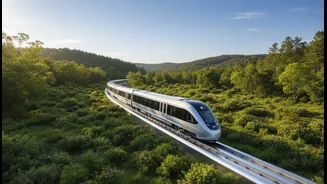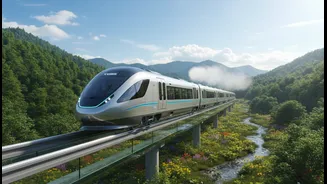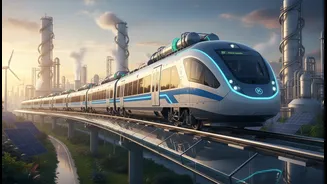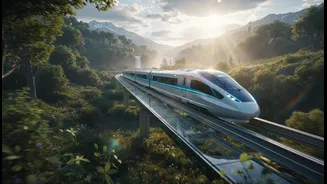







What Exactly is a Hydrogen Train?
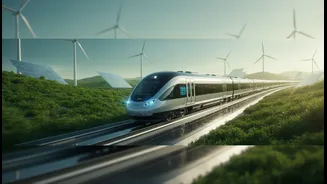
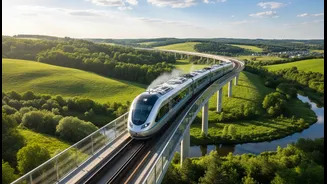
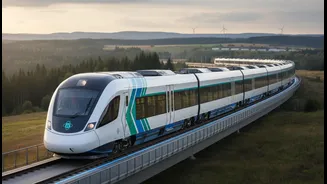
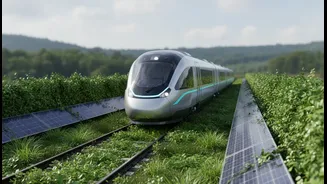
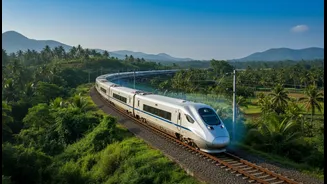
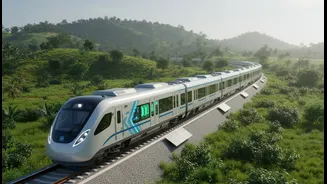
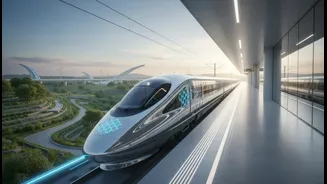
A hydrogen train, or 'hydrail', is a train that uses hydrogen gas to generate electricity. Think of it as a self-contained power plant on wheels. Instead of drawing electricity from overhead wires or burning diesel, it uses an onboard fuel cell. In this
fuel cell, hydrogen stored in tanks reacts with oxygen from the air. This electrochemical reaction produces electricity to power the motors, with the only byproducts being heat and pure water vapour. This makes them a zero-emission alternative, ideal for routes where electrifying the tracks is difficult or too expensive, such as in hilly terrain or on less-travelled lines.
India's Big Push: From Heritage to High-Tech
Indian Railways is embracing this technology as a cornerstone of its mission to become a net-zero carbon emitter. A key initiative is "Hydrogen for Heritage," which aims to introduce 35 hydrogen trains on iconic, narrow-gauge tourist routes. These include the Kalka-Shimla Railway, Darjeeling Himalayan Railway, and Nilgiri Mountain Railway. The logic is to preserve the charm of these heritage lines, which are difficult to electrify, while eliminating diesel pollution. However, the first practical application will be seen on a broad-gauge line. India's first hydrogen train is scheduled to be inaugurated on July 17, 2026, on the Jind-Sonipat route in Haryana. This 10-coach train, retrofitted from a diesel unit, is set to be the world's longest hydrogen trainset on a broad-gauge network.
The Passenger Experience: Quiet, Clean, and Quick
For weekend travellers and daily commuters, the shift to hydrogen will be noticeable. The trains are significantly quieter than their diesel counterparts because there is no noisy combustion engine. The ride is smooth, and passengers can enjoy their journey knowing it has a minimal environmental footprint. The new service on the Jind-Sonipat section is expected to cut travel time from two hours to about one hour. Fares are also being set at an affordable level, making green travel accessible. The train has a capacity for around 2,600 passengers and will initially operate at a speed of 75 kmph, though it has been tested at speeds up to 120 kmph. A dedicated hydrogen refuelling facility has been established at Jind to support operations.
The Road Ahead: Hurdles and Potential
While the promise is immense, the path to a widespread hydrogen rail network has its challenges. The primary hurdle is the cost and production of "green" hydrogen—hydrogen produced using renewable energy like solar or wind. Currently, green hydrogen is more expensive than conventional fuels, though prices are falling thanks to government initiatives like the National Green Hydrogen Mission. Building the necessary storage and refuelling infrastructure also requires significant initial investment. Safety is another critical consideration, and these trains are equipped with advanced sensors and fire detection systems to manage the flammability of hydrogen. Despite these challenges, the long-term benefits are compelling. A shift to domestically produced green hydrogen would reduce India's reliance on imported fossil fuels, improve air quality, and create new jobs in a sunrise sector.