

The Hellish World Next Door
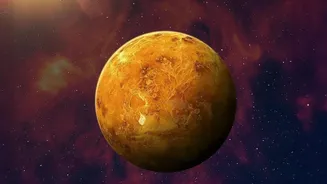
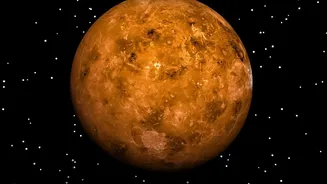
From Earth, Venus is the brilliant Morning Star, a serene presence in our sky. But up close, it’s a vision of hell. The planet is choked by a thick, toxic atmosphere composed almost entirely of carbon dioxide, creating a runaway greenhouse effect. This
traps heat so effectively that surface temperatures average a staggering 465 degrees Celsius, hot enough to melt lead. If the heat doesn't get you, the pressure will. The atmospheric pressure on the Venusian surface is more than 90 times that of Earth at sea level. Standing there would feel like being nearly a kilometre deep in the ocean, an experience that would instantly crush any unprotected object, human or machine. Add clouds of corrosive sulfuric acid, and you have an environment uniquely engineered to destroy visitors.
A History Written in Minutes
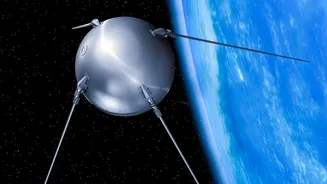
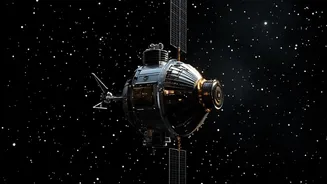
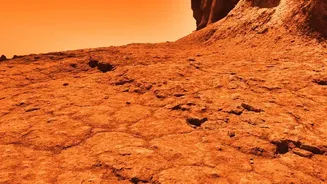
The only nation to successfully land probes on Venus was the Soviet Union, with its Venera program from the 1960s to the 1980s. These missions were monumental feats of engineering, essentially armoured, spherical pressure vessels built like deep-sea submersibles. Yet even these titans had short lives. Venera 7 became the first spacecraft to transmit data from another planet's surface in 1970, surviving for just 23 minutes before succumbing. The all-time record holder, Venera 13, lasted an impressive 127 minutes in 1982 before going silent forever. These brief windows were enough to send back the only images we have from the surface of Venus, revealing a bleak, rocky, and orange-lit landscape under a suffocating sky. The lesson was clear: on Venus, survival is measured in minutes, not days or years.
The Next Generation's Fleeting Glimpse
After decades of focusing elsewhere, humanity is turning its eyes back to Venus. A new fleet of missions from multiple space agencies is set to launch in the coming years. Among the most anticipated is NASA's DAVINCI (Deep Atmosphere Venus Investigation of Noble gases, Chemistry, and Imaging) mission, planned for the early 2030s. DAVINCI will drop a sophisticated probe through the planet’s atmosphere for a one-hour descent. This probe isn't designed to last long on the surface; its primary science happens on the way down. As it falls, a camera called the Venus Descent Imager (VenDI) will peer through a sapphire window, capturing the first-ever high-resolution images of a mountainous, continent-like region called Alpha Regio. Scientists recently tested the camera system in June 2026 over the deserts of Utah to ensure it can map the terrain in the moments before impact. This fleeting glimpse is our next best chance to understand the geology of this mysterious world.
Why Bother With a Moment's Work?
So what can we possibly learn in just a few minutes? A great deal, it turns out. The data from DAVINCI’s descent, combined with observations from orbiters like NASA’s VERITAS and India’s Shukrayaan-1, will help answer fundamental questions about our sister planet. Scientists want to know if Venus ever had oceans, why its climate spiralled so violently out of control, and whether volcanic activity still shapes its surface. By understanding the divergent path Venus took, we learn more about the delicate balance that makes a planet habitable—or not. This knowledge is crucial not only for understanding the history of our own solar system but also for identifying potentially life-bearing exoplanets far beyond it. Those few precious minutes of data are a down payment on understanding our own place in the cosmos.