


The Rise of the Meerut Magician
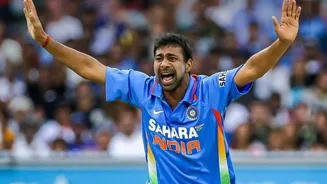
Praveen Kumar burst onto the scene not with express pace, but with an almost supernatural ability to swing the ball. Hailing from Meerut, the right-arm medium-pacer made his debut for India in late 2007. His greatest weapon was the conventional outswinger
to the right-hander, delivered with a repeatable action and an impeccable wrist position. But he also possessed a deceptive inswinger, making him a nightmare for top-order batsmen. He wasn't just a bowler; he was a craftsman. This skill was on full display during his early days, where he quickly established himself as a vital cog in India's limited-overs setup, particularly with the new ball.
A Brief, Brilliant Peak
The high point of Praveen Kumar's career undoubtedly came during the 2008 Commonwealth Bank Series in Australia. In a country known for its pace-friendly pitches, it was Kumar's swing and guile that proved decisive. His four-wicket haul in the second final against a formidable Australian side is etched in the memory of Indian fans, as it played a pivotal role in securing a historic series win. He took 27 wickets in his first six Tests and 77 wickets in 68 ODIs, numbers that speak to his effectiveness when he was at his best. For a period, he was the captain's go-to man, relied upon to provide crucial early breakthroughs.
The Unravelling: Form and Fitness
The very tools that made Praveen Kumar special were reliant on rhythm and a fully functional body. Unfortunately, injuries began to take their toll. A significant elbow injury ruled him out of the 2011 ICC World Cup, a devastating blow for a player in his prime. Following his return, his pace dropped noticeably. This reduction in speed was critical; while he could still swing the ball, batsmen had more time to adjust, blunting his primary weapon. The consistency wavered, and the incisiveness that defined his peak began to fade. This dip in on-field performance was the most significant factor in his eventual ousting.
The Rise of New Competition
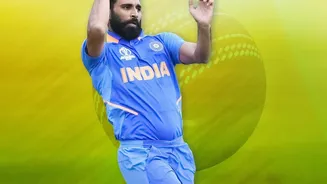
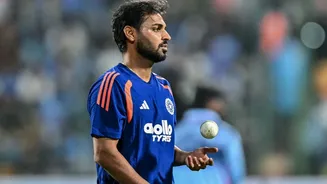
Cricket waits for no one. As Praveen struggled to regain his peak form and fitness, a new generation of Indian fast bowlers was emerging. Crucially, another swing bowler from his own state, Bhuvneshwar Kumar, rose through the ranks, offering similar skills but with better fitness and consistency. At the same time, the likes of Umesh Yadav and Mohammed Shami offered something different: genuine pace. The Indian team's pace battery was evolving, becoming faster and more varied. Selectors, faced with a wealth of new, fit, and hungry talent, started looking past Praveen. His last appearance for India came in March 2012, at the young age of 26.
Temperament and Off-Field Issues
While form and fitness were the primary drivers, questions around Praveen's temperament did not help his cause. He was known for his aggressive, emotional character on the field. While this passion often worked in his favour, there were instances of disciplinary issues that drew negative attention, including a suspension by the BCCI during a corporate match for on-field altercations. In later interviews, Praveen himself spoke about his struggles with depression after being dropped and admitted that perceptions about his lifestyle were 'blown out of proportion', suggesting his image may have been unfairly tarnished. These factors, while perhaps secondary to his performance dip, likely contributed to the selectors' decision to move on.