




The Moon's Brilliant Problem
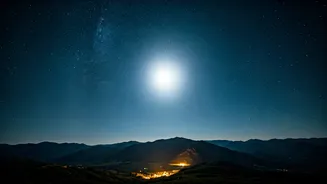
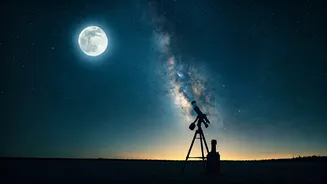
A full moon is the undisputed celebrity of the night sky, but its brilliance comes at a cost. It acts like a giant celestial spotlight, creating what astronomers call 'moon glare' or sky glow. This natural light pollution washes out the faint light from
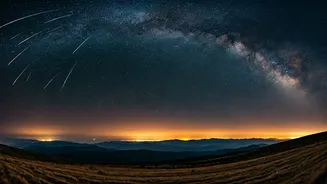
distant stars, nebulae, and galaxies, making them difficult, if not impossible, to see. On a dark, moonless night, you might see thousands of stars with the naked eye; during a full moon, that number can plummet by up to 90%, leaving only a few hundred of the brightest ones visible. Furthermore, the moon's intense light prevents your eyes from achieving full dark adaptation, a process that normally takes about 20 minutes and is crucial for spotting faint objects.
Shift Your Focus: What to Observe
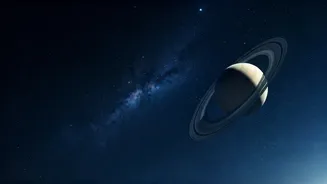
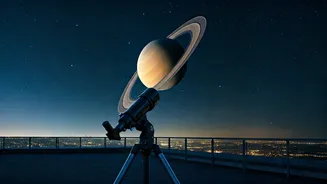
Instead of fighting the moonlight, work with it by shifting your focus to objects that can withstand the glare. The most obvious target is the moon itself. While many astronomers prefer observing the moon during its other phases to see shadows along the terminator, a full moon offers a unique, fully illuminated view of its vast plains, or 'maria', and bright ray systems radiating from craters like Tycho and Copernicus. Beyond our satellite, the full moon has little effect on the visibility of bright planets. Giants like Jupiter and Saturn, the reddish dot of Mars, and dazzling Venus are all bright enough to punch through the moonlit haze. In fact, some observers find that the slightly brighter sky can reduce the overwhelming contrast of planets, making them more comfortable to view. You can also hunt for the brightest stars—like Sirius and Vega—and prominent, easily recognisable constellations.
Plan Your Viewing Session
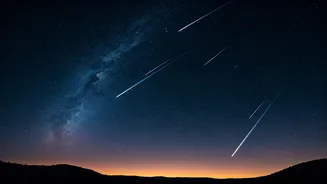
Success on a full moon night begins with good planning. First, check the weather forecast for clear skies. Next, while you can't escape the moon, you can still benefit from escaping city lights. Find a location with an unobstructed view of the horizon, away from streetlights and buildings. Give your eyes at least 20-30 minutes to adapt to the dark by avoiding looking at bright screens—including your phone—and use a red torchlight if you need illumination, as it's less disruptive to your night vision. If you're targeting a specific event like a meteor shower that happens to fall during a full moon, you can still see the brightest meteors. Plan your session for the hours before the moon rises or after it sets to take advantage of the darkest possible sky.
Tools of the Trade
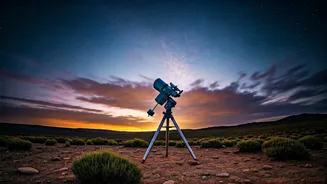
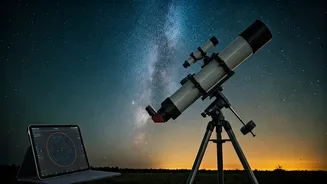
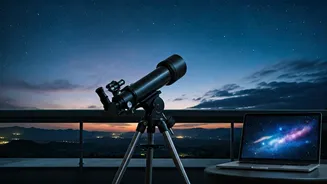
You don't need expensive equipment to enjoy a full moon night. A simple pair of binoculars can reveal stunning details on the lunar surface, from craters to mountain ranges, and can help you spot Jupiter's four largest moons. If you have a telescope, a moon filter is a wise investment; it reduces glare and makes observing the lunar surface more comfortable without damaging your eyes. For navigating the sky, smartphone apps are indispensable. Apps like SkyView, Star Walk 2, and Stellarium provide interactive, real-time maps of the sky. Just point your phone upwards, and they will identify the planets, stars, and constellations you're looking at. For users in India, the Indian Sky Map app specifically highlights nakshatras and rashis.
A Different Kind of Night Sky Art
If observing faint objects is off the table, why not try capturing the scene? The full moon presents a fantastic opportunity for astrophotography, but not in the way you might think. While the moonlight washes out deep-sky objects like nebulae, it's perfect for lunar photography. You can capture detailed shots of the moon's surface with a DSLR and a telephoto lens, or even with a smartphone camera mounted to a telescope or binoculars. The bright moon also acts as a giant softbox, beautifully illuminating the landscape for stunning nightscape photos. This allows you to capture a dramatic scene with a bright moon in the sky and a softly lit foreground, a type of photo that's impossible on a moonless night.