



A New Watchdog in Orbit
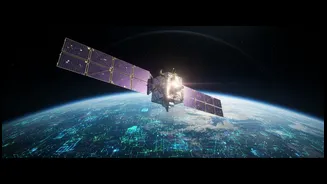
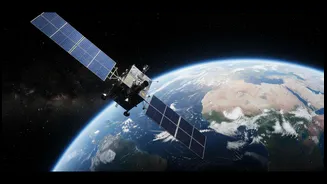
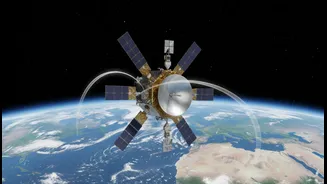
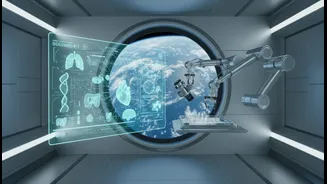
Launched to the International Space Station (ISS), NASA's CLARREO Pathfinder (CPF) is a mission designed to do one thing with unprecedented accuracy: measure how much of the sun's energy Earth reflects back into space. This is a critical component of the planet's
'energy budget'—the balance between incoming energy from the sun and outgoing energy from Earth. An imbalanced budget is the driver of climate change. The CPF instrument is a spectrometer that will measure this reflected sunlight with five to ten times more accuracy than existing sensors. By being hosted on the ISS, it will serve as a highly stable calibration point, helping to improve the accuracy of other Earth-observing satellites it crosses paths with. Think of it as a trusted reference book in orbit, ensuring all other instruments are on the same, highly accurate page.
Sharpening the Picture of Our Future
The data from CLARREO Pathfinder is set to significantly refine our climate models. These complex computer simulations are the primary tools scientists use to project future climate scenarios. A key variable in these models is Earth's energy balance. By providing a much more precise benchmark for how much solar radiation is being reflected by clouds, oceans, and land, CPF will help reduce a significant source of uncertainty in these models. Higher accuracy in these fundamental measurements allows scientists to detect subtle climate trends much sooner, potentially shaving decades off the time it takes to confirm changes. For a country like India, this means more reliable long-term forecasts for crucial phenomena like monsoon intensity, heatwave frequency, and the rate of sea-level rise, which are vital for national planning and adaptation strategies.
The Stubborn Persistence of Uncertainty
However, even with perfectly measured data, climate projections will never become perfectly exact. The headline's point is a crucial one about the nature of science. Better data reduces the error bars, but it cannot eliminate them entirely. One major reason is the inherent chaos and natural variability within the climate system itself. Phenomena like El Niño and La Niña cycles create year-to-year fluctuations that are difficult to predict with absolute certainty decades in advance. Furthermore, factors like cloud behavior remain one of the biggest mysteries in climate science; their dual role in both cooling the planet by reflecting sunlight and warming it by trapping heat is incredibly complex to model.
The Biggest Wildcard: Us
Ultimately, the single greatest source of uncertainty in long-term climate projections has nothing to do with orbital mechanics or atmospheric physics—it's human behavior. Climate models run different scenarios based on the choices we make as a global society. A future where we rapidly decarbonize will look drastically different from one where emissions continue to rise. No satellite, no matter how accurate, can predict future policy decisions, technological breakthroughs, or shifts in global economic activity. These variables mean that scientists will always have to work with a range of possible outcomes rather than a single, definitive prediction. The models can tell us the consequences of our actions, but they cannot predict the actions themselves.
Why Better, Not Perfect, is What Matters
For India, the takeaway is not that climate models are flawed, but that they are becoming more useful tools for risk management. While models may not predict the exact date of a future flood, more reliable data from missions like CLARREO Pathfinder can tell us with greater confidence how the frequency and intensity of extreme rainfall events are likely to change in a given region. This improved, though not perfect, foresight is invaluable. It helps policymakers decide where to build coastal defenses, what crops will be viable in coming decades, and how to manage water resources in a warming world. The goal of climate science is not to produce an infallible prophecy, but to provide an ever-clearer assessment of risks and probabilities to guide our decisions.