
More Than a Pretty Picture
That colourful seed packet is more than just a pretty wrapper; it's a detailed instruction manual for your future plant. Beyond the enticing photo of a perfect tomato or blooming flower, the back of the packet is packed with essential data. This information,
from plant size to spacing needs, is your blueprint for a successful container garden. Understanding these details before you even touch the soil can be the difference between a thriving balcony oasis and a pot of disappointment. It's a legal label and a practical guide all in one. By taking a few moments to decode this information, you empower yourself to make informed decisions that will help your seeds flourish.
Check the Mature Dimensions
One of the most critical pieces of information for a container gardener is the plant's final size. Look for "height" and "spread" or "width" on the packet. This tells you how large the plant will be when fully grown. A tall, top-heavy sunflower will easily tip over in a small, shallow pot, while a wide-spreading zucchini will quickly overwhelm a narrow container. As a rule, the pot should be large enough to accommodate the plant's mature size, providing stability and enough soil volume to support it. This information ensures the plant has adequate light and air circulation, which is crucial for preventing disease.
Consider the Root System
While the packet won't show you a diagram of the roots, it offers clues about their needs. Root vegetables like carrots or parsnips obviously need deep pots to allow their main taproot to grow long and straight. Leafy greens like lettuce or spinach have shallower root systems and can thrive in wider, less deep containers. Fruiting vegetables like tomatoes and peppers need significant root space to support their growth and production, so they require larger, deeper pots. The 'Days to Maturity' can also be a hint; a plant that takes a long time to grow will likely develop a more extensive root system, requiring a bigger home from the start or the need to be potted up into a larger container as it grows.
Translate Spacing for Pots
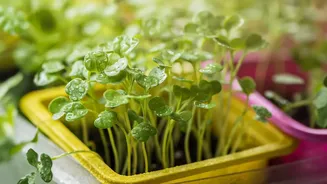
Seed packets provide "spacing" or "thinning" instructions, which are typically meant for traditional in-ground gardens. While these guidelines are designed to prevent overcrowding and competition for resources, they can be adapted for containers. The spacing recommendation gives you a good idea of the plant's footprint. If a packet says to space plants 12 inches apart, you should plan for one of those plants per 12-inch diameter pot. Trying to squeeze too many plants into one container can lead to stunted growth and lower yields as they compete for water and nutrients. For leafy greens, you can often plant more densely and harvest them as baby leaves.
Look for Container-Friendly Varieties
Seed companies recognize the popularity of small-space gardening and have developed specific varieties to suit it. Scan the packet for keywords like "patio," "bush," "dwarf," "compact," or "container." These are your best bet for a successful pot-grown harvest. For example, a "bush" bean will grow in a contained form, unlike a "pole" bean which requires a large trellis to climb. A "patio" tomato variety is bred to stay smaller and more manageable than its sprawling, indeterminate cousins. Some packets will even explicitly state they are "container friendly" and may suggest an ideal pot size or number of plants per pot.