







The Squeezed Middle
The pressure on restaurants is coming from all directions. The cost of food and beverages has seen significant inflation, with official data from August 2026 showing an 8.4% year-on-year price rise in restaurant services. This isn't just a single-item
issue; it’s a widespread squeeze. The prices of essential ingredients like cooking oils, vegetables, and proteins are climbing. Add to that the rising cost of commercial LPG cylinders, which are crucial for most kitchens, and the financial strain intensifies. Beyond the kitchen, operational expenses such as rent, electricity, and an impending merchant discount rate (MDR) on certain UPI transactions are also adding to the burden. For an industry where net margins are already razor-thin—often between 8% to 12%—these cumulative increases can be crippling.
The Secret Science of Menu Engineering
Rather than applying a blanket price increase, many restaurants are turning to a sophisticated strategy known as 'menu engineering'. This involves a deep analysis of every dish based on its popularity and profitability. Dishes are often categorized into 'Stars' (popular and profitable), 'Plowhorses' (popular but less profitable), 'Puzzles' (profitable but not popular), and 'Dogs' (neither popular nor profitable). The goal is to subtly guide customers toward the 'Stars' using strategic placement on the menu, descriptive language, and visual cues. A common mistake is a flat 10% hike, which can alienate regulars from their favourite value items. Instead, owners might make a small, almost unnoticeable increase on a less price-sensitive item, while keeping the price of a signature dish stable to retain its 'value anchor' status. This data-driven approach helps protect margins without shocking the customer.
Smarter Kitchens and Creative Sourcing
Beyond the menu itself, restaurants are innovating behind the scenes. One key area is rigorous portion control. By standardizing recipes and using tools like digital scales, kitchens can reduce the incremental waste that erodes profit, especially when ingredient costs are high. Some have found that simply tracking and visualizing food wastage can reduce it significantly, saving thousands of rupees a month. Another tactic is 'shrinkflation'—reducing portion sizes slightly—though this is often a last resort as customers notice a smaller plate more than a small price change. Chefs are also adapting by streamlining menus to focus on fewer, more efficient dishes and sourcing locally and seasonally to manage costs. This operational discipline, from inventory management to supplier negotiations, is becoming a survival skill.
The Customer’s Bottom Line
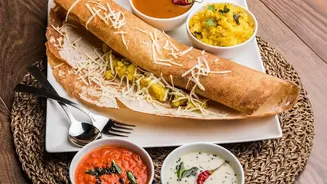
For diners, this behind-the-scenes battle means a few things. While many restaurant owners are trying to hold prices steady, especially during high-demand festive seasons, some level of increase is unavoidable. Some chains have already implemented modest 5% hikes after holding off for years. However, the industry is acutely aware that there's a limit to what customers will tolerate. As one restaurateur noted, you can't keep passing every cost increase to the consumer because at some point, they push back. Many businesses are choosing to absorb some of the cost pressures to maintain footfall, viewing strong customer demand as their most important asset. So, while your favourite biryani or masala dosa might cost a little more than it did a year or two ago, the price reflects a complex struggle to deliver a quality experience in a challenging economic climate.