





From the Ocean to the Lab
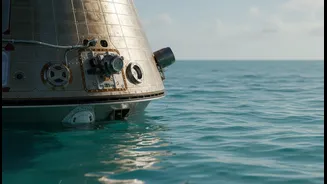
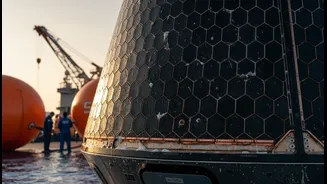
The moment the Orion capsule hit the Pacific Ocean, a meticulously planned recovery operation swung into action. US Navy divers and NASA teams approached the floating spacecraft to perform initial safety checks and assist the four astronauts. Once the crew
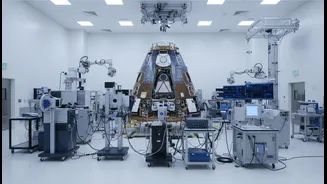
was safely extracted and transferred to the USS John P. Murtha for medical evaluations, the focus shifted entirely to the capsule itself. Technicians conducted tests while Orion was still in the water before powering it down for recovery. The spacecraft was then carefully winched into the well deck of the naval ship, secured onto a special cradle, and transported to Naval Base San Diego before beginning its journey back to NASA's Kennedy Space Center in Florida for a thorough teardown.
The All-Important Heat Shield Inspection
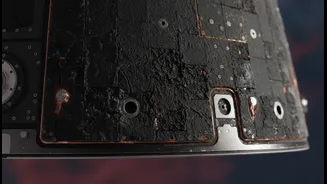
A primary focus of the post-flight check is Orion's heat shield. During its fiery re-entry through Earth's atmosphere, the capsule endured temperatures of nearly 2,760 degrees Celsius. After the uncrewed Artemis I mission, engineers had noted some unexpected erosion of the heat shield material. Therefore, inspecting the shield on Artemis II was a top priority. Initial inspections after splashdown and on the recovery ship showed the shield performed well, with the previous char loss issue significantly reduced. For a deeper analysis, the heat shield will be removed and transported to NASA's Marshall Space Flight Center for detailed sample extraction and X-ray scans to understand its performance at a microscopic level. This data is non-negotiable for ensuring the safety of crews on future, longer missions.
A Treasure Trove of Data
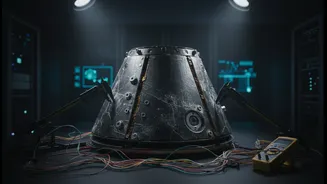
Beyond the heat shield, the Orion capsule is a treasure trove of invaluable data. Engineers meticulously disassemble the spacecraft to retrieve data recorders and reusable components. This includes critical avionics, navigation systems, and life support equipment. Every component is inspected for wear and tear from the harsh deep-space environment, which includes high radiation levels and extreme temperature swings. The performance data from every system, from the main engine to the toilet vent line, is analyzed to refine designs and procedures for upcoming missions like Artemis III and IV. This process helps engineers understand what worked perfectly, what could be improved, and what parts can be safely refurbished and flown again, which is key to making space exploration more sustainable.
Checking the Human Element
The spacecraft isn't the only thing under scrutiny; so are the astronauts. Throughout their mission, the crew participated in studies to see how deep space affects the human body. They provided biological samples before, during, and after the flight to track changes in their immune systems, cardiovascular health, and more. After landing, they underwent a series of functional tests, including balance and muscle performance, to see how quickly they could adapt back to Earth's gravity and perform critical tasks after landing on a celestial body like the Moon or Mars. This research is crucial for developing protocols and technologies to keep astronauts healthy on long-duration missions of the future.
Why This Matters for India
The lessons learned from Artemis II's post-flight analysis have direct relevance for India's own space ambitions. As a signatory of the Artemis Accords, India is a partner in this new era of lunar exploration. The technical data shared from the Orion mission provides a vital blueprint for ISRO's Gaganyaan programme, offering insights into life support, safety systems, and operational protocols for human spaceflight. The success and detailed analysis of Artemis II provide a tested model that strengthens India's path toward its own crewed missions and its long-term goal of building a space station by 2035 and sending an Indian to the Moon by 2040. It's a collaborative effort where NASA's findings help de-risk and accelerate the development of India's capabilities.