








In July 2017, the 600-year-old walled city of Ahmedabad was declared India's first UNESCO World Heritage City, a moment of immense national pride. But what makes this bustling metropolis a 'heritage city' on par with Paris and Cairo?
A Landmark Recognition
The announcement came
from the 41st session of the World Heritage Committee in Krakow, Poland, placing Ahmedabad on a prestigious global list. This was a significant milestone, as the city was chosen over other major contenders like Delhi and Mumbai. The recognition wasn't for a single monument or ruin, but for the entire historic walled city—a sprawling, living urban landscape founded by Sultan Ahmed Shah in the 15th century on the banks of the Sabarmati River. The journey to this status was a long one, beginning with initial conservation studies in 1984 and culminating in a formal nomination in 2011.
More Than Monuments: A Living Heritage
Unlike many heritage sites that are preserved as relics of the past, Ahmedabad's old city is a thriving, breathing entity. This concept of a 'living heritage' was central to its inscription. UNESCO recognized that the city’s historic urban structure, which has survived for over six centuries, remains deeply connected with the everyday life of its people. The traditions, community spaces, and markets are not museum pieces; they are integral parts of a continuous cultural landscape. This distinction was key to why Ahmedabad succeeded where other Indian cities had not, as it demonstrated an exceptional ability to preserve its authentic urban fabric while remaining fully functional and inhabited.
The Soul of the City: The Pols
At the heart of Ahmedabad's unique character are the 'pols'—traditional residential clusters that define the old city. Derived from the Sanskrit word 'Pratoli', meaning a gated entrance, a pol is a micro-neighbourhood of closely packed houses, often linked by caste, religion, or profession. These gated communities, with their narrow, winding streets, secret passages, and shared courtyards ('chowks'), were designed for security and community living. The architecture of the pols is a standout feature, with exquisitely carved wooden facades, columns, and balconies that make them a testament to indigenous craftsmanship. Each pol traditionally featured its own gate, a community well, and a 'chabutro' or bird feeder, fostering a strong sense of collective identity that persists even today.
A Tapestry of Coexistence
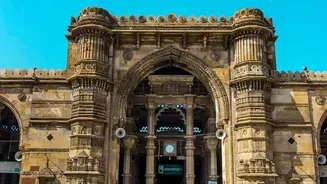
One of the most compelling reasons for Ahmedabad’s status is its long history as a melting pot of cultures. For centuries, Hindu, Jain, and Islamic communities have coexisted, creating a unique fusion evident in the city's architecture. This is beautifully illustrated in its monuments, where Indo-Islamic styles blend seamlessly. Sultanate-period mosques were often built by Hindu and Jain artisans, who incorporated their traditional craftsmanship into the structures. This multicultural harmony is not just a feature of its grand monuments like the Jama Masjid, but is woven into the fabric of the pols, where institutions of many different faiths have long stood side-by-side.
The Legacy and the Path Forward
Achieving World Heritage status was more than an honour; it was a catalyst. The recognition has boosted tourism and the local economy, bringing global attention to the city's unique cultural assets. It also serves as a model for other Indian cities aspiring for similar recognition, highlighting the importance of preserving living urban heritage. However, the title also brings the responsibility of conservation. Protecting the fragile timber-based architecture and the traditional lifestyle of the pols from the pressures of modern development is an ongoing challenge. The hard work, as many involved have noted, is in ensuring that Ahmedabad's precious heritage can be sustained for generations to come.