





A Galaxy's Sudden Turn-On
Deep in the constellation Virgo, about 300 million light-years from Earth, lies a galaxy with the designation SDSS1335+0728. For years, it was just another quiet spot in the vast cosmic map, unremarkable in every observed way. Then, in December 2019,
something extraordinary happened. The Zwicky Transient Facility, an observatory in California, flagged a sudden, dramatic spike in the galaxy's brightness. It wasn't just a flicker; the galaxy's core began shining brighter than ever before recorded, and it has continued to intensify for more than four years. This sustained and unprecedented change alerted astronomers worldwide that they might be witnessing a truly rare event.
Ruling Out the Usual Suspects
When a galaxy suddenly lights up, astronomers have a standard checklist of culprits. The most common are supernova explosions—the dazzling death of a massive star—or a tidal disruption event (TDE), where a star wanders too close to a black hole and gets shredded. However, these phenomena are transient. A supernova's brilliant light fades over a few hundred days, as does the flare from a TDE. But SDSS1335+0728 didn't dim; it kept getting brighter across multiple wavelengths. It became four times brighter in the ultraviolet, twice as bright in the mid-infrared, and even started emitting X-rays by February 2024, a behaviour never before seen in this context. This longevity pointed away from typical cosmic flares and toward a more fundamental, ongoing change at the galaxy's very heart.
What It Means for a Black Hole to Awaken
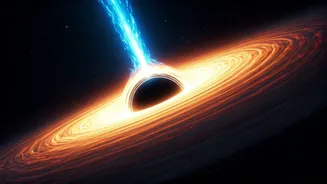
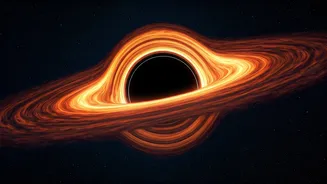
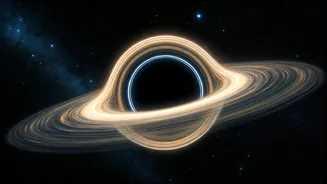
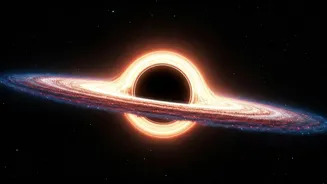
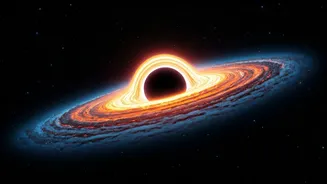
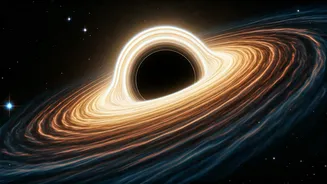
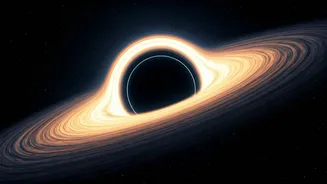
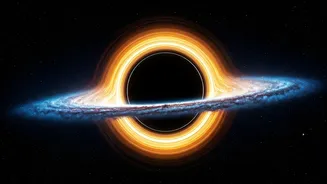
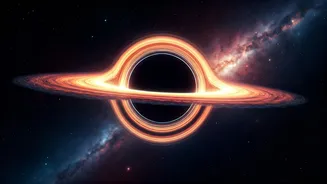
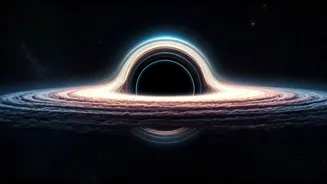
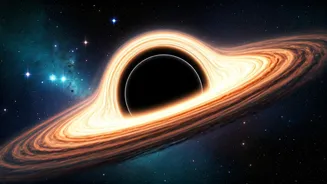
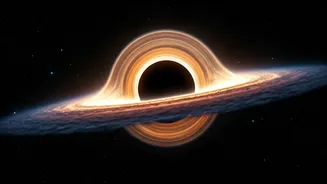
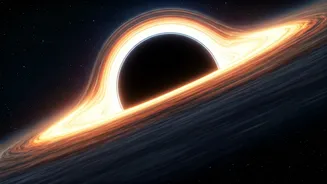
Most large galaxies, including our own Milky Way, have a supermassive black hole at their center. These cosmic behemoths, with masses hundreds of thousands to billions of times that of our sun, are usually dormant or 'sleeping'. They are not actively consuming large amounts of matter and are therefore invisible. An 'awakening' occurs when a vast supply of gas and dust falls toward the black hole, forming a swirling, superheated structure called an accretion disk. As matter in this disk gets crushed and accelerated by immense gravitational and frictional forces, it radiates a tremendous amount of energy across the entire electromagnetic spectrum, from radio waves to X-rays. This intensely luminous region is called an Active Galactic Nucleus (AGN), and it can outshine all the stars in the host galaxy combined. The evidence suggests this is precisely what astronomers are seeing in SDSS1335+0728—the real-time birth of an AGN.
A First-of-its-Kind Observation
While astronomers have studied active galaxies for decades and have even seen galaxies switch on after the fact, this is the first time they have caught the process of activation in real time. According to Paula Sánchez Sáez of the European Southern Observatory, who led the study, observing this transition provides an unprecedented opportunity to understand how these cosmic engines start. What triggered the event remains a mystery. It could be that the black hole is beginning to consume a massive cloud of gas that has just reached it, or perhaps the galaxy is interacting with another. The team of astronomers used data from multiple ground and space-based observatories, including the Very Large Telescope in Chile, to piece together the story.
A New Window into the Cosmos
This discovery is more than just a cosmic light show; it's a new laboratory for studying the life cycles of galaxies. Observing how a black hole begins to feast on its surroundings can help solve fundamental puzzles about how these giants grow and influence their host galaxies. Researchers hope that continued observation will reveal what is fueling the black hole and how the AGN develops. The event also raises intriguing questions closer to home. Our own galaxy's supermassive black hole, Sagittarius A*, is currently sleeping. While scientists say an awakening isn't imminent, this discovery confirms that it is a process that can and does happen. For now, all eyes are on SDSS1335+0728 as its new cosmic alarm clock continues to ring.