





The Pacific's Global Ripple Effect
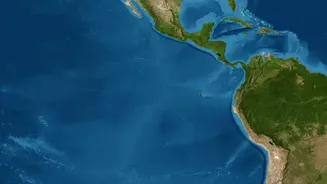
El Niño is a naturally occurring climate phenomenon defined by the unusual warming of surface waters in the central and eastern tropical Pacific Ocean. It's one phase of a larger cycle called the El Niño-Southern Oscillation (ENSO), which swings between
warm (El Niño), cool (La Niña), and neutral conditions every two to seven years. Under normal circumstances, trade winds blow from east to west across the Pacific, pushing warm surface water towards Asia and Australia. During an El Niño event, these trade winds weaken or even reverse. This allows the massive pool of warm water to shift eastward, toward the coast of South America. This change might seem distant, but it sets off a chain reaction, altering atmospheric pressure and disrupting weather patterns across the globe, including the intricate system that powers the Indian monsoon.
El Niño’s Tug-of-War with the Monsoon
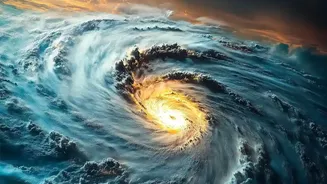
The Indian monsoon is essentially a gigantic sea breeze, driven by the temperature difference between the Indian subcontinent and the surrounding ocean. El Niño disrupts this delicate balance. The warming of the Pacific Ocean changes large-scale atmospheric circulation, including a key pattern known as the Walker Circulation. This disruption can weaken the monsoon trough and the winds that carry moisture from the ocean to the Indian mainland. The result is often a weaker, delayed, or more erratic monsoon, leading to reduced rainfall over large parts of the country. However, the relationship isn't a simple one-to-one equation. Historically, while many El Niño years have resulted in droughts in India, not all have. Other climate factors, like the Indian Ocean Dipole (IOD)—a similar pattern of sea surface temperature differences in the Indian Ocean—can either counteract or worsen El Niño's influence.
The Outlook for 2026
For 2026, forecasters have been closely monitoring a strengthening El Niño. The India Meteorological Department (IMD) had predicted a below-normal monsoon season, anticipating the development of El Niño conditions. After a surprisingly strong July in some areas, the forecast for August pointed towards below-normal rainfall as the El Niño event persists and intensifies. Global agencies like the World Meteorological Organization (WMO) have also noted that a strong El Niño is expected to dominate global climate patterns through late 2026, increasing the likelihood of drier-than-normal conditions over the Indian subcontinent. According to a recent NOAA discussion, there is a high probability of this El Niño becoming a very strong, potentially historic event.
Beyond the Farm: Economic Tremors
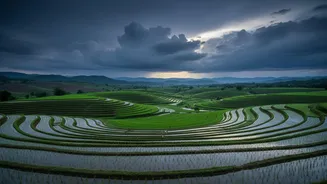
The stakes of a weakened monsoon are incredibly high. With nearly half of India's workforce employed in agriculture and a significant portion of farmland being rain-fed, a poor monsoon has immediate and widespread consequences. It can lead to lower crop yields, forcing a dip in farmer incomes and threatening rural demand across the economy. This directly impacts the availability of essential food items, which can drive up food price inflation, affecting every household's budget. Beyond agriculture, deficient rainfall puts a strain on water resources, affecting drinking water supplies and the generation of hydroelectric power. This can, in turn, increase the demand for other forms of electricity as reliance on pumping for irrigation grows. The ripple effects of a poor monsoon season demonstrate just how deeply intertwined India's economic stability is with this annual weather pattern.