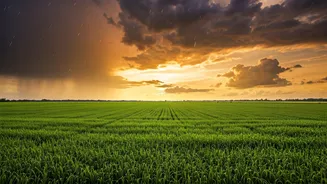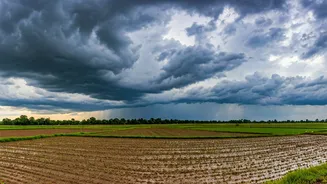







The Scale of Dependence
India's relationship with the monsoon is rooted in staggering numbers. About 51% of the country's net sown area is rain-fed, meaning it lacks access to assured irrigation and is almost entirely dependent on seasonal rains. This vast rain-fed land accounts
for approximately 40% of India's total food production. These aren't just marginal crops; rain-fed lands are responsible for producing the majority of the country's coarse cereals, pulses, and oilseeds. Given that agriculture contributes significantly to India's GDP and employs a vast portion of the population, the performance of the monsoon is not just a rural concern—it's a national economic event. A good monsoon, arriving on time and distributing evenly, sets the stage for a prosperous year.
A Ripple Effect Through the Economy
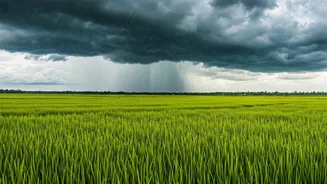
When the monsoon is generous, the benefits ripple far beyond the farm gates. Bountiful harvests lead to higher rural incomes, which in turn fuels demand for a wide range of goods and services. Companies that sell everything from tractors and two-wheelers to fast-moving consumer goods (FMCG) watch the monsoon's progress as keenly as farmers. A strong rural economy boosts their sales and drives corporate growth. Furthermore, a good harvest keeps food prices stable, helping to keep the nation's inflation in check. The rains also replenish reservoirs and groundwater tables, which is crucial for drinking water supplies and for generating hydroelectric power, a key component of India's energy mix.
The Human Cost of a Failed Monsoon
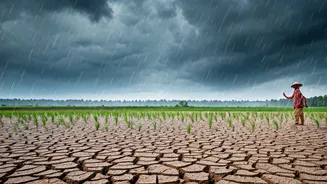
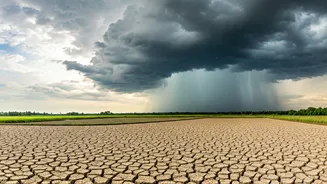
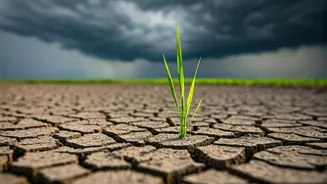
Conversely, a weak or erratic monsoon can trigger a cascade of negative consequences. For millions of small and marginal farmers, a failed monsoon means crop failure, financial ruin, and mounting debt. This distress often forces families to migrate to urban areas in search of manual labour, placing immense strain on city infrastructure. A poor monsoon also leads to lower agricultural output, which can cause food prices to spike and stoke inflation, affecting household budgets across the country. As of early July 2026, concerns are mounting as the India Meteorological Department (IMD) has forecast below-normal rainfall for July, following a significant deficit in June.
The Challenge of a Changing Climate
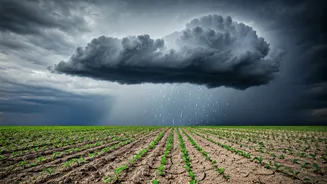
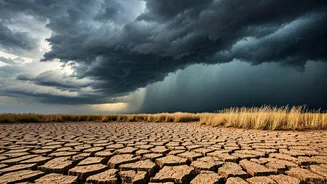
This age-old dependency is now compounded by a modern threat: climate change. Scientists have observed that the monsoon is becoming more erratic. Instead of a steady, even distribution of rain over four months, recent years have seen long dry spells punctuated by short, intense bursts of extreme rainfall. This pattern is detrimental to agriculture; crops need consistent moisture, and sudden deluges can cause flooding and destroy standing crops. This increased unpredictability, with delayed onsets and uneven distribution, is making farming an even riskier proposition and threatening India's food and water security.
Seeking a More Resilient Future
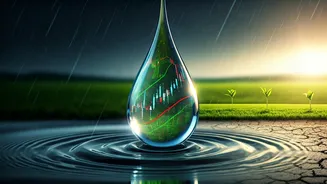
Reducing this critical dependence on the monsoon is a national priority. The government has been pushing to expand the country's irrigation network through schemes like the Pradhan Mantri Krishi Sinchayee Yojana (PMKSY), which aims to provide water to every field. The scheme focuses on creating irrigation infrastructure, promoting micro-irrigation techniques like drip and sprinkler systems to ensure 'per drop, more crop', and developing watersheds to conserve rainwater. Alongside infrastructure, efforts are underway to promote climate-resilient agricultural practices, such as planting drought-tolerant crop varieties and diversifying farming systems to include livestock, which can provide a buffer against crop failure.