





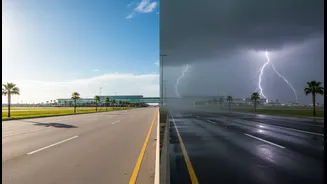


The Monsoon Mayhem at Major Hubs
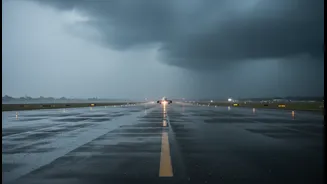
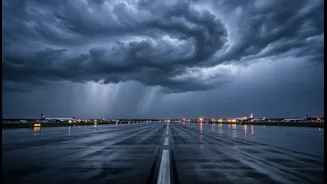
On Sunday, heavy monsoon rains and gusty winds caused significant disruptions at India's two busiest airports. In Mumbai, operations were suspended for an hour as a safety precaution, leading to multiple flight diversions and cancellations. Delhi faced
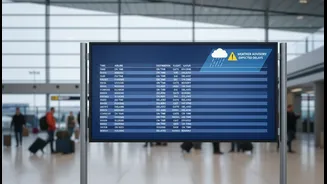
similar challenges, with at least 15 flights diverted to nearby airports like Jaipur and Lucknow due to the severe weather. These events are not isolated; they are a predictable feature of the June to September monsoon period, when flight disruptions can increase by up to 40%. Airlines issued advisories urging passengers to check their flight status before heading to the airport, a clear sign of the system straining under the weather's impact.
What Exactly Are Weather Buffers?
The term 'weather buffer' doesn't refer to a single item but a combination of proactive strategies designed to absorb the impact of bad weather. Think of it as planned slack in the system. For airlines, this includes several key actions. One is carrying extra fuel, which allows a plane to circle in a holding pattern if it cannot land immediately, or to divert to an alternate airport without a critical fuel situation. Another is adjusting crew schedules, often by positioning additional pilots and cabin crew at major hubs to prevent staff shortages from causing a domino effect of delays. Finally, it involves padding flight schedules—intentionally adding extra time to the planned journey to account for potential slowdowns during taxiing, takeoff, or landing.
Why Standard Schedules Buckle Under Pressure
Aviation is a finely tuned network where every component depends on the other. During the monsoon, this delicate balance is easily broken. Heavy rain reduces visibility, forcing pilots to rely on instrument landing systems and slowing down the rate of arrivals. Waterlogging on runways can increase braking distances and the risk of hydroplaning, making operations more cautious and time-consuming. Furthermore, India's major airports in Mumbai and Delhi operate at near-peak capacity. When a single flight is delayed due to a thunderstorm, it occupies a gate or a spot on the tarmac longer than planned, creating a ripple effect that cascades through the day's entire schedule, turning a 30-minute morning delay into a multi-hour disruption by evening.
The Regulator’s Stance on Safety
The Directorate General of Civil Aviation (DGCA) consistently updates its guidelines for monsoon operations, prioritizing safety above all else. In a recent circular, the aviation watchdog emphasized that safety should take precedence over schedule adherence. Pilots are encouraged to plan weather avoidance well in advance and are advised to divert, return, or reroute if faced with severe conditions like turbulence, windshear, or a sudden drop in visibility. The guidelines strongly discourage flying under storm clouds due to the high risk of microbursts and lightning. This regulatory stance essentially endorses the concept of weather buffers, urging airlines to adopt a conservative approach and view diversions not as failures, but as valid and necessary risk mitigation strategies.
The Airline Dilemma: On-Time vs. Resilient
For airlines, implementing robust weather buffers is a difficult balancing act. Padding schedules and carrying extra fuel costs money and reduces aircraft utilization—an airline's key efficiency metric. An aircraft that could theoretically fly five routes a day might only be able to fly four if schedules are extended. However, the alternative is often worse. A single weather-related diversion can be incredibly expensive, and rampant delays destroy customer trust and on-time performance records. Some airlines are proactively using data analytics and historical weather patterns to better predict fuel needs and manage maintenance, ensuring critical systems like navigation and thrust reversers are in top condition for monsoon challenges. This represents a shift from a purely reactive model to one that tries to build resilience into its core operations.
What This Means For Travellers
For passengers, the need for weather buffers means adjusting expectations. During monsoon season, it's wise to treat published flight times as estimates rather than guarantees. Booking morning flights can be a smart strategy, as weather disruptions tend to build throughout the day. If you have a connecting flight, especially through Mumbai or Delhi, allow a buffer of at least three to four hours between flights. Packing essentials like medications, a change of clothes, and a power bank in your carry-on luggage is crucial in case of unexpected delays or diversions. While airlines are not required to compensate for weather-related delays, they are obligated to provide meals for significant delays and a refund or rebooking if the flight is cancelled.